

Egg Binding
By The Coop Team · Updated May 25, 2026
Quick answer
Egg binding occurs when a hen cannot pass an egg, often due to inadequate calcium, oversized eggs, or obesity. If untreated, it can be fatal. A warm Epsom salt bath at about 90-95°F for 30 minutes can help. Seek veterinary care if the egg does not pass within 24 hours.
Key facts
- Ideal bath temperature
- 90-95°F
- Calcium supplement dosage
- Tums for humans
- Time before vet visit
- 24 hours
- Common breeds prone to egg binding
- Buff Orpingtons
- Recommended diet elements
- appropriate calcium levels
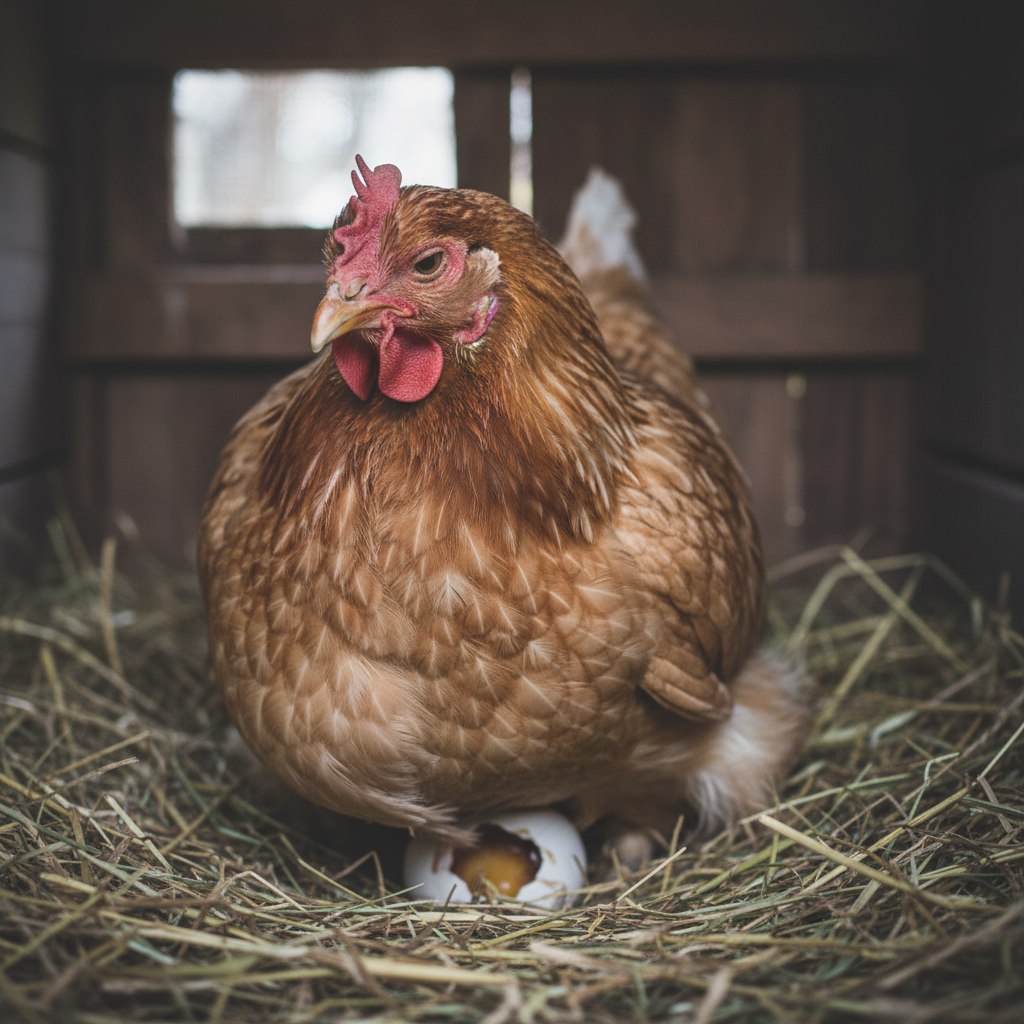
If you've ever noticed your hen waddling around like a penguin or straining excessively, she might be dealing with egg binding. This condition occurs when a hen can't pass an egg due to various reasons such as oversized eggs, inadequate calcium, or obesity. It's essential to spot the signs and act quickly, as leaving it untreated can be fatal for your feathered friend.
What Causes Egg Binding?
Egg binding can be attributed to several factors, each affecting the hen's ability to lay eggs smoothly.
Inadequate Calcium Intake
Calcium is vital for strong eggshells. Without enough calcium, hens may produce soft-shelled eggs that are more difficult to pass. It's a good idea to provide free-choice calcium supplements like oyster shell (find more details in our guide on Grit and Oyster Shell).
Oversized Eggs
Sometimes, a hen might produce an egg that's too large for her to pass comfortably. This issue is more common in certain breeds like the Australorp, known for laying larger eggs, and can be exacerbated by overfeeding or obesity.
Obesity and Poor Health
Overweight hens have weaker abdominal muscles, making it harder for them to lay eggs. Ensuring your chickens stay active and aren't overfed is key. Be mindful of appropriate treats by following our Treats and Kitchen Scraps guide.
Recognizing the Signs of Egg Binding
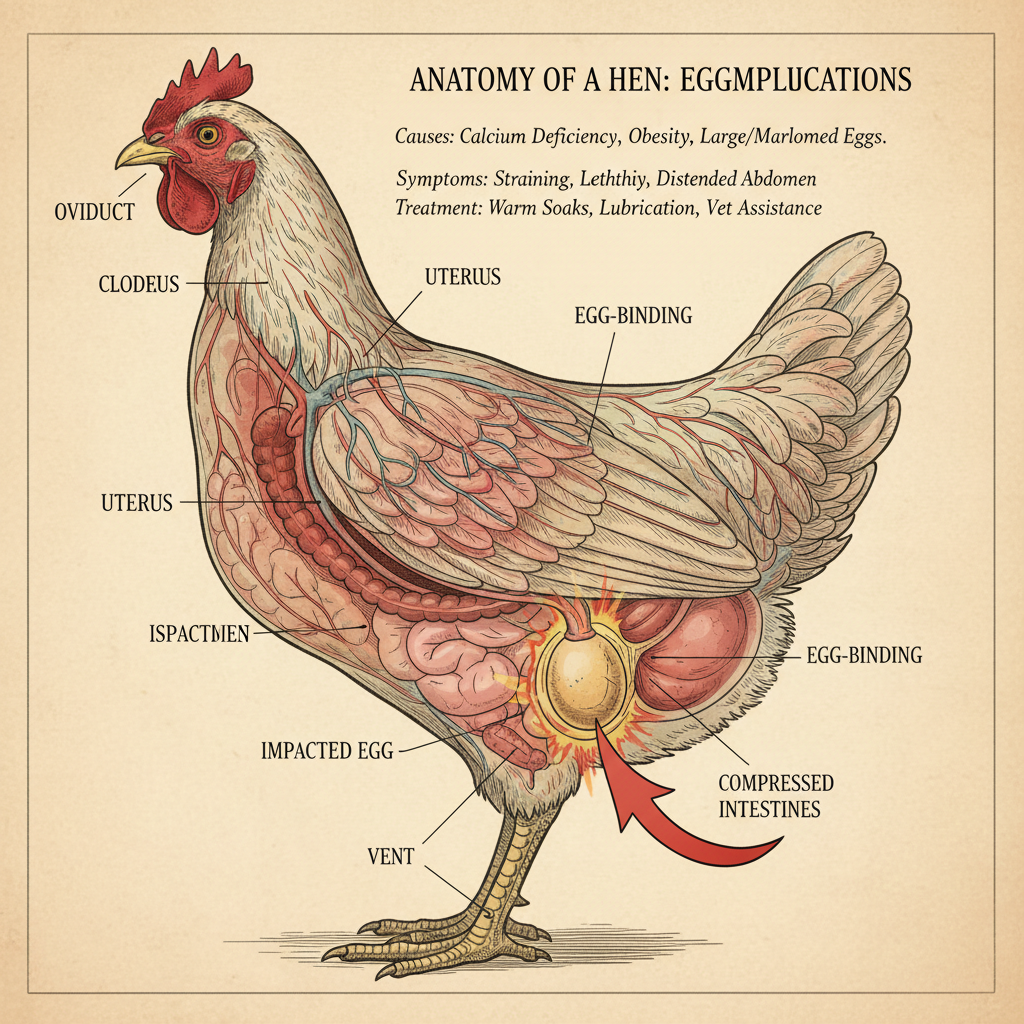
To prevent serious complications, it's crucial to identify egg binding early. Look out for these signs:
- A hen sitting in a puffed-up posture
- Repeated straining without laying an egg
- Walking with a penguin-like waddle
- A visibly distended vent area
How to Treat an Egg-Bound Hen
If you suspect egg binding, don't panic. There are several steps you can take to help your hen pass the egg.
Epsom Salt Bath
Giving your hen a 30-minute soak in a warm Epsom salt bath can help relax her muscles and ease egg passage. Make sure the water isn't too hot, about 90-95°F is ideal.
Calcium Supplementation
Providing a quick dose of calcium can strengthen her contractions. Many chicken keepers use Tums (for humans), which are calcium carbonate, or a more concentrated option like calcium gluconate, which can be found at farm supply stores.
Lubrication
Gently applying a lubricant, such as vegetable oil, around the vent can facilitate the egg's exit. Be delicate to avoid causing injury.
When to Call the Vet
If the egg doesn't pass after 24 hours, it’s time to call a vet. They have tools and medications that can help her pass the egg safely.
Preventing Egg Binding
Prevention is the best strategy. Here’s how you can reduce the risk of egg binding in your flock:
- Balanced Diet: Ensure your hens receive a balanced diet with appropriate calcium levels. Check out our Feed by Life Stage guide for more details.
- Regular Exercise: Promote regular exercise to avoid obesity. This can be as simple as letting them forage in a safe yard.
- Proper Coop Setup: Make sure your coop is well-ventilated and appropriately sized, which you can read about in our Coop Size Per Bird and Ventilation articles.
Frequently Asked Questions
What should I do first if I think my hen is egg-bound?
Start by observing the hen for symptoms like straining and a penguin-like walk. If symptoms persist, give her a warm Epsom salt bath and administer a calcium supplement.
How can I safely give my hen a calcium supplement?
You can crush Tums (calcium carbonate) and mix it in water or feed, or use liquid calcium gluconate. Be sure to follow the dosage instructions carefully.
Are some breeds more prone to egg binding?
Yes, heavier breeds like Buff Orpingtons and Brahmas can be more susceptible due to their size and egg-laying tendencies.
Can egg binding kill my hen?
Yes, if untreated, egg binding can be fatal due to potential complications such as internal organ damage or infection.
How can I prevent egg binding in the future?
Ensure a balanced diet with plenty of calcium, encourage regular exercise, and maintain a healthy weight for your hens. Set up your coop properly to minimize stress.
Read more about poultry health and common diseases like Marek's Disease.
For more in-depth information, you might want to check out this extension resource on egg binding.
Got questions or your own tips?
Jump into the community and swap notes with other backyard chicken keepers.
Discuss in the community →Comments
Sign in to join the conversation.