Buff Orpington
By The Coop Team · Updated May 25, 2026
Quick answer
Buff Orpingtons are friendly, docile chickens weighing 7 to 10 pounds and known for their excellent egg-laying abilities, producing 150 to 200 light-brown eggs annually. They tolerate cold climates well thanks to their thick feathers. However, they can overheat above 90 degrees Fahrenheit, so ensure shade and ventilation.
Key facts
- Weight of Hens
- 7-8 pounds
- Weight of Roosters
- up to 10 pounds
- Egg Production
- 150-200 eggs per year
- Coop Space Required
- 4 square feet per bird
- Run Space Required
- 10 square feet per bird
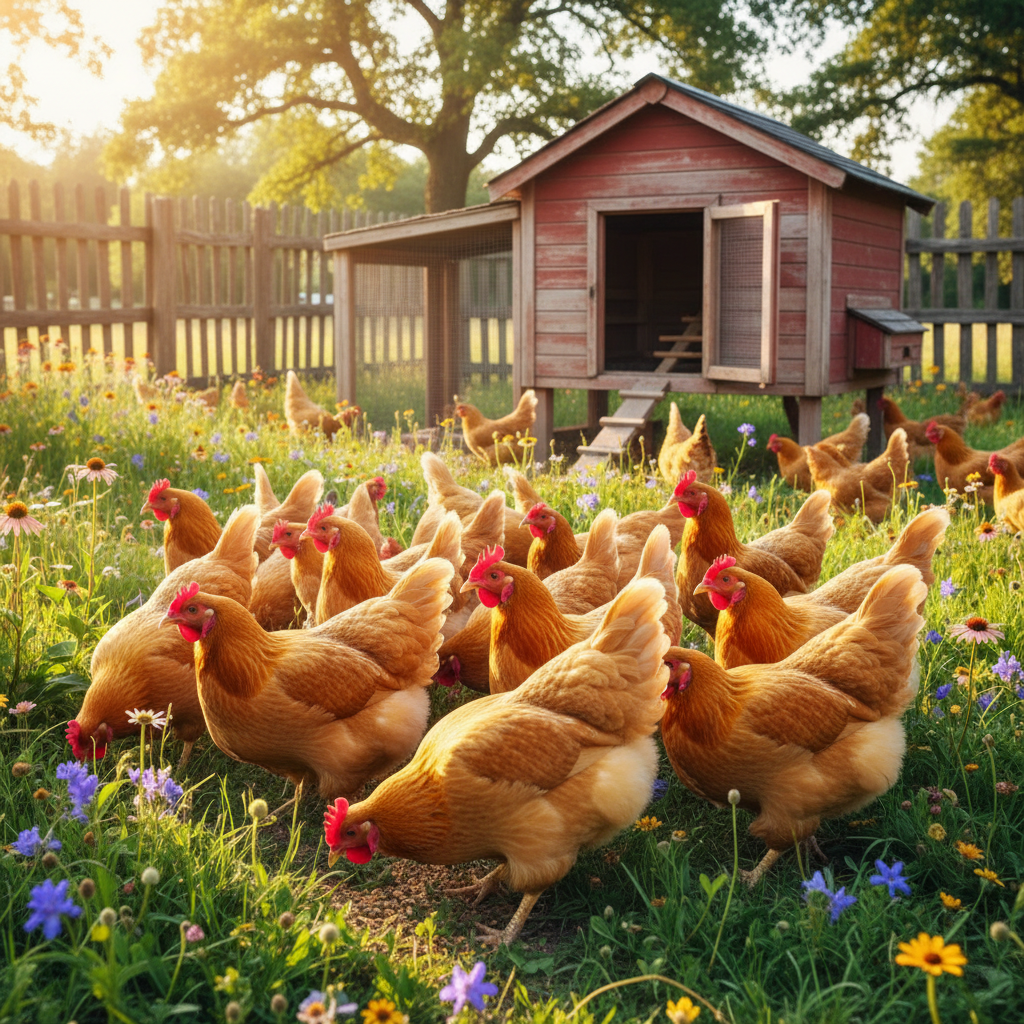
Buff Orpingtons are like the golden retrievers of the chicken world , friendly, reliable, and loved by families everywhere. Their broad, soft-feathered bodies and gentle temperament make them a favorite among backyard chicken enthusiasts. Whether you're a newbie or a seasoned chicken keeper, there's plenty to love about these golden beauties.
What Makes a Buff Orpington Special?
Buff Orpingtons stand out for their beautiful buff color and broad-bodied appearance, weighing in at a hearty 7-10 pounds. These chickens aren't just about looks. They're incredibly docile and friendly, traits that make them perfect for families with young kids. If you want a chicken that enjoys being handled, Buff Orpingtons are your go-to breed.
- Weight: Hens weigh 7-8 pounds, roosters can reach up to 10 pounds.
- Color: Their signature buff color is a warm golden hue.
- Personality: Exceptionally calm and friendly.
How Well Do Buff Orpingtons Lay Eggs?
Buff Orpingtons are respectable layers, producing between 150 to 200 light-brown eggs annually. This makes them a solid choice for those looking to keep a steady supply of eggs rolling in without needing a high-maintenance breed.
- Egg Production: 150-200 eggs per year.
- Egg Color: Light brown.
- Broodiness: Known for going broody, excellent for natural hatching.
If you're considering adding Buff Orpingtons to your flock for their laying capabilities, you might also be interested in comparing other reliable layers like the Rhode Island Red or the Australorp.
Can Buff Orpingtons Handle the Cold?
These chickens are well-suited for colder climates due to their dense feathering. They can handle chilly weather with ease, making them a popular choice in northern regions or anywhere with harsh winters.
- Cold Hardy: Thick feathers provide excellent insulation.
- Considerations: Ensure they have a draft-free coop with proper ventilation (Read more about ventilation).
How to Keep Buff Orpingtons Cool in the Heat
While Buff Orpingtons are cold-hardy, they can overheat when temperatures climb above 90°F. It's crucial to provide them with plenty of shade and proper ventilation during the summer months.
- Shade and Ventilation: Make sure their coop has good airflow. Install fans if necessary.
- Water: Provide fresh, cool water at all times.
- Dust Baths: Allow access to dust baths to help regulate body temperature.
Are Buff Orpingtons Good with Other Breeds?
Generally, Buff Orpingtons are very social and get along well with other chicken breeds. Their laid-back nature means they rarely cause trouble in a mixed flock. However, sometimes their gentleness might see them lower in the pecking order if housed with more assertive breeds.
For those interested in a diverse flock, consider mixing Orpingtons with equally friendly breeds like the Plymouth Rock or Silkies.
Common Health Considerations for Buff Orpingtons
Buff Orpingtons are generally hardy chickens, but keeping an eye on their health is always wise.
- Mites and Lice: Regularly check for parasites. Learn about prevention.
- Respiratory Issues: Ensure their coop has proper ventilation to prevent respiratory diseases.
For any health concerns, consult resources like the Merck Veterinary Manual or your local extension office.
Frequently Asked Questions
How long do Buff Orpingtons live?
Buff Orpingtons typically live for 5-7 years, although some can live longer with excellent care.
Are Buff Orpingtons noisy?
They're generally quieter than most breeds, making them suitable for urban or suburban areas.
Do Buff Orpingtons require special feed?
No special feed is required. A balanced layer feed like those from Purina or Kalmbach works well.
How much space do Buff Orpingtons need?
Ensure 4 square feet per bird in the coop and 10 square feet per bird in the run. Learn more about coop sizes.
Can Buff Orpingtons fly?
They're not strong flyers due to their size, so low fences usually suffice to contain them.
By understanding these aspects of Buff Orpingtons, you're setting yourself up for a rewarding experience with these fluffy, golden companions.
Got questions or your own tips?
Jump into the community and swap notes with other backyard chicken keepers.
Discuss in the community →Comments
Sign in to join the conversation.