

Ventilation
By The Coop Team · Updated May 25, 2026
Quick answer
Proper ventilation in a chicken coop is essential for maintaining a healthy environment for your flock. Aim for at least 1 square foot of ventilation area per 10 square feet of coop floor space to control moisture and ammonia levels, and keep ventilation higher to avoid drafts.
Key facts
- Ventilation Area
- 1 square foot per 10 square feet of coop
- Ammonia Levels
- below 25 ppm
- Humidity Levels
- below 60%
When you're keeping chickens in your backyard, you'll quickly learn that proper ventilation in the coop is crucial for keeping your flock healthy. Ammonia buildup from droppings can be more harmful in winter than the cold itself, leading to respiratory issues. Ensuring enough ventilation without creating drafts keeps your birds comfortable and safe.

Why is Ventilation Important in a Chicken Coop?
Ventilation in a chicken coop helps control moisture and ammonia levels. Chickens produce a lot of moisture from their breath and droppings. If this moisture has no way to escape, it can lead to damp conditions inside the coop, encouraging mold and mildew and increasing the risk of respiratory diseases.
Ammonia Buildup
Ammonia forms when droppings break down and can cause irritation to a chicken's respiratory system. In a poorly ventilated coop, ammonia levels can rise quickly, especially in the winter when windows are often kept closed. According to poultry.extension.org, keeping ammonia levels below 25 ppm is essential.
Temperature Regulation
Ventilation also helps regulate temperature. Chickens are hardy creatures and can tolerate cold much better than they can tolerate poor air quality or dampness. Maintaining good airflow will help keep the coop dry and prevent frostbite, particularly on combs and wattles.
How Much Ventilation Does a Coop Need?
As a general rule of thumb, aim for at least 1 square foot of vent area per 10 square feet of coop floor space. This ratio ensures enough air exchange to keep ammonia levels low and moisture under control.
Placement of Vents
- High on the Walls: Place vents high on the walls, under the eaves, to allow moisture-laden warm air to rise and escape without creating a draft on your roosting birds.
- Cross-Flow Ventilation: Install soffit vents covered with hardware cloth on opposite walls to promote air movement through the coop.
For those designing their own coops, see our guide to Finding Free Chicken Coop Blueprints for inspiration.
Understanding Drafts vs. Ventilation
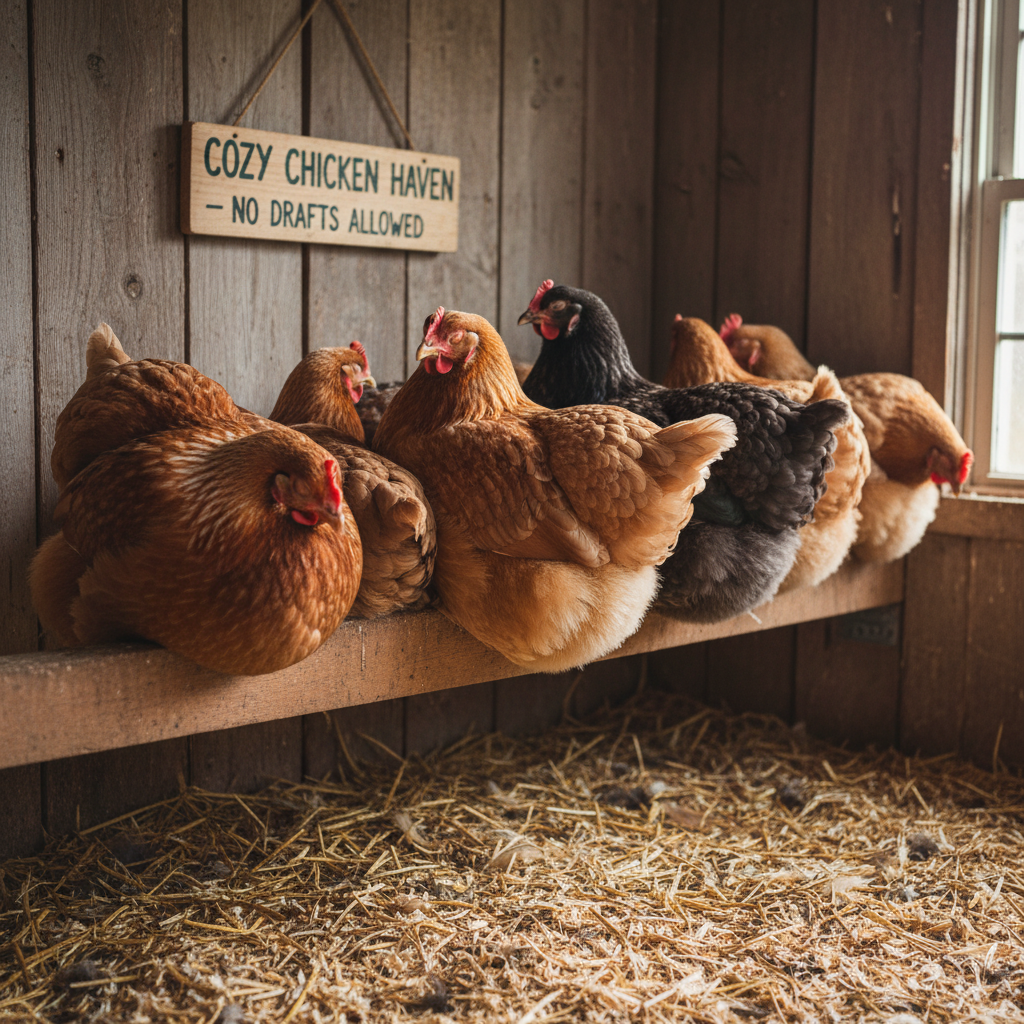
It's essential to differentiate between drafts and ventilation. Drafts are unwanted currents of cold air at the bird's level, which can lead to chilling and stress. Ventilation, however, is the controlled movement of air that removes moisture and regulates temperature without chilling the birds.
Preventing Drafts
- Roost Placement: Ensure roosts are above the level of lower vents to avoid drafts hitting birds.
- Baffle Designs: Implement baffles or other design elements to direct airflow up and out rather than across the birds.
Seasonal Adjustments for Ventilation
Ventilation needs vary with the seasons. In summer, additional ventilation might be necessary to keep temperatures down. In winter, more careful management is required to prevent moisture buildup while retaining heat.
Winter Ventilation Tips
- Adjustable Vents: Use adjustable vents or shutters that you can open or close based on the weather conditions.
- Monitor Humidity: Use a hygrometer to keep an eye on humidity levels, ideally keeping them below 60%.
Common Ventilation Mistakes and How to Avoid Them
Even seasoned chicken keepers can make mistakes when it comes to coop ventilation. Understanding common pitfalls can help you avoid them.
- Too Little Ventilation: Don't underestimate the amount of ventilation needed, especially in winter.
- Misplaced Vents: Ensure vents are positioned to prevent drafts but allow effective air exchange.
- Neglecting Maintenance: Regularly clean vents to prevent dust and cobwebs from blocking airflow.
Frequently Asked Questions
How can I tell if my coop is properly ventilated?
Keep an eye out for signs like a strong ammonia smell, condensation inside the coop, or birds showing signs of respiratory distress. These indicate inadequate ventilation.
Do different chicken breeds need different ventilation?
While ventilation needs are generally similar, some breeds like Australorps or Silkies with dense plumage might need more careful monitoring to prevent overheating in summer.
What's the best way to monitor ammonia levels?
You can purchase ammonia test strips or electronic ammonia detectors to monitor levels in your coop. Keep readings below 25 ppm as recommended by extension.umn.edu.
Can I ventilate too much in winter?
Yes, excessive ventilation can lead to drafts, which can chill your birds. The goal is to allow airflow without causing drafts. Utilize adjustable vents to find the right balance.
Will adding fans help with ventilation?
Fans can help circulate air in large coops, but they should be used cautiously to avoid creating drafts. Ensure they circulate air upwards and out rather than directly towards the birds.
For more insights on keeping your flock healthy, check out our guides on coop size recommendations and roosts and nest boxes.
Got questions or your own tips?
Jump into the community and swap notes with other backyard chicken keepers.
Discuss in the community →Comments
Sign in to join the conversation.