
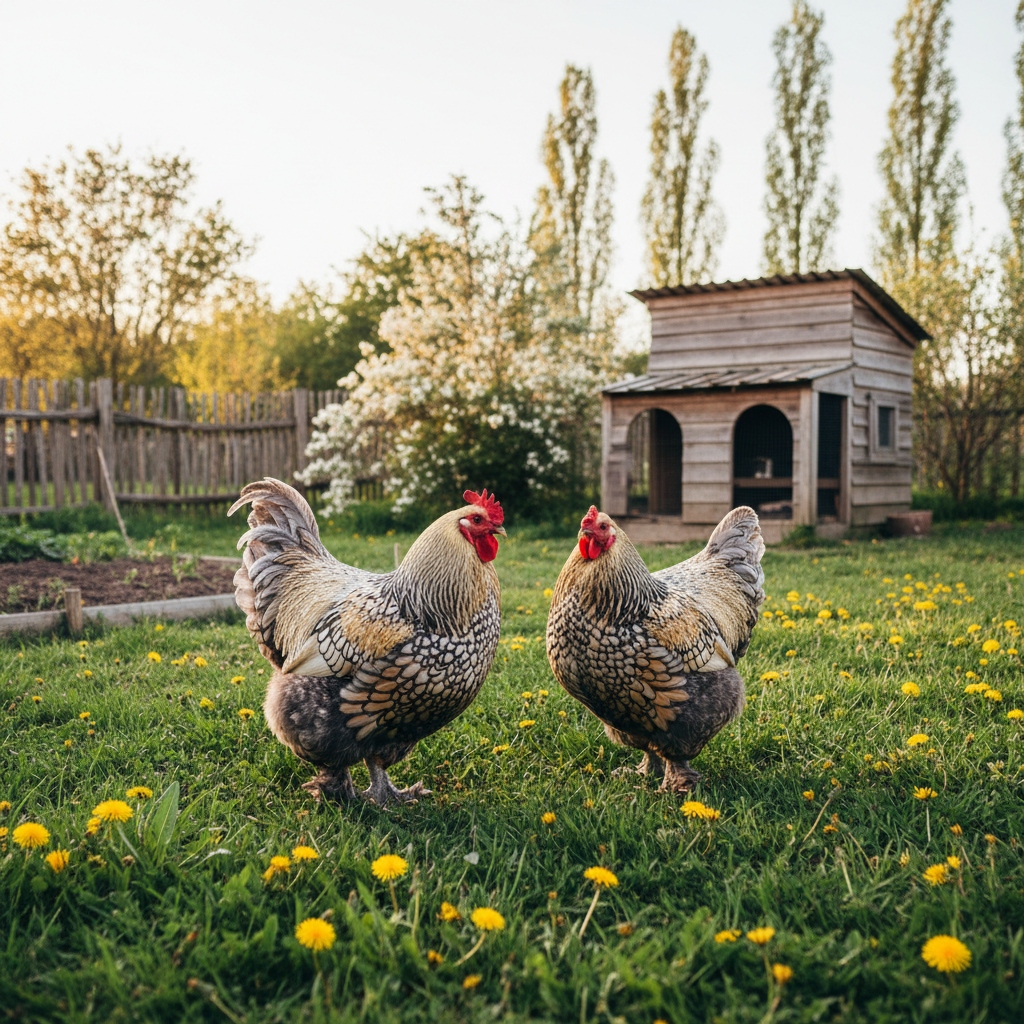
Brahma
By The Coop Team · Updated May 25, 2026
Quick answer
Brahmas are large, gentle chickens that thrive in colder climates. Hens weigh 9 to 10 pounds and produce 150 to 200 medium brown eggs annually. They require a minimum of 4 square feet per bird in the coop to ensure comfort and prevent crowding.
Key facts
- Weight of Brahma Hens
- 9-10 lbs
- Weight of Brahma Roosters
- 10-12 lbs
- Annual Egg Production
- 150-200 eggs
- Minimum Coop Space
- 4 sq ft
Ever considered adding a giant yet gentle chicken breed to your flock? Meet the Brahma, a majestic bird originating from Asia, renowned for its sizeable stature and feathered legs. If you live in a colder climate, Brahmas might just be your perfect backyard companions, continuing to lay eggs through the frosty winter months.
What Makes Brahmas Stand Out?
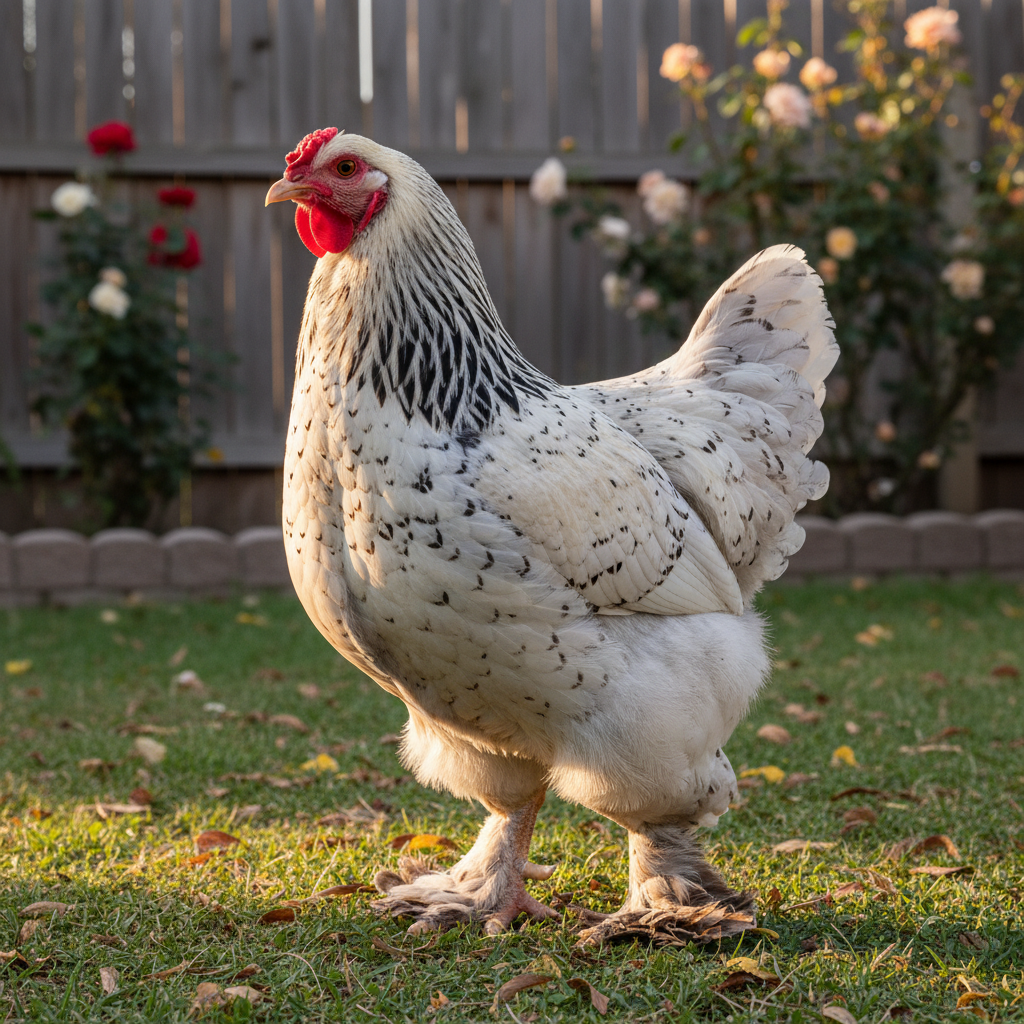
Brahmas are hard to miss. These birds are among the largest chicken breeds, with hens weighing between 9 to 10 pounds and roosters tipping the scales at 10 to 12 pounds. Their feathered legs add to their unique appearance, giving them a regal look that's hard to beat.
- Size: Hens 9-10 lbs, Roosters 10-12 lbs
- Egg Production: 150-200 medium brown eggs annually
- Temperament: Gentle, calm, and friendly
Beyond their size, Brahmas are also known for their calm demeanor. They're often called "gentle giants" for a reason. This makes them ideal for families with children or anyone new to chicken-keeping.
How Do Brahmas Handle the Cold?
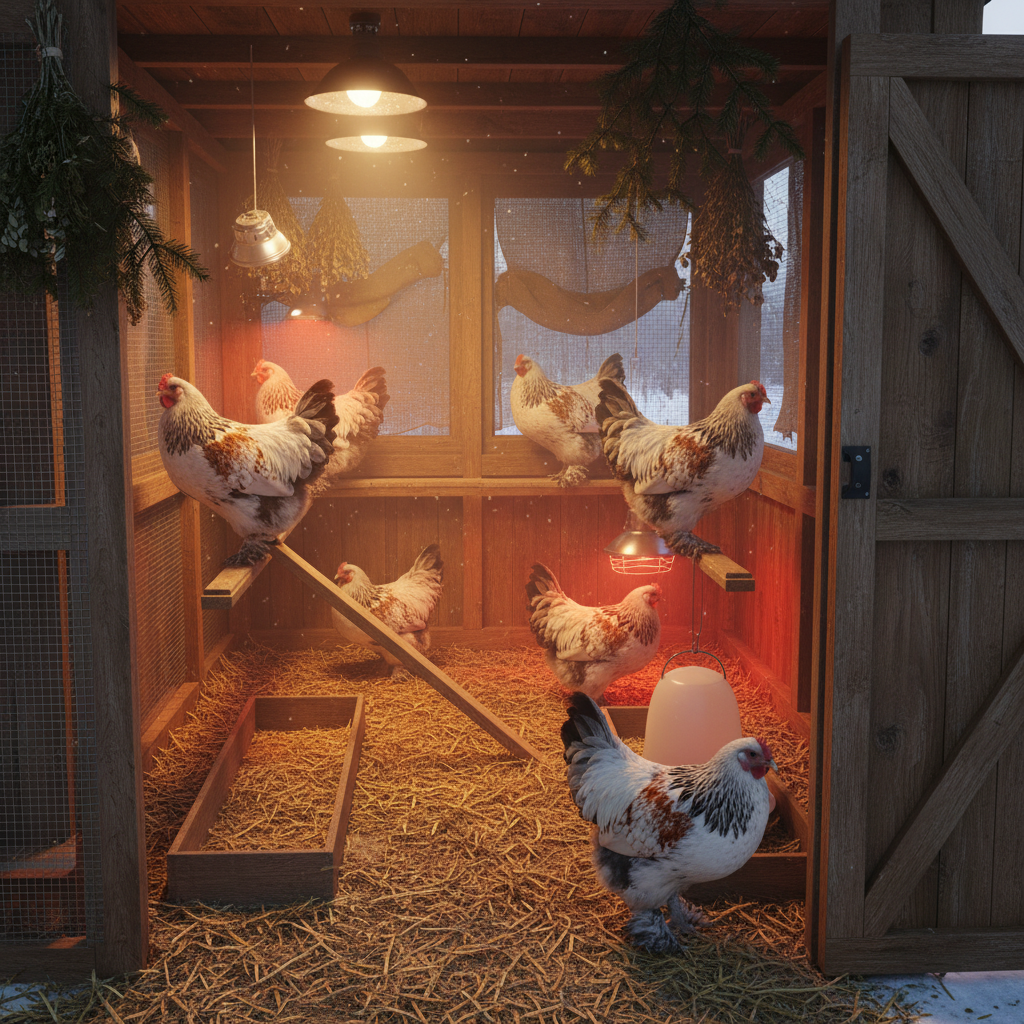
Brahmas are well-suited for cold climates, thanks to their dense plumage and feathered legs that offer extra insulation. However, their feathered feet can become a liability in wet and muddy conditions. Keeping their coop dry is essential to prevent issues like scaly leg mites, which can occur when the feathers retain moisture.
- Winter Hardy: Continue laying throughout winter
- Care Tip: Use straw or wood shavings to keep bedding dry
If you live in a region with heavy snowfall, it's a good idea to have a covered run or a protected area where your Brahmas can roam without getting their feet too wet.
What Should You Know About Egg Production?
Brahmas are not prolific layers like the Leghorn, but they more than make up for it with consistency. Producing 150 to 200 eggs annually, Brahmas continue to lay steadily even when days get shorter. This trait is particularly beneficial if you're looking to have a year-round supply of eggs.
- Egg Size: Medium
- Egg Color: Brown
Are Brahmas Good With Other Chickens?
With their docile nature, Brahmas generally get along well with other breeds. They're not known to be bullies, which makes them a great addition to a mixed flock. However, due to their size, it's important to ensure that your coop has enough space to accommodate these large birds comfortably. For guidance on space requirements, check out our article on Coop Size Per Bird.
- Temperament: Non-aggressive, peaceful
- Space Needs: Require larger coop spaces
What Do Brahmas Eat?
Like any other chicken breed, Brahmas need a balanced diet to thrive. Their larger size means they might consume a bit more feed than smaller breeds. Opt for a high-quality layer feed when they're in the egg-laying cycle. Brands like Purina or Kalmbach offer excellent options.
- Feed: High-quality layer feed
- Supplements: Grit for digestion and oyster shell for calcium
It's essential to provide grit, especially if your birds have access to treats or free-range. For detailed dietary advice, see our guide on Feed by Life Stage.
Frequently Asked Questions
How do Brahmas handle heat?
Brahmas are more accustomed to cooler climates due to their thick feathers. In hotter weather, make sure they have plenty of shade and fresh water. Ventilation in the coop is crucial to prevent overheating. For tips on keeping your coop cool, check out our Ventilation guide.
Are Brahmas prone to any health issues?
Brahmas, like any chickens, can be susceptible to mites, lice, and respiratory diseases. Regular health checks and maintaining a clean, dry environment will significantly reduce these risks. Learn more about preventing mite infestations in our Mites and Lice article.
How much space do Brahmas need?
Due to their size, Brahmas need more space than smaller breeds. A minimum of 4 square feet per bird inside the coop is recommended but more is always better.
Can Brahmas fly?
Brahmas are not great flyers due to their weight. A low fence is typically sufficient to contain them, but ensure your yard is safe from predators.
Do Brahmas need any special care?
Special care involves managing their feathered feet. Keeping them dry and free from mud will prevent feather and skin issues.
What Are Some Common Challenges?
Despite their many advantages, Brahmas do come with their own set of challenges. Their feathered feet require extra attention to cleanliness, especially in wet conditions. Additionally, their large size can lead to coop crowding if not properly managed. Familiarize yourself with predator-proofing techniques here to protect your sizable investment.
When considering Brahmas, it's all about balancing their impressive size and gentle nature with the specific care they require. If you can manage their needs, Brahmas will reward you with a steady supply of eggs and a delightful presence in your backyard.
Got questions or your own tips?
Jump into the community and swap notes with other backyard chicken keepers.
Discuss in the community →Comments
Sign in to join the conversation.