
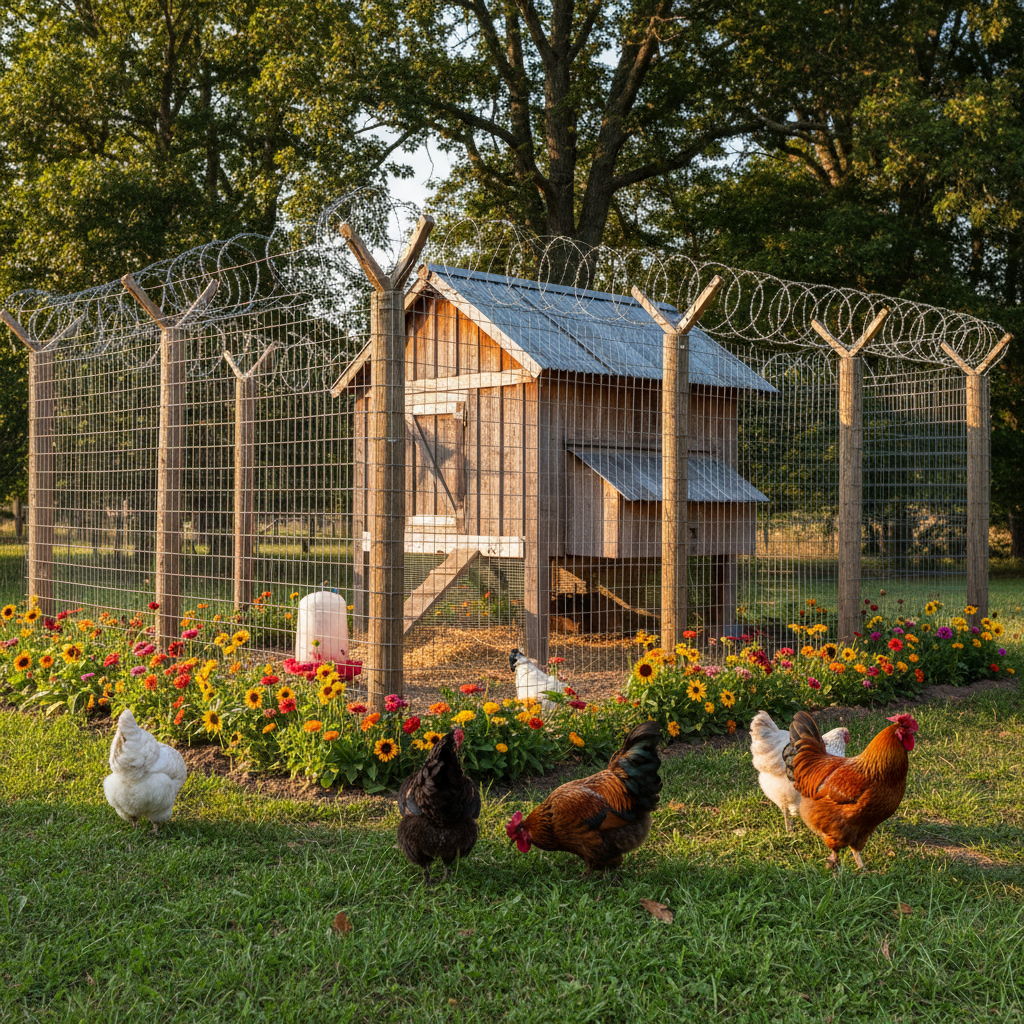
Predator-Proofing Basics
By The Coop Team · Updated May 25, 2026
Quick answer
To predator-proof your chicken coop, use 1/2 inch hardware cloth for openings and bury it 12 inches deep. Opt for treated lumber for structure and secure doors with raccoon-proof latches. Consider adding motion-activated lights or a secure fenced area to enhance safety against aerial predators.
Key facts
- Hardware cloth depth
- 12 inches
- Recommended wire gauge
- 1/2 inch
- Supervision suggestion
- supervised free-ranging
- Lumber types
- treated lumber (2x4s or 2x6s)
- Automatic door feature
- closes at dusk
Keeping chickens is a rewarding venture, but protecting them from predators is critical to their safety and your peace of mind. Common threats include raccoons, foxes, coyotes, hawks, owls, weasels, snakes, dogs, and rats. With some strategic planning and the right materials, you can build a fortress that keeps these predators out and your feathered friends safe.
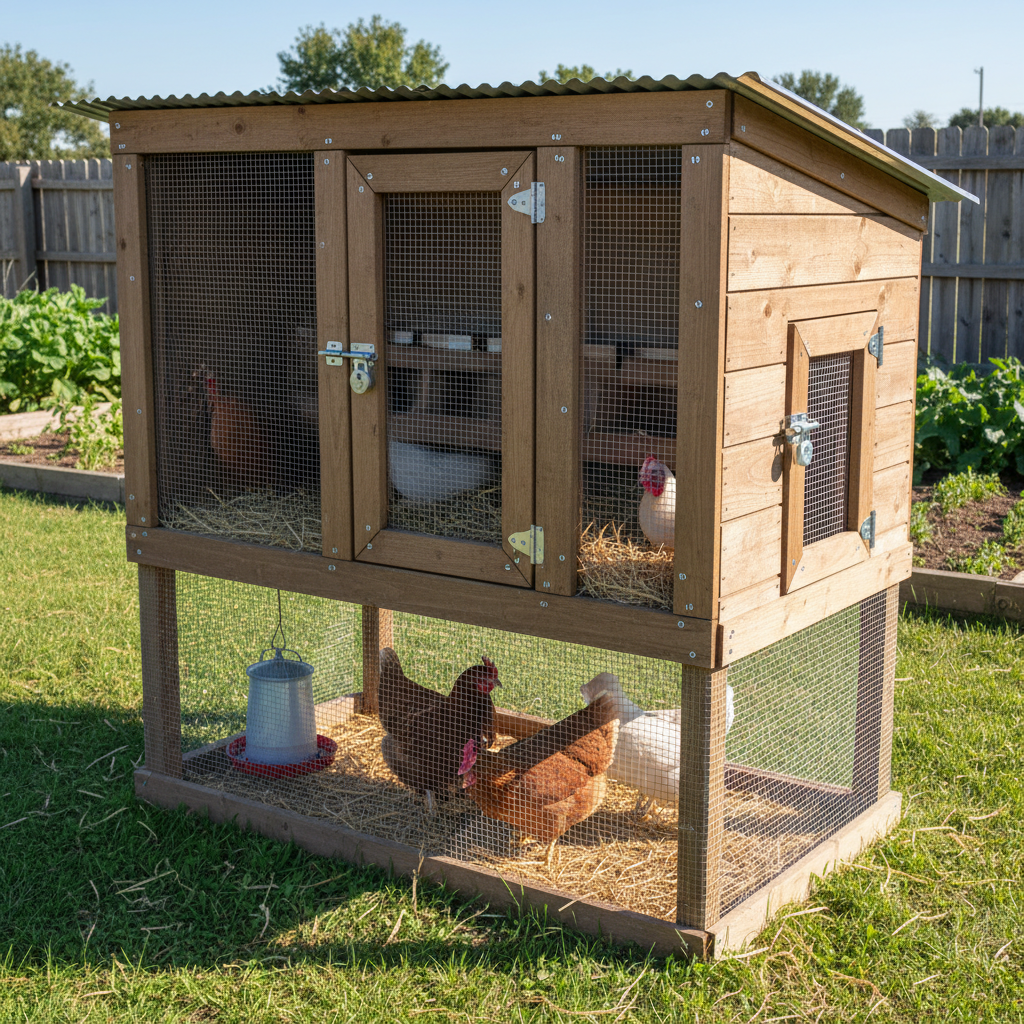
What Materials Should You Use?
When it comes to predator-proofing, not all materials are created equal. While chicken wire may seem sufficient, it only keeps chickens in, not predators out. Here are the materials that should top your list:
- Hardware Cloth: Use 1/2 inch hardware cloth for all coop openings, including ventilation areas. It's much sturdier than chicken wire and can withstand determined predators.
- Lumber: Opt for treated lumber (like 2x4s or 2x6s) for the coop structure. A robust frame will deter larger predators like foxes and dogs.
- Concrete and Gravel: These materials are ideal for securing the base of your coop. Adding a layer of gravel can deter digging pests.
How to Fortify the Coop Perimeter?
Predators often strike at ground level, aiming to dig under your defenses. A well-fortified perimeter is essential.
- Burying the Wire: Bury hardware cloth 12 inches deep or extend it in an L-shape 18 inches outward along the perimeter to block diggers.
- Concrete Footers: Pour a concrete footer around the coop’s base for ultimate protection.
Are Your Coop Doors Secure?
Coop doors are a common point of entry for crafty critters. Here’s how to reinforce them:
- Raccoon-Proof Latches: Use spring-loaded or carabiner-style latches. Raccoons have dexterous paws and can open simple hooks and slide bolts.
- Automatic Doors: An automatic door that closes at dusk can be the single best upgrade. It ensures your flock is securely tucked in without fail. Brands like ChickenGuard offer reliable options.
How to Protect Against Aerial Predators?
Hawks and owls pose a significant risk, especially if your chickens free-range. Aerial Predator Protection strategies are crucial here.
- Netting: Cover the run with bird netting or use wire mesh to prevent aerial attacks.
- Reflective Tape and Decoys: Hang reflective tape or install owl decoys around the yard to deter birds of prey.
Should You Use Motion Sensors or Lights?
Technology can play a role in your predator defense strategy:
- Motion-Activated Lights: Sudden lights can scare off many nocturnal predators. Solar options are available to cut down on electricity use.
- Cameras: Trail cameras are great for monitoring predator activity. This helps in identifying threats and tailoring your defenses.
How to Manage Free-Range Chickens?
If you let your chickens roam, they’re more vulnerable. Consider these tips to reduce risk:
- Supervised Free-Ranging: Only let them out when you or a trusty dog can supervise.
- Secure Fencing: Create a secure, grazable fenced area with high-quality fencing.
- Shelter Spots: Provide ample hiding spots like bushes or pallets for your chickens to flee and hide from danger.
Frequently Asked Questions
What’s the Best Way to Deter Snakes?
Snakes can slip through tiny gaps. Seal any holes larger than a quarter inch and keep the area around the coop clean of debris and tall grass to eliminate hiding spots. Learn more about snake deterrents.
How Often Should I Check My Coop's Security?
Regularly inspect your coop's defenses at least once a month. Focus on latches, wire integrity, and any signs of digging or wear. Frequent checks can prevent small issues from becoming big problems.
Can I Use Electric Fencing?
Yes, electric fencing can be effective around the perimeter. It’s a deterrent for larger predators, but ensure it’s properly installed to prevent accidental harm to the chickens. Electric fencing tips.
How Do I Know If a Predator Is Targeting My Coop?
Look for tracks, scat, or signs of forced entry. Consult our guide on Identifying the Predator for more help.
What’s the Best Breed for Predator Awareness?
Some breeds, like the Australorp and Rhode Island Red, are known to be more alert. They could alert the flock sooner to danger.
What Are Some Other Effective Deterrents?
Guard animals such as dogs or even llamas can be surprisingly effective at deterring predators. Just ensure they're trained to coexist with your chickens. Guard animal strategies.
Securing your flock against predators is an ongoing task that requires vigilance and adaptability. With the right setup and materials, you can ensure your chickens thrive in a safe environment.
Got questions or your own tips?
Jump into the community and swap notes with other backyard chicken keepers.
Discuss in the community →Comments
Sign in to join the conversation.