

Identifying the Predator
By The Coop Team · Updated May 25, 2026
Quick answer
Identifying predators that threaten your backyard chickens involves recognizing specific signs. For example, if the head and crop are eaten but the body is left, suspect a raccoon or owl. Securing coop doors with heavy-duty latches and burying fencing at least 1 foot underground can help protect your flock.
Key facts
- Fencing depth
- 1 foot
- Window cloth gauge
- 1/2 inch
- Camera height
- 3 to 4 feet
- Egg collection frequency
- daily
- Predation spikes
- 2 times a year
Ever step into your coop, only to find a scene that looks straight out of a mystery novel? Feathers strewn about, missing birds, or even just an eerie silence can leave you scratching your head and wondering what predator might have paid a visit. If you've ever felt like a detective trying to piece together clues, you're not alone. Let's unravel this mystery and identify the most common culprits terrorizing our backyard flocks.
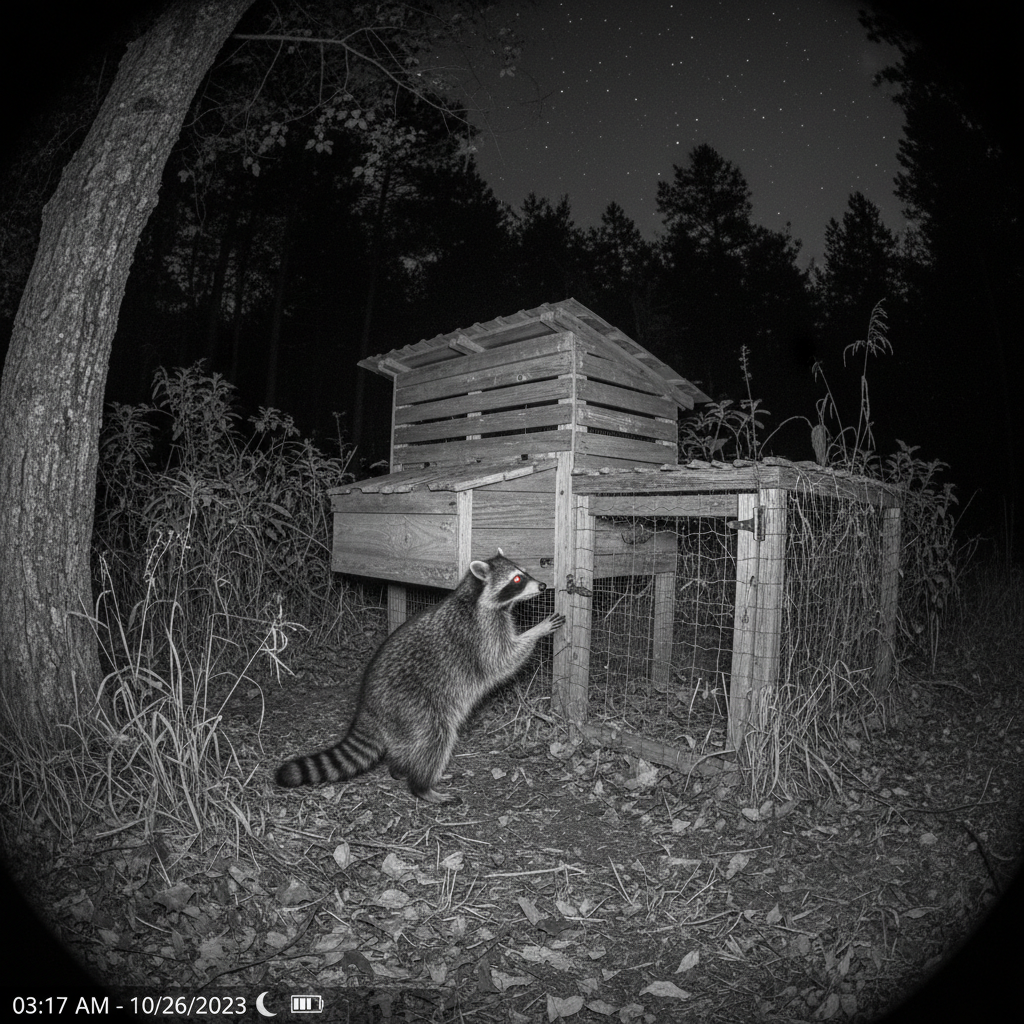
What Did the Predator Leave Behind?
Recognizing the signs left behind is the first step in nailing down the predator. Each animal has its own style of attack and preference, leaving particular evidence.
- Head and crop eaten, body left: This unappetizing scenario often indicates a raccoon or owl. Both are known to eat the head and crop, leaving the rest.
- Whole bird missing, feathers in a trail: A classic sign that a fox or coyote has struck. These predators typically carry off their prey to a safer location.
- Multiple birds killed but not eaten: When you find a scene of carnage with bodies untouched, suspect a weasel, mink, or dog. They often kill for sport.
- Eggs missing, no shells left: Snakes and rats are your prime suspects. They can sneak in and out, leaving little behind.
- Bird found dead with no marks: Hawks may strike a bird, killing it instantly. It’s a clean attack with no mess.
How to Set Up a Trail Camera
If you’re serious about catching the culprit, a trail camera can be your best friend. Here’s how to get started:
- Placement: Position the camera at a height of about 3-4 feet, pointing directly at the entrance of your coop or a popular predator path.
- Settings: Opt for a model with night vision capabilities and a motion sensor. These features ensure you capture both day and night activity.
- Check Regularly: Review footage every few days. It’s not just about catching predators but learning their patterns.
Reinforcing Your Chicken Coop
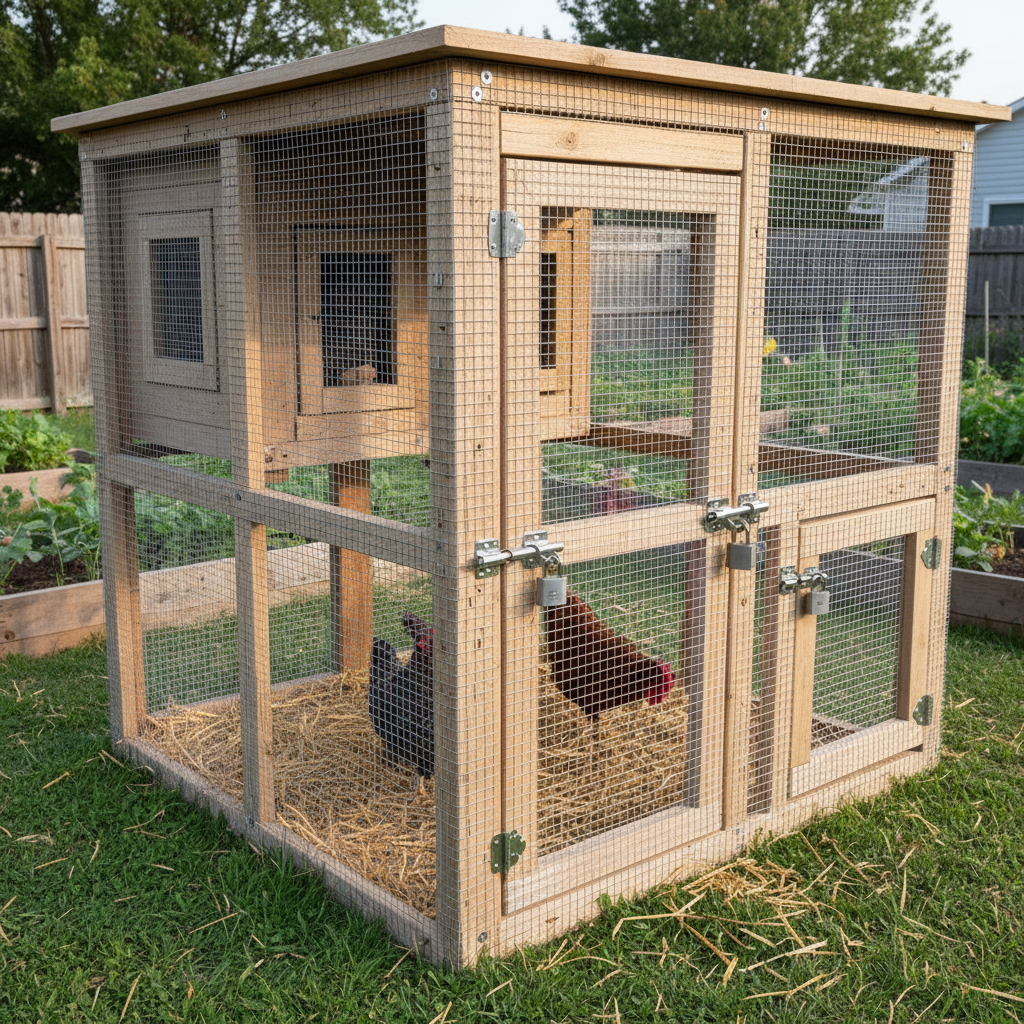
Once you’ve identified the predator, it’s time to fortify defenses. Here’s how:
Securing Doors and Windows
- Use heavy-duty latches on all doors. Raccoons are crafty and can open simple ones.
- Install hardware cloth (1/2 inch gauge) over windows and ventilation openings.
Strengthening the Run
- Bury fencing at least 1 foot underground to deter digging predators like foxes and coyotes.
- Consider electric fencing for additional security.
For more thorough protection methods, check out our guide on Predator-Proofing Basics.
Choosing the Right Chicken Breeds
Believe it or not, some breeds are more savvy when it comes to avoiding predators. You might want to consider these breeds known for their awareness and resilience:
- Buff Orpingtons: Known for their docility but also their ability to blend in with surrounding foliage.
- Plymouth Rocks: Not only are they easy to keep, but their alert nature can give them an edge.
- Australorps: They’re hardy birds that can handle a bit of rough and tumble.
Understanding Predator Behavior
Gaining insight into predator habits can help tailor your defenses.
Nocturnal vs. Diurnal
- Raccoons, opossums, and owls are nocturnal. Secure your coop by dusk.
- Hawks and eagles hunt during the day. Ensure your chickens have places to hide or cover.
Seasonal Patterns
- Predation often spikes in spring and fall. In spring, predators feed young, and in fall, they prepare for winter.
Frequently Asked Questions
How can I tell if it's a hawk or an owl?
Hawks hunt during the day, while owls are night hunters. If your chickens are attacked during daylight and left with no apparent marks, suspect a hawk.
What can I do if I'm dealing with a snake?
Snakes are drawn to eggs. Ensure your coop has no gaps larger than 1/4 inch, and collect eggs frequently.
What if I can't afford a trail camera?
Look for tracks or scat (droppings) around the coop for clues. You may also find fur caught on wire or near entry points.
Are there any tech solutions apart from cameras?
Motion-activated lights or alarms can deter some predators. These might be worth a try if a camera is out of reach.
How important is coop ventilation in deterring predators?
While ventilation is crucial for chicken health, it doesn't deter predators but can be an entry point if not properly secured. Learn more about coop ventilation options.
By recognizing the signs and taking proactive steps, you can transform from a baffled chicken keeper into a savvy predator detective, ensuring your flock stays safe and sound.
Got questions or your own tips?
Jump into the community and swap notes with other backyard chicken keepers.
Discuss in the community →Comments
Sign in to join the conversation.