Feed by Life Stage
By The Coop Team · Updated May 25, 2026
Quick answer
Raising chickens requires feeding by life stage. Chicks need starter feed with 20-22% protein until 8 weeks old, followed by grower feed with 16-18% protein until 18 weeks. Mature laying hens require layer feed with 16% protein and 3.5-4% calcium for eggshell production.
Key facts
- Chick Starter Protein
- 20-22%
- Grower Feed Protein
- 16-18%
- Layer Feed Protein
- 16%
- Calcium Content in Layer Feed
- 3.5-4%
- Average Hen Daily Feed
- 1/4 pound
If you're new to raising chickens or just looking to refine your flock's diet, feeding by life stage is crucial. It's not just about keeping your birds full, but ensuring they thrive at each stage of their development. From tiny chicks to mature layers, here's how to feed your flock right.
What Do Chicks Need in Their Starter Feed?
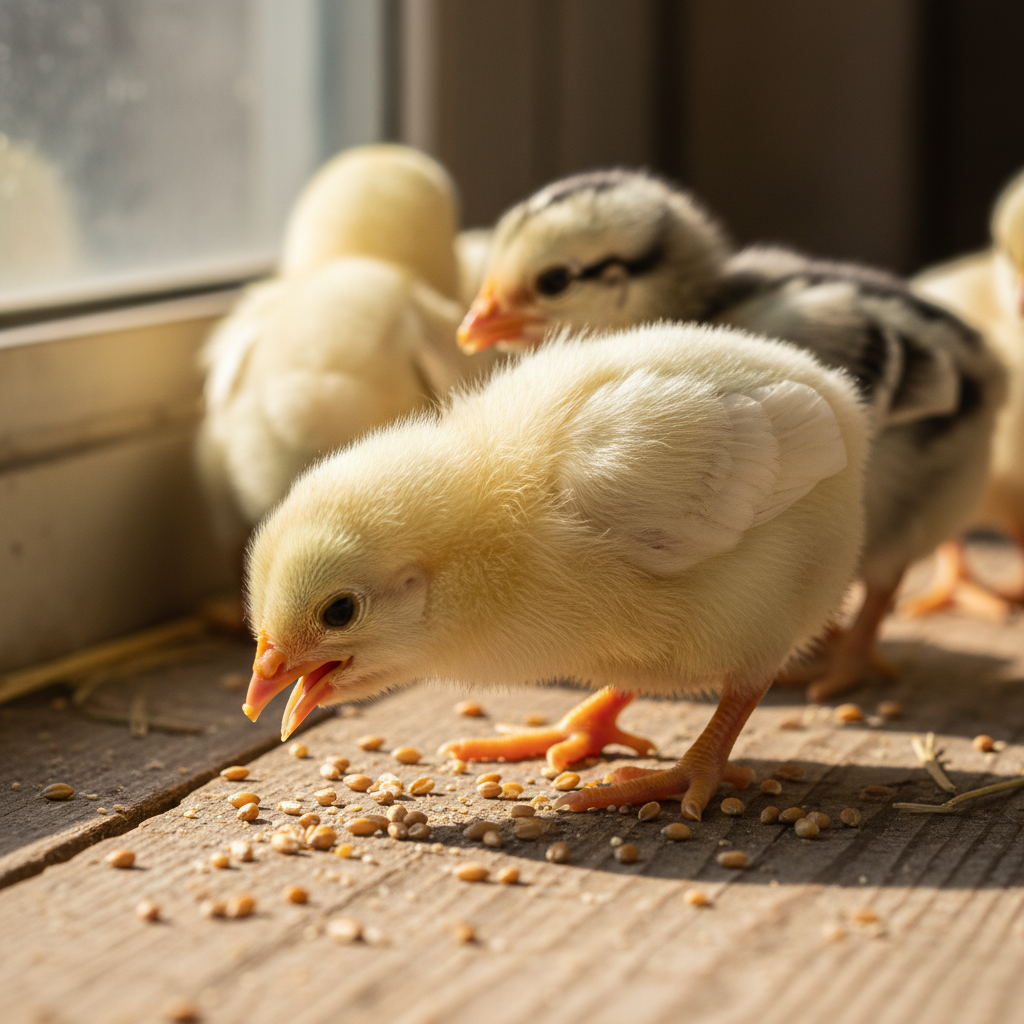
When your fluffy little chicks first hatch, they need a carefully balanced diet to support rapid growth. A chick starter feed usually contains 20-22% protein, which is essential for building strong muscles and feathers. Most starter feeds are medicated with amprolium, a coccidiostat that helps prevent coccidiosis, a common and potentially deadly parasitic disease. You can read more about coccidiosis and how to recognize its symptoms.
- Protein Content: 20-22%
- Medicated with: Amprolium
Feeding chicks the right starter feed ensures they get a solid start. It's generally recommended to keep them on this diet until they reach about 8 weeks old.
Transitioning to Grower Feed for Pullets
Once your chicks hit that 8-week milestone, it's time to switch them to grower feed. This stage is crucial for their continued development as they grow into pullets (young hens not yet laying eggs). Grower feed typically contains 16-18% protein and is not medicated. The lower protein content compared to starter feed helps manage growth at a more moderated pace, which is healthier for developing birds.
- Protein Content: 16-18%
- Unmedicated
This feed will support your birds until they begin to lay eggs, usually around 18 weeks. At this point, it's a good idea to learn about the specific needs of different breeds, as they can vary.
What to Feed Mature Laying Hens?
As your hens begin laying, their nutritional needs change again. Layer feed is formulated with 16% protein and a higher calcium content (3.5-4%) to support eggshell production. It's important not to feed layer feed to chicks, roosters, or hens not actively laying, as the excess calcium can damage their kidneys.
- Protein Content: 16%
- Calcium Content: 3.5-4%
For those hens that are laying, the additional calcium is essential. If your hens need a calcium boost, provide free-choice oyster shells in a separate dish. This allows each bird to consume the amount it needs without affecting non-layers in mixed flocks. Learn more about calcium needs in our grit and oyster shell guide.
How Much Should I Feed My Chickens?
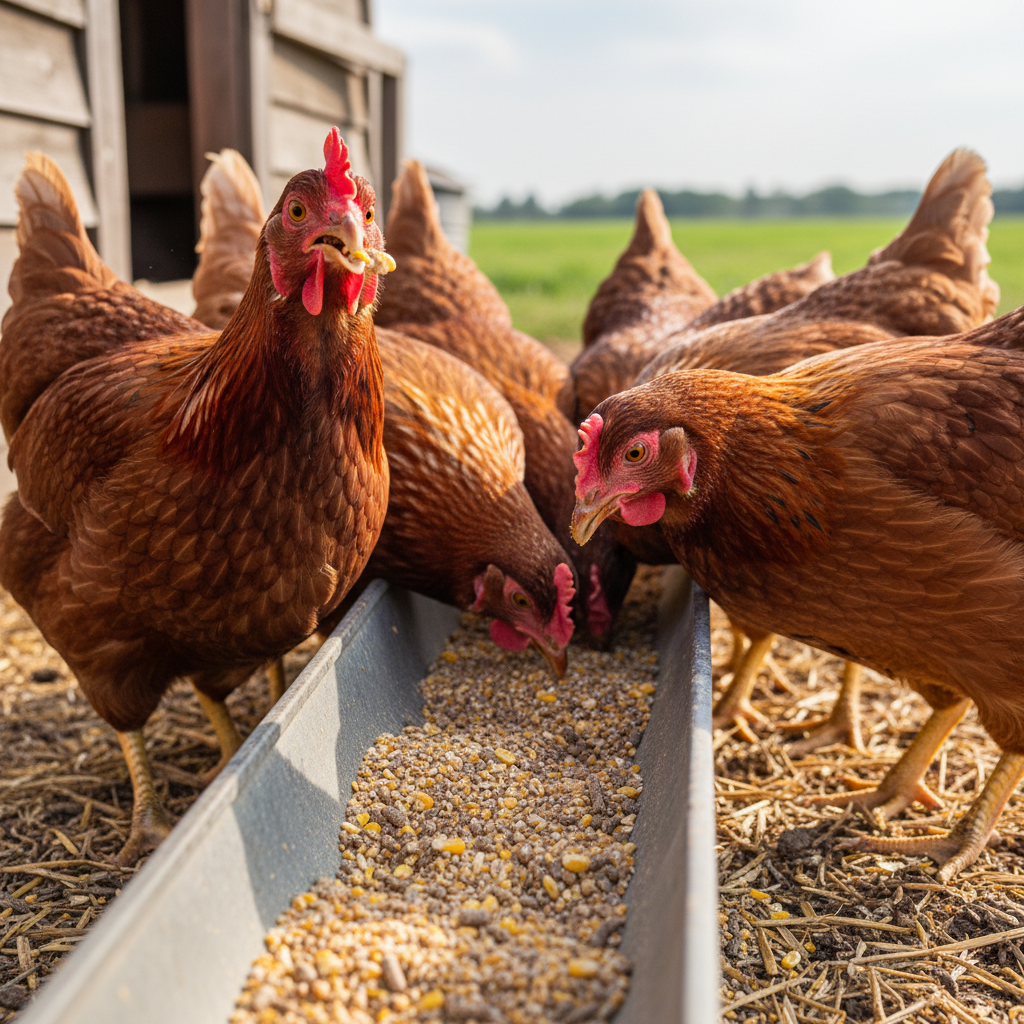
The average hen eats about 1/4 pound of feed per day, but this can vary based on the breed, weather, and their activity level. For example, Australorps and Leghorns might have different needs due to their size and egg production rates. It’s always a good idea to adjust based on your flock's behavior and needs.
Can I Offer Treats and Scraps?
While it's okay to give your chickens some treats, remember that these should only make up about 10% of their diet. Stick to healthy options like fruits, vegetables, and grains. Treats and scraps can be a great source of entertainment and enrichment for your birds, but be mindful of what you’re tossing into the coop. You can check our treats and kitchen scraps guide for safe options.
Preventing Nutritional Deficiencies and Health Issues
Ensuring your chickens receive the correct feed at each life stage helps prevent nutritional deficiencies and associated health issues. Nutritional imbalances can lead to poor feather quality, weak eggshells, or more serious health problems like egg binding. Monitoring their feed intake and adjusting as needed based on the flock's performance can help keep them in peak condition. The Merck Veterinary Manual is a solid resource for further information on poultry nutrition and health issues.
Frequently Asked Questions
How do I know if my feed is medicated?
It's usually labeled right on the bag. Look for mentions of amprolium or similar ingredients listed on the packaging.
Can roosters eat layer feed?
No, roosters should not eat layer feed because the high calcium can damage their kidneys over time. It's better to feed them a grower or all-flock feed.
What if I run out of chick starter?
If you find yourself out of chick starter, you can temporarily substitute with a grower feed, though it's not ideal. Make sure to switch back as soon as possible to ensure your chicks get the protein they need.
Can I mix feeds for different life stages?
Mixing is not recommended since each feed is formulated to meet specific nutritional needs. The best practice is to feed each life stage separately to ensure optimal nutrition.
Should I change feed brands often?
Consistency is key. Frequent changes can upset their digestive systems. If you must switch, do so gradually by mixing new feed with the old over several days.
For more details on breeds and how they might affect feeding, check out our guides on Plymouth Rock and Silkie.
Got questions or your own tips?
Jump into the community and swap notes with other backyard chicken keepers.
Discuss in the community →Comments
Sign in to join the conversation.