
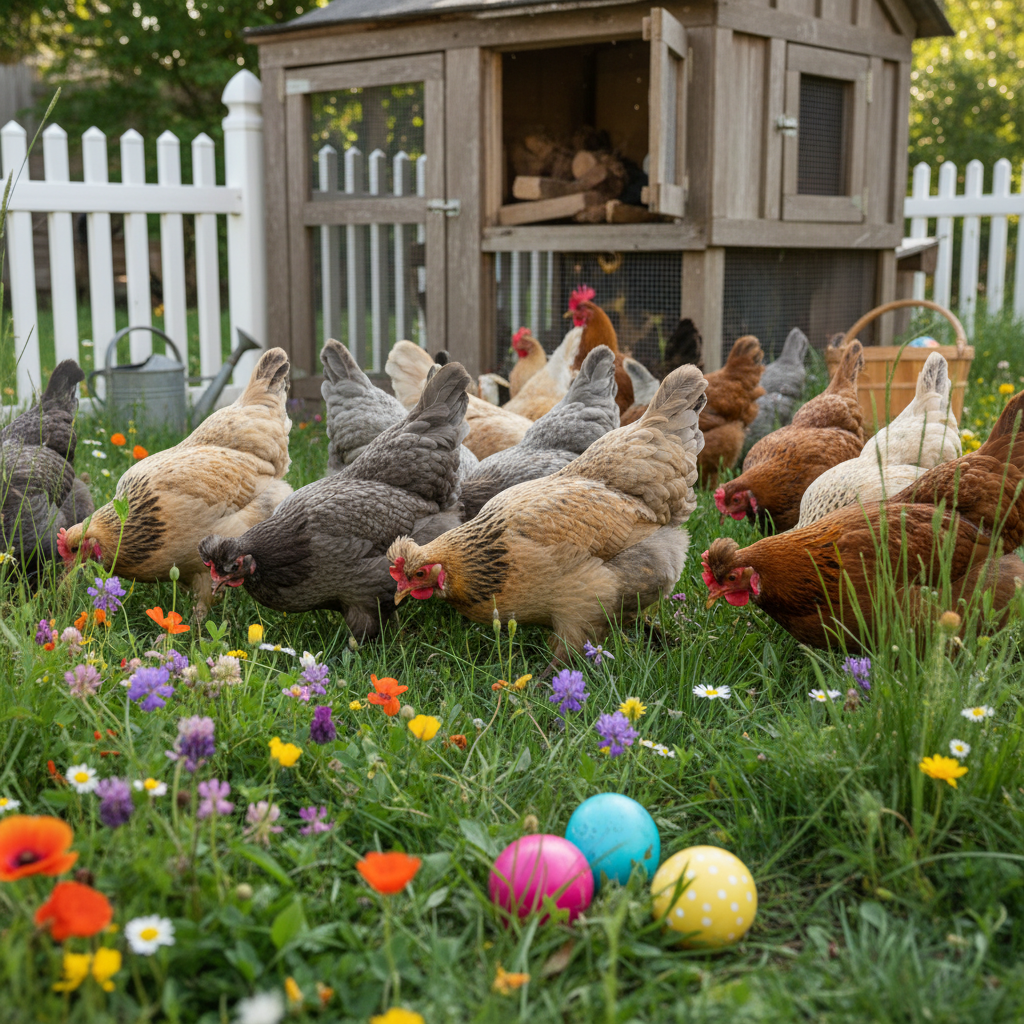
Easter Egger
By The Coop Team · Updated May 25, 2026
Quick answer
Easter Eggers are unique chickens known for laying vibrant eggs in colors like blue, green, and pink. They require at least 3 to 4 square feet of indoor space in their coop and lay approximately 200 to 280 eggs annually, making them suitable for both novice and experienced chicken keepers.
Key facts
- Annual egg production
- 200 to 280 eggs
- Indoor space requirement
- 3 to 4 sq ft
- Lifespan of egg color consistency
- consistent throughout laying life
- Light exposure for optimal laying
- 14 to 16 hours
- Average weight
- 4 to 5 pounds
If you're looking for a chicken breed that brings a splash of color to your egg basket, then Easter Eggers might be the perfect choice. Known for their vibrant eggs in shades of blue, green, pink, and even olive, Easter Eggers are a delightful addition to any backyard flock. They're not an officially recognized breed but are typically crosses of Ameraucana or Araucana chickens. What they lack in pedigree, they certainly make up for in charm and productivity, laying between 200 to 280 eggs annually. Let's explore what makes Easter Eggers such a fantastic choice for both novice and seasoned chicken keepers.
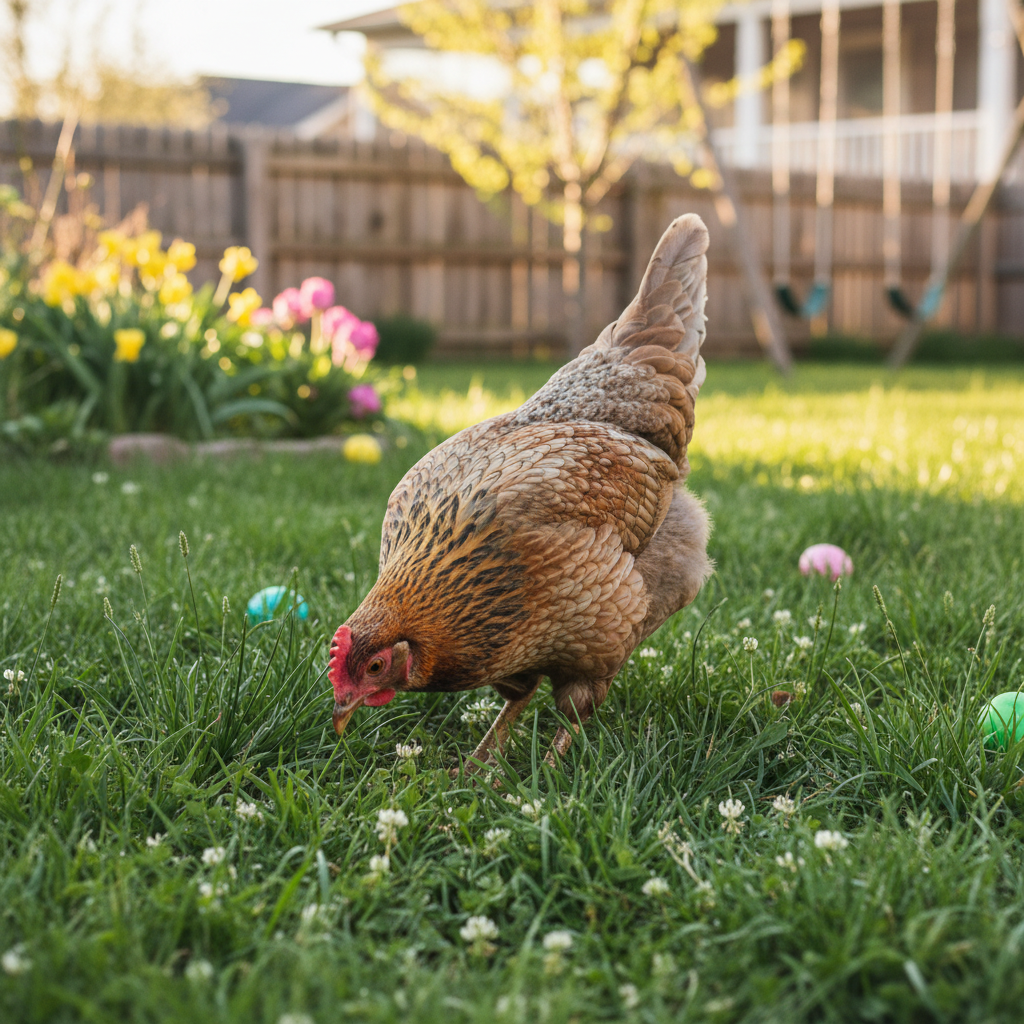
What Exactly Is an Easter Egger?
Easter Eggers aren't a standardized breed but rather a type of chicken with the genetic ability to lay blue or green eggs. This trait usually hails from the Ameraucana or Araucana lineage. Due to their mixed heritage, Easter Eggers display a wide variety of appearances, including an array of feather colors and patterns. This makes each bird quite unique, akin to a snowflake in the chicken world.
Origins and Background
The Easter Egger's claim to fame lies in its colorful eggs, which result from a genetic trait carried over from its Ameraucana or Araucana ancestry. The gene is known as the oocyan gene and is responsible for the blue hue of the eggshells. When these birds are bred with other chicken breeds, the resulting eggs can take on additional colors, such as green (when a brown-egg layer is in the mix).
How to Care for Easter Eggers
Caring for Easter Eggers is quite similar to tending other chicken breeds, but let's break it down further.
Coop Requirements
Easter Eggers are medium-sized birds, typically weighing between 4 to 5 pounds, so they don't require as much space as some larger breeds. However, they do appreciate a comfortable and well-ventilated coop. Each bird should have at least 3-4 square feet of indoor space to prevent overcrowding (more on coop size). Nesting boxes should be cozy and private, as they like a bit of seclusion when laying their colorful eggs.
Feeding Your Easter Eggers
Providing a balanced diet is crucial for maintaining the health and productivity of your Easter Eggers. A high-quality layer feed, such as Purina or Kalmbach, will meet their basic nutritional needs. Supplementing with oyster shell provides essential calcium for strong eggshells (learn more about grit and oyster shell).
Treats and Supplements
Easter Eggers enjoy occasional treats like fruits, vegetables, and grains. However, moderation is key, as too many treats can upset their nutritional balance. A handful of fresh greens or some mealworms can be a delightful addition to their diet (explore more about treats).
Health Concerns and Tips
Easter Eggers are generally hardy and adapt well to various climates. However, like all chickens, they can be susceptible to common poultry ailments.
Common Health Issues
- Mites and Lice: Regular inspections and dust baths can help prevent these pesky parasites (more on mites and lice).
- Respiratory Diseases: Ensure the coop has proper ventilation to reduce the risk of respiratory issues (understand respiratory diseases better).
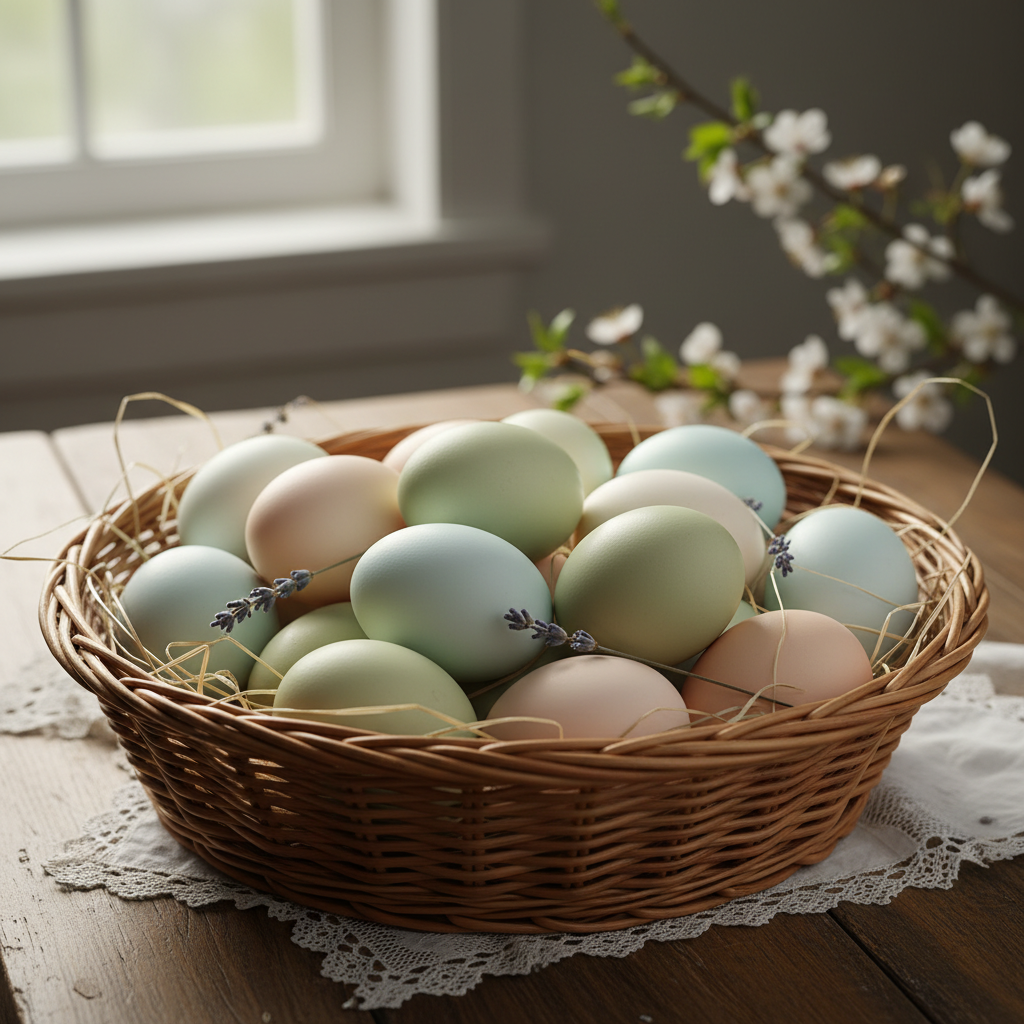
Egg Production and Colors
One of the most exciting aspects of raising Easter Eggers is the variety of egg colors. While not every bird will lay every color, the spectrum can include shades of blue, green, olive, and even pink. Each hen typically maintains a consistent egg color throughout her laying life.
Increasing Egg Laying
To maximize egg production, ensure your Easter Eggers have a consistent light source, especially during the shorter days of winter. At least 14-16 hours of light per day can help maintain laying frequency.
Frequently Asked Questions
What makes Easter Egger eggs different?
Easter Egger eggs are known for their unique colors due to the oocyan gene, which adds a blue or green tint to the eggshell.
How can I tell if my chicken is an Easter Egger?
Easter Eggers often have a mixed and varied appearance due to their crossbred nature. If your chicken lays colored eggs and has mixed ancestry, it is likely an Easter Egger.
Are Easter Eggers good for beginners?
Yes, Easter Eggers are friendly, hardy, and adapt well to different environments, making them a great choice for first-time chicken keepers.
How do Easter Eggers handle cold weather?
Easter Eggers are quite hardy and usually do well in colder climates. Ensure their coop is well-insulated and protected from drafts to keep them comfortable during winter.
Do Easter Eggers get along with other chicken breeds?
Generally, Easter Eggers are friendly and can coexist with other breeds like Silkies or Leghorns, given enough space and resources.
Got questions or your own tips?
Jump into the community and swap notes with other backyard chicken keepers.
Discuss in the community →Comments
Sign in to join the conversation.