

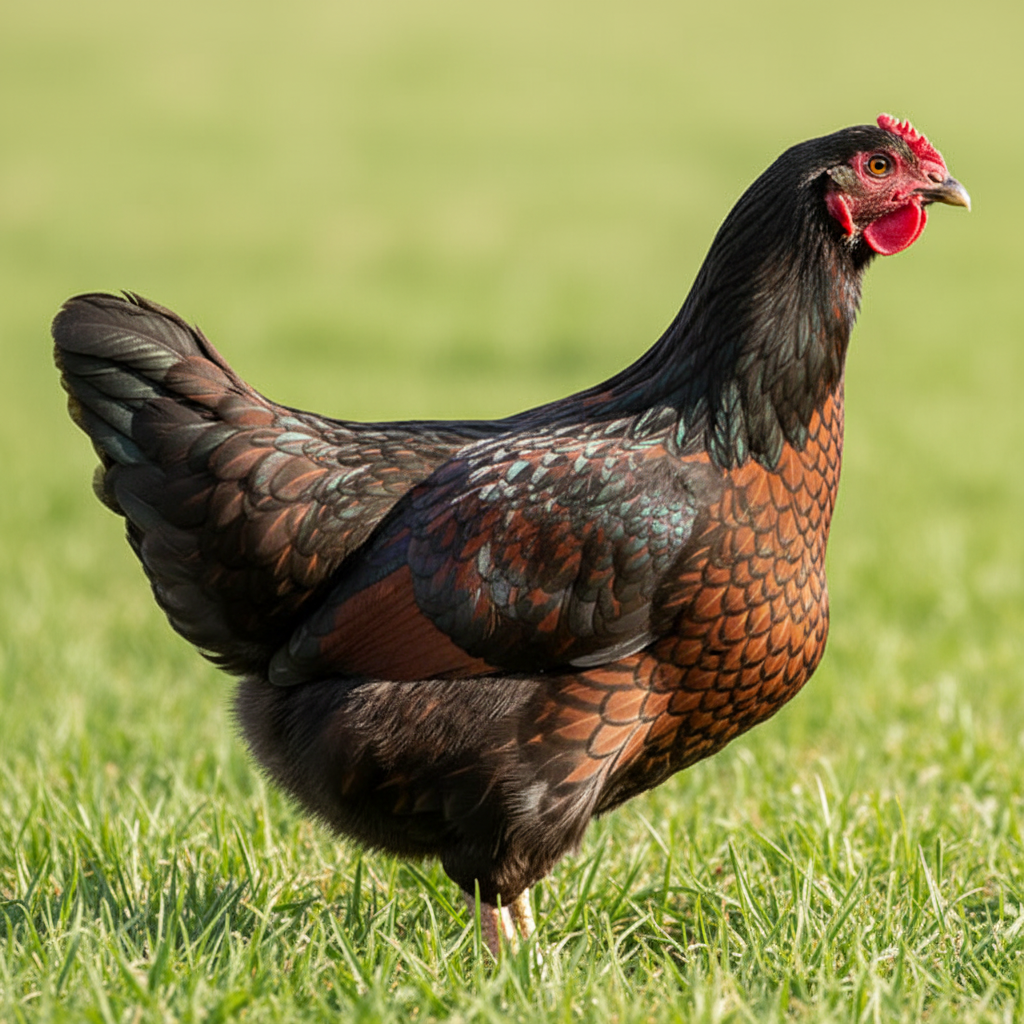
Cornish
Also known as Indian Game
Also known as: Indian Game
Is the Cornish right for you? Take the Breed Matcher →About the Cornish
Cornish chickens are stout and muscular with broad bodies and a short back, making them ideal for meat production. They have a distinctive large breast and strong legs, contributing to their rapid weight gain. Generally, they have a calm temperament but can be less active due to their weight. Their efficiency in converting feed to meat sets them apart from other breeds.
History
The Cornish breed originated in England and was developed in the 19th century for meat production. Its lineage includes several breeds, contributing to its robust physique. Cornish chickens gained popularity in the United States in the 20th century, particularly in commercial poultry farming.
Care tips
Cornish require adequate space to prevent health issues related to their weight, as they can be prone to leg problems. They are less active than other breeds, so ensuring a clean and dry living area is vital. While not known for being broody, they can still benefit from appropriate nutrition to support their growth rate.
Color varieties
Fun facts
- Cornish chickens grow rapidly, reaching market weight in about 6-8 weeks.
- Their substantial breast and thighs make them a preferred choice for broilers.
- The breed is recognized for its hardiness and adaptability to various environments.
- Cornish were crossed with other breeds to create popular broiler hybrids used today.
What keeping Cornish chickens is like
The Cornish is a heavy, broad, muscular breed from Cornwall in England, where it was known as Indian Game. It was built for meat, not eggs, and it looks like it. A good Cornish has a wide chest, thick legs set far apart and tight, hard feathering.
It is important to separate the heritage Cornish from the Cornish Cross broiler. The Cornish Cross is a fast-growing commercial meat hybrid that reaches butcher weight in weeks and is not meant to live long. A heritage Cornish grows much more slowly, lives a normal chicken life and can breed naturally, though not always easily.
Temperament and day to day care
Heritage Cornish can be calm with people but some lines are assertive with other chickens, which reflects their game bird background. Roosters in particular can be pushy. They are not great fliers, and their heavy build makes them less active than lighter breeds. They are more likely to stand around than to range far.
Who they suit and who they do not
- Good for people raising heritage meat birds or breeding their own meat crosses.
- Good for keepers interested in showing a striking, uncommon type.
- Not a good choice if you want eggs. Hens lay few eggs, and they are small to medium and brown to tinted.
Eggs and broodiness
Cornish hens are poor layers by backyard standards, and laying is seasonal, mostly spring and summer. Many hens do go broody and can be protective mothers. Their build can make natural mating less successful in some lines, which is one reason they are not the easiest breed to keep going.
Space, coop and climate
Cornish are heavy for their height, so use low roosts and give them room. Their tight, short feathering gives less insulation than fluffy breeds, so they need a draft-free coop in cold winters. Their pea comb helps with frostbite. In heat, they can suffer because of their heavy body, so shade and water are important.
Health and handling notes
- Heavy birds are more prone to leg and foot strain, including bumblefoot, especially with high roosts or hard landings.
- Keep them fit. Free choice rich feed can make them too heavy.
- Watch new roosters with flock mates and separate if fighting gets serious.
Cornish vs other meat breeds
If your goal is a dual-purpose bird that also lays, look at a breed like the Delaware, which grows reasonably fast and still lays well. For a heritage French option known for flavor, the Bresse is popular. The best breeds for meat page lays out more choices.
Varieties and where to buy
Dark Cornish is the classic. White, White Laced Red and Buff also exist, along with bantams. Many hatcheries sell Dark Cornish chicks. For true heritage type, look to breeders and shows, since hatchery birds vary. Do not confuse them with Cornish Cross listings, which are a different product.
Common questions about Cornish chickens
Is a Cornish chicken the same as a Cornish Cross?
No. The Cornish is a heritage breed. The Cornish Cross is a commercial meat hybrid that grows very fast.
Do Cornish hens lay many eggs?
No. They lay a small number of brown to tinted eggs, mostly in warmer months.
Are Cornish chickens aggressive?
They are often calm with people, but some can be assertive with other chickens because of their game background.

