

Predator Wound
Bites, scratches, or punctures from raccoons, dogs, hawks, foxes, or other birds. Chickens are stoic, the wound is often worse than the bird looks at first.
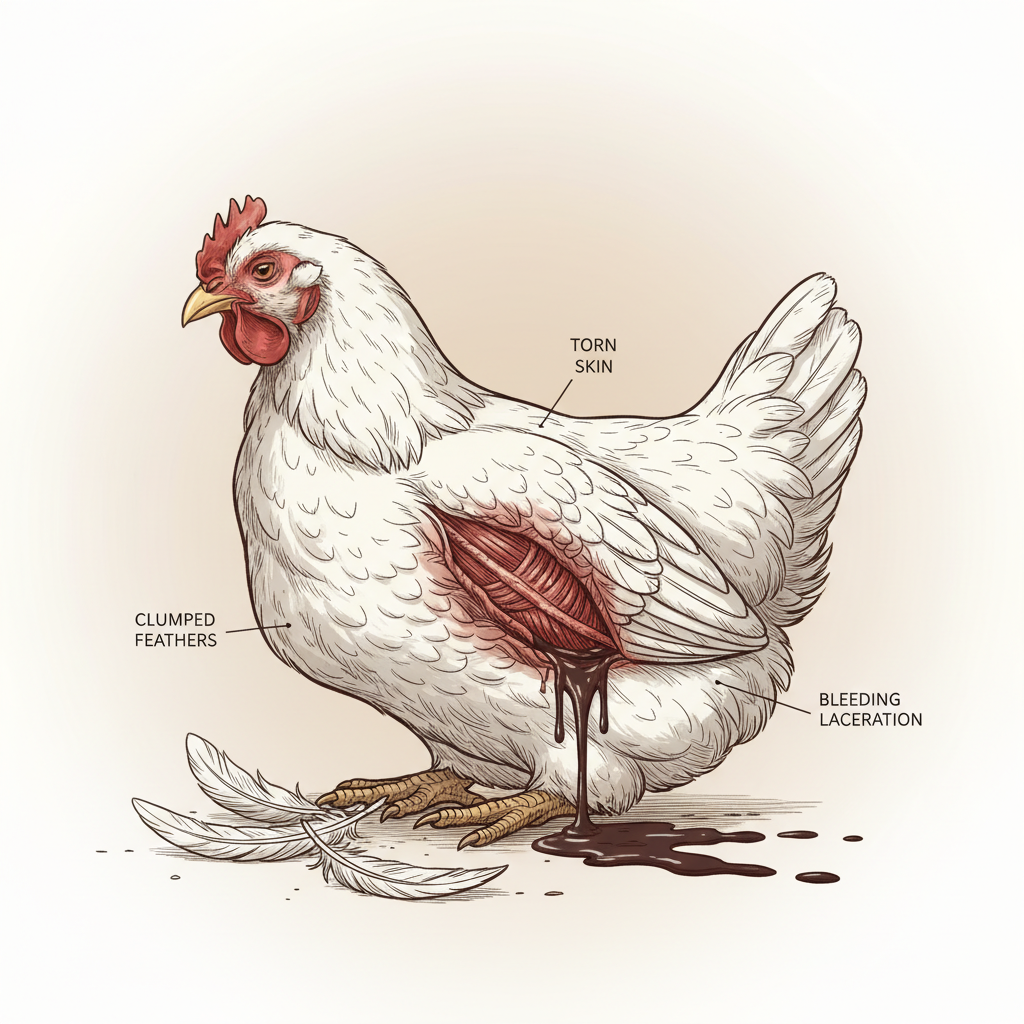
Mix of AI illustrations and anonymized real cases shared by community keepers. Visual severity varies by bird, age, and stage.
Symptoms
- Bleeding wound
- Torn skin or feathers
- Limping / leg weakness
- Shock or lethargy
- Missing feathers in clumps
Treatment
Bring the bird inside, calm and dim. Flush wounds with saline, trim feathers around the wound, dab with antiseptic (chlorhexidine or dilute betadine). Use blue kote to discourage pecking. Deep punctures need a vet, infection from animal mouths is common. Give vitamins and electrolytes in water.
Prevention
Hardware cloth (not chicken wire) on coop windows and runs. Lock the coop at dusk. Use motion lights or a guard dog or rooster in problem areas. Cover the run if hawks are around. Buried apron prevents diggers.
First aid for a chicken after a predator attack
A predator attack leaves more damage than you can see. Bite wounds can be tiny on the outside and deep underneath, and bacteria from teeth and claws cause serious infection. Shock is a real risk too. The first hour matters.
Step by step, right now
- Secure the rest of the flock. The predator may come back, so lock birds in and check the coop for gaps.
- Bring the injured bird somewhere warm, quiet and dim. A box with a towel works.
- Let her calm down for a few minutes before you examine her. Birds in shock can die from extra stress.
- Stop bleeding with gentle, steady pressure using clean gauze.
- Look her over carefully. Part feathers on the back, under the wings, around the neck and near the vent. Wet the feathers to see the skin.
- Flush wounds with saline or clean warm water.
- Apply a wound spray or ointment made for animals. Avoid products with painkillers in them, since some human products can be harmful to birds.
- Keep her separate from the flock while she heals.
When to call a vet
Call an avian or poultry vet for deep punctures, wounds you can see muscle or bone through, large flaps of skin, bleeding you cannot stop, or a bird who is limp, cold or breathing hard. Bites from mammals often need antibiotics, and a vet may need to close large wounds. Check the product label or ask the vet about eggs while she is treated.
Watching for infection
Check wounds every day. Redness, swelling, heat, a bad smell, or green or yellow pus mean infection. Also watch for fly eggs and maggots in warm weather. Keep her indoors or screened until wounds close.
How to tell this apart from other wounds
Peck wounds from flock mates are often on the back, tail or vent and keep getting worse if the bird stays in the flock. Those are covered under feather pecking. Bare backs from a rooster are mating wear. If you are not sure what attacked, the predator identification page can help you read the signs.
Prevention
- Use hardware cloth, not chicken wire, for coop windows and runs.
- Bury or apron wire around the run to stop diggers.
- Lock birds in every night.
- Cover runs if hawks are a problem.
See predator-proofing basics for a fuller setup.
Rest of the flock
Check every bird after an attack, since others may have hidden injuries. Stress can stop laying for a while. Eggs from uninjured birds are fine to eat. Wear gloves when handling wounds and wash your hands well.
Common questions about predator wounds in chickens
Can a chicken survive a predator attack?
Many do with quick first aid and good wound care. Deep bites and shock are the biggest risks.
Should I give my chicken antibiotics after an attack?
Ask a vet. Mammal bites often need them, but the right product depends on the wound.
When can an injured hen rejoin the flock?
Once wounds are fully healed. Reintroduce her slowly to avoid pecking.

