

Marek's Disease
A herpesvirus that causes paralysis (classic split leg posture), tumors, and a gray eye. No cure. Survivors stay lifetime carriers. Vaccinate chicks at hatch to prevent it.
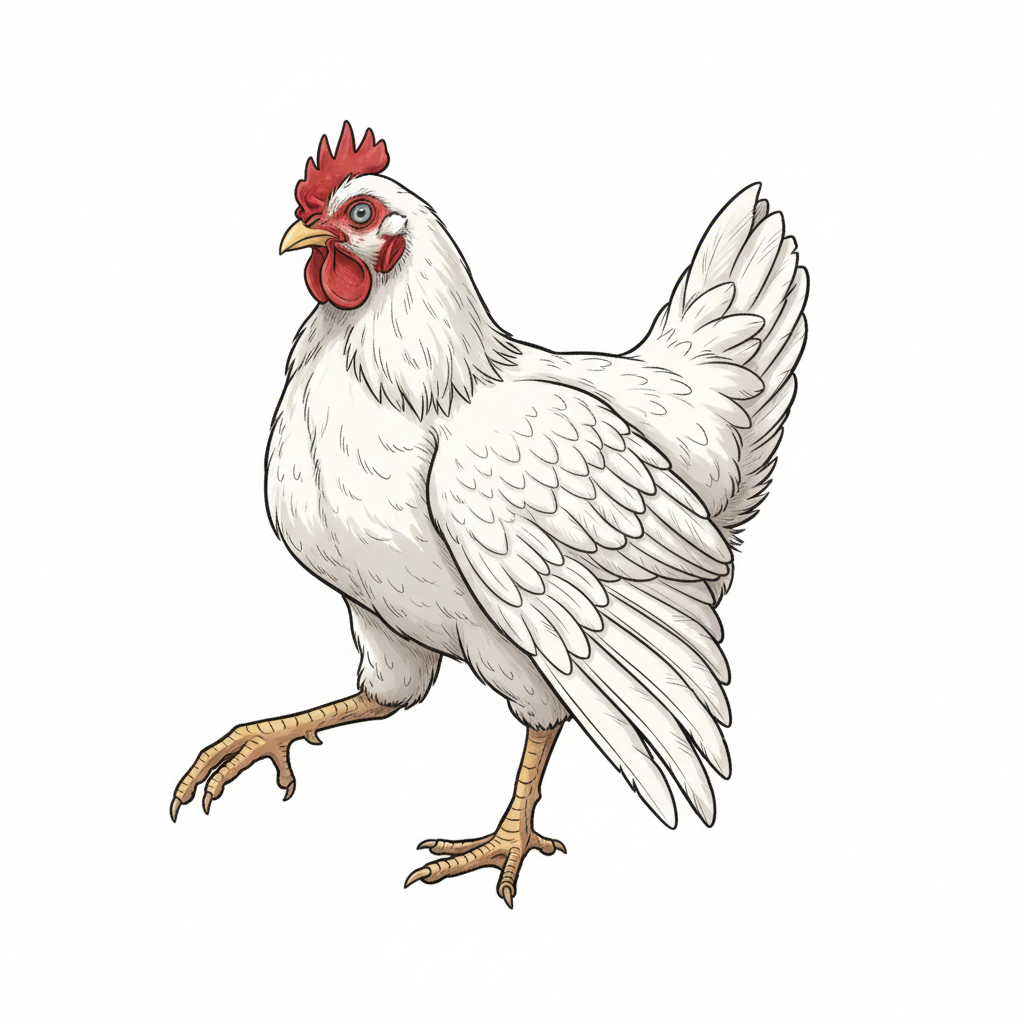
Mix of AI illustrations and anonymized real cases shared by community keepers. Visual severity varies by bird, age, and stage.
Symptoms
- Leg paralysis (one leg forward one back)
- Wing droop
- Weight loss
- Cloudy or gray eye
- Lethargic / not moving
- Sudden death
Treatment
There is no cure. Affected birds should be isolated and humanely culled in most cases. Supportive care can extend life for pet birds but the disease progresses.
Prevention
Vaccinate day old chicks at the hatchery. Buy only vaccinated stock. Strict biosecurity, the virus survives in coop dust for months. Quarantine new birds 30 days minimum.
Living with Marek's disease in a backyard flock
Marek's disease is caused by a herpesvirus that is extremely common wherever chickens are kept. It spreads in feather dander, and the virus can survive in coop dust for months. Most flocks have been exposed. The disease shows up mostly in young birds, often between a few weeks and several months old, and it can cause paralysis, tumors, weight loss and death. There is no cure, but vaccination works well.
Signs to watch for
- Paralysis of one or both legs, often one leg forward and one back.
- A drooping wing or twisted neck.
- Gray or irregular pupils, sometimes called gray eye, and vision loss.
- Weight loss despite eating.
- Sudden death in birds that seemed only slightly off.
What to do if you suspect it
- Separate the affected bird into a quiet pen with food and water within reach.
- Rule out other causes like injury, bumblefoot or a stuck toe.
- Keep her clean and comfortable. Some birds with mild signs recover for a while.
- If a bird dies, keep the body cool and contact your state diagnostic lab about a necropsy. It is the only reliable way to confirm Marek's.
- Think about the rest of the flock and future chicks.
How to tell this apart from look-alikes
Leg paralysis can also come from injury, botulism or vitamin problems. Botulism paralysis climbs from the legs up to the neck and usually affects birds that ate rotting material. A twisted neck alone is often wry neck. A swollen foot or footpad scab is bumblefoot. The limping page walks through these checks.
When to call a vet
Call a vet or lab if several young birds go lame, if birds are wasting away, or if you are losing birds without a clear cause. Knowing it is Marek's changes how you plan the next batch of chicks.
Prevention
- Buy vaccinated chicks. The vaccine needs to be given at hatch or in the egg to work best.
- Keep new chicks away from older birds and their dust for the first weeks so the vaccine has time to work.
- Keep the brooder clean and low in dust.
- Some breeds have more natural resistance than others. Ask your hatchery.
The vaccine reduces tumors and deaths but does not stop birds from carrying or spreading the virus. The Marek's guide explains more.
The flock, eggs and people
Marek's does not infect people, and eggs from a flock with Marek's are considered safe to eat. Survivors can shed the virus for life, so assume a flock that has had it will expose any new birds. Do not sell or give away birds as healthy if Marek's has been confirmed in your flock.
Common questions about Marek's disease
Can a chicken recover from Marek's?
Some birds with mild signs seem to recover, but they remain carriers and can relapse.
Can I eat eggs from hens with Marek's?
Marek's is not a risk to people, and eggs are generally considered safe.
Should I vaccinate my chicks for Marek's?
Yes, it is one of the most useful vaccines for backyard flocks.

