

About the Polish
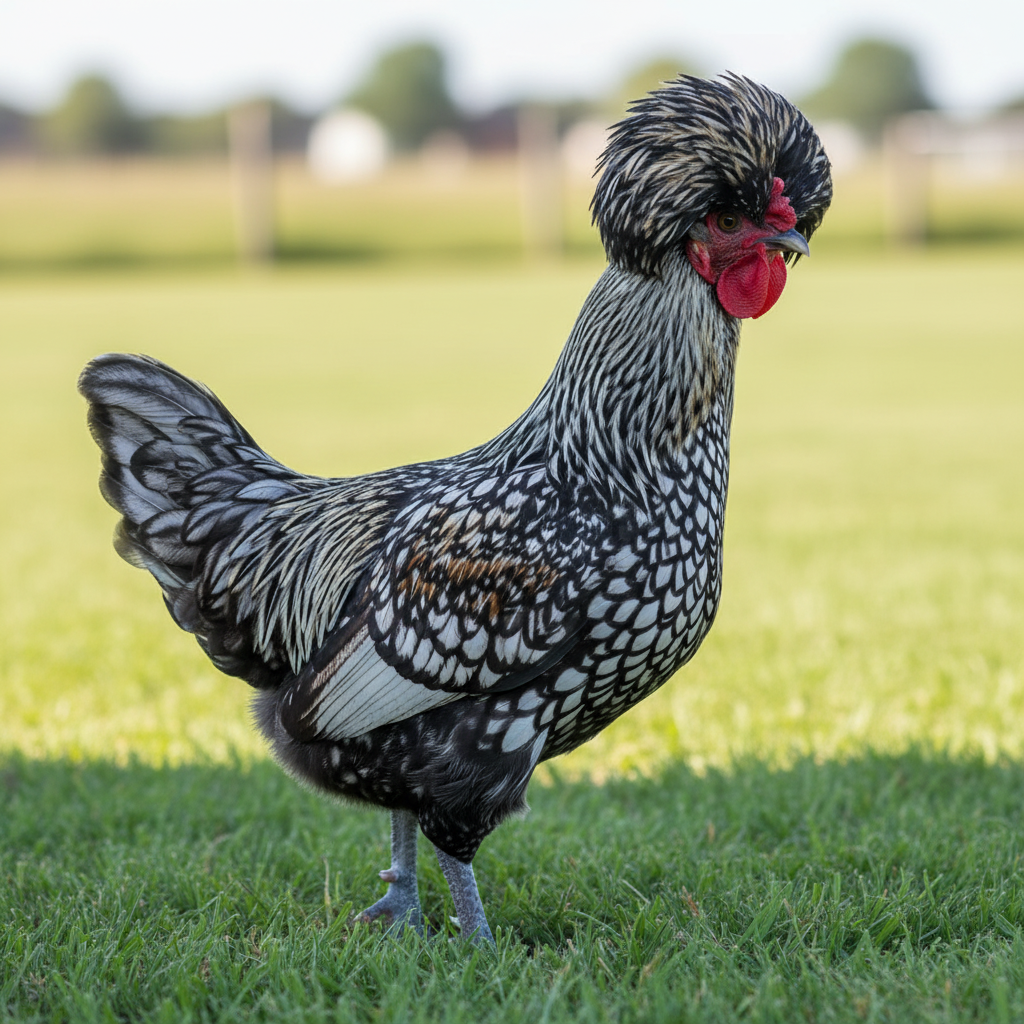
Polish chickens are easily recognizable due to their unique feathered crests that resemble a top hat. They have white skin and a calm disposition, making them friendly and somewhat curious. The feathering around their heads often obscures their eyes, lending a whimsical appearance. This breed is known for its striking looks one of the most ornamental in the poultry world.
History
The Polish breed originated in the 16th century, with roots tracing back to Poland and possibly the Netherlands. They gained fame in Europe and were highly sought after for exhibition and ornamental purposes. Their unique appearance and mild temperament contributed to their spread to various countries.
Care tips
Polish chickens enjoy a spacious coop environment to accommodate their large crests, which can impede vision. They are generally hardy but can be susceptible to feather pecking, so ensure they have ample stimulation. Regular grooming is recommended to keep their crests clean and healthy.
Color varieties
Fun facts
- Polish chickens are often used in poultry shows due to their unique appearance.
- The breed’s crest can vary in size and shape, adding to their individual character.
- They are known to be gentle around children and can be quite sociable.
- Polish hens are moderate layers of white eggs, especially in their first year.
Caring for Polish chickens and their crests
Polish chickens are kept for their looks. That huge pom-pom crest is the whole point, and it also shapes almost everything about daily care. Despite the name, the breed's true origin is unclear. It was well established in Western Europe, especially the Netherlands, by the 1700s. Common varieties include White Crested Black, Golden Laced, Silver Laced, Buff Laced, White and Black, plus bearded and frizzled forms.
Living with a bird that cannot see well
The crest covers much of a Polish chicken's view. They startle easily because they often do not see you coming. Talk to them as you approach, and avoid grabbing from above. Limited vision also makes them easy targets for hawks, so a covered run is a good idea if you have aerial predators. Many keepers trim the feathers around the eyes so the birds can see better. A light trim does not hurt them and grows back.
Skull and head care
Many Polish have a bony knob on top of the skull under the crest. In some birds that area is not fully closed, so a peck or knock to the head can be more serious than in other chickens. Handle the head gently, and keep them away from aggressive flock mates.
Keeping the crest clean and dry
A wet crest is a common problem. Open waterers soak it, and in winter it can freeze into clumps. Nipple waterers or cups help a lot. Check crests for lice and mites, which love to hide there. Flock mates sometimes pick at crests too. If one bird keeps pulling feathers, separate it or add more space and distractions.
Laying and temperament
Polish lay small to medium white eggs at a fair rate. They are rarely broody. Personalities run from sweet and tame to jumpy, mostly because of how well they can see. Many become friendly with gentle handling. They are often low in the pecking order and do best with other calm breeds.
Space and climate
They are small, light birds and do not need much room, but give them shelter from rain. They handle moderate cold if the crest stays dry. The small V-shaped comb resists frostbite well. In heat they do fine with shade.
How they compare
The Houdan also has a crest but is a heavier, five-toed French bird with a muffed face. The Polish vs Houdan comparison breaks down the differences. The Swiss Spitzhauben has a smaller, forward-pointing crest and is a tougher forager.
Where to get them
Most big US hatcheries sell several Polish colors, both standard size and bantam. Show-quality birds with full, round crests come from breeders, and Polish are a common sight in show halls.
Common questions about Polish chickens
Should I trim my Polish chicken's crest?
Many keepers trim feathers around the eyes to help them see. Skip it if you plan to show the bird.
Do Polish chickens lay eggs?
Yes. They lay white eggs at a fair rate, though they are kept more for looks than production.
Are Polish chickens good with other breeds?
They mix well with calm breeds. Bossy birds may peck at their crests, so watch them closely at first.

