

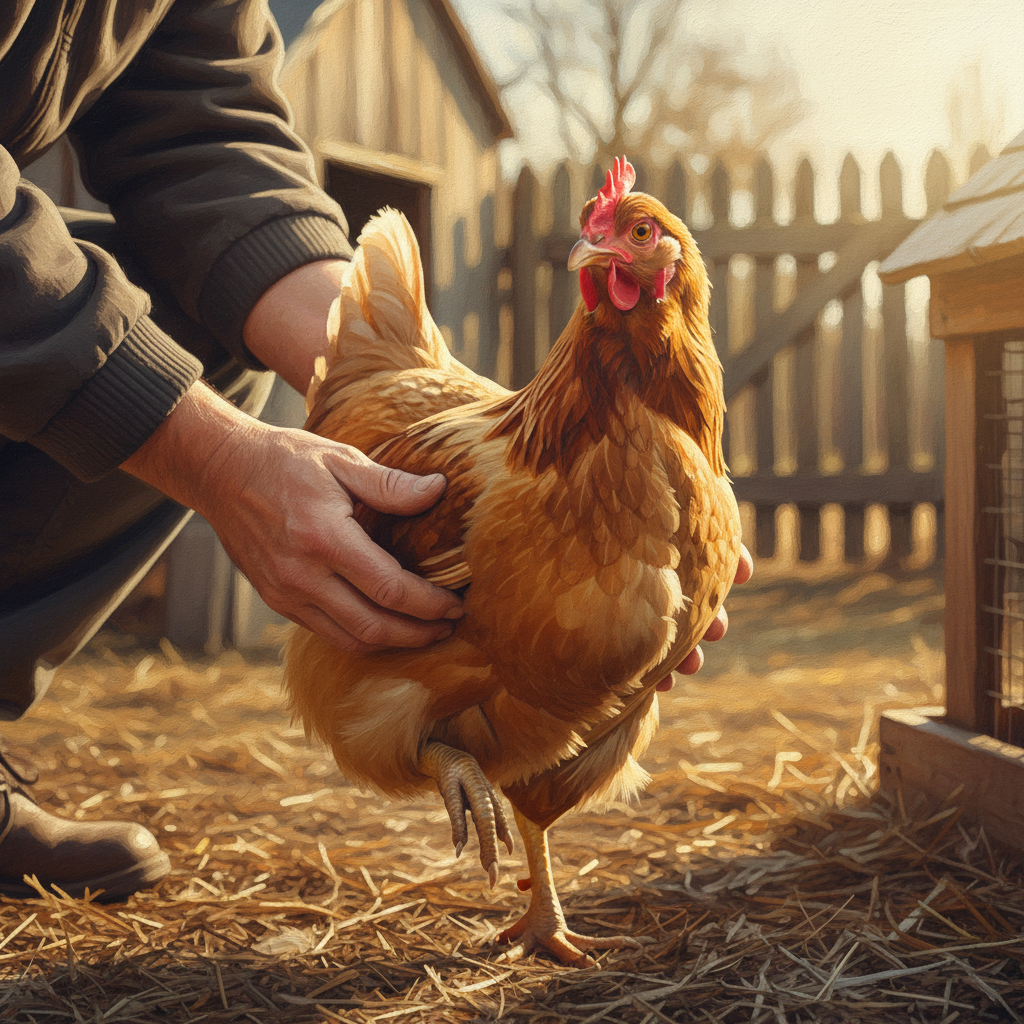
Why is my chicken limping?
A limp can be as simple as a bruised foot or as serious as Marek's disease. The pattern (one leg or both, sudden or gradual) tells you a lot.
Diagnose your chicken in 30 seconds
Upload a photo + describe symptoms. Our AI vet returns likely causes, urgency, and home care.
Open AI Chicken DoctorMost likely causes
1. Bumblefoot
Foot pad infection, see dedicated guide.
2. Sprain or strain
Jumping off high roosts or rough play. Usually resolves with rest.
3. Scaly leg mites
Heavy crusting can cause discomfort and limping.
4. Marek's disease
Young birds (under 1 year). Asymmetric leg paralysis, dropped wing, grey eye.
5. Vitamin B deficiency
Curled-toe paralysis, especially in chicks on poor diet.
6. Egg binding
Penguin walk and difficulty moving in a laying hen.
What to check first
- Examine each foot, black scab, swelling, scaly buildup?
- Feel for heat, swelling, or out-of-place joints.
- One leg only or both?
- Sudden onset or gradual?
- Age, Marek's hits birds under a year especially.
Home care that works
- Isolate in a small space to limit movement.
- Treat bumblefoot or scaly leg per their dedicated guides.
- For sprain: confined rest for 5-7 days; soft bedding; warm Epsom salt soaks.
- Boost B vitamins with poultry Nutri-Drench.
Call a vet if
- Sudden full leg paralysis (Marek's, botulism).
- Dropped wing on the same side as the bad leg (Marek's).
- Hot, very swollen joint (septic arthritis).
- No improvement after 1-2 weeks of rest.
Frequently asked questions
Can a chicken recover from a leg injury?
Most mild sprains heal in 1-2 weeks of confined rest. Fractures and dislocations need a vet.
Is Marek's contagious to other chickens?
Yes, Marek's is a herpesvirus and very contagious through dander. Vaccination at hatch is the only prevention.
Related symptoms
Finding out why your chicken is limping
A limp can come from a splinter, a sprain from jumping off a high roost, an infection in the foot, or something deeper like a nerve problem. Most limps are physical injuries that heal with rest. A few are early signs of a disease you need to know about. A careful look tells you a lot.
What to do right now
- Catch her calmly, ideally at night from the roost when chickens are sleepy.
- Look at the bottom of both feet. A round swelling with a dark scab is a classic sign of bumblefoot.
- Check between the toes for splinters, wire, string or hair wrapped around a toe.
- Feel each leg and joint gently and compare sides. Heat, swelling or a grinding feel are important.
- Look at the scales for crusting or lifting.
- Watch her walk on a flat surface. Does she favor one leg, or drag both?
How to tell common causes apart
- Swelling on the footpad with a black scab. Bumblefoot.
- Rough, raised, crusty scales. Scaly leg mites.
- One leg forward and one back, or a young bird losing use of a leg or wing over days. This can be Marek's disease, especially in unvaccinated birds a few months old.
- Sudden limp after a fall or a fight, with normal looking feet. Likely a sprain or bruise.
- Weak legs in a heavy, fast-growing meat bird. Often weight and growth related.
Supportive care
Put her in a small, quiet pen with soft bedding so she does not have to move much. Put food and water within easy reach. Remove anything wrapped around a toe carefully with small scissors. Clean small cuts with saline. Give a sprain a week or two of rest before deciding it is something worse.
When to call a vet
Call an avian or poultry vet if a leg looks broken or bent at an odd angle, if a joint is hot and swollen, if there is a deep wound, or if she stops eating. Paralysis spreading to the wings or neck, or several birds going lame, also needs a vet or lab diagnosis. Sudden weakness that climbs from the legs to the neck can be botulism.
Prevention
- Keep roosts at a height birds can jump down from without a hard landing.
- Use smooth, splinter-free perches.
- Clear sharp wire, nails and string from the run.
- Vaccinate chicks against Marek's when you buy them.
The flock and the eggs
A limp from injury is not contagious. If you suspect Marek's, a lab test helps you understand the risk to the rest of the flock. Eggs from a limping hen are fine to eat unless she is on medication, in which case check the product label or ask a vet.
Common questions about a chicken limping
Can a limping chicken heal on its own?
Mild sprains and bruises often heal with a week or two of rest. Infections and nerve problems usually do not.
Why is my young chicken suddenly lame?
Injury is common, but Marek's disease is a concern in young birds, especially unvaccinated ones.
How do I check for bumblefoot?
Look for a round swelling on the footpad, often with a dark scab in the middle.

