
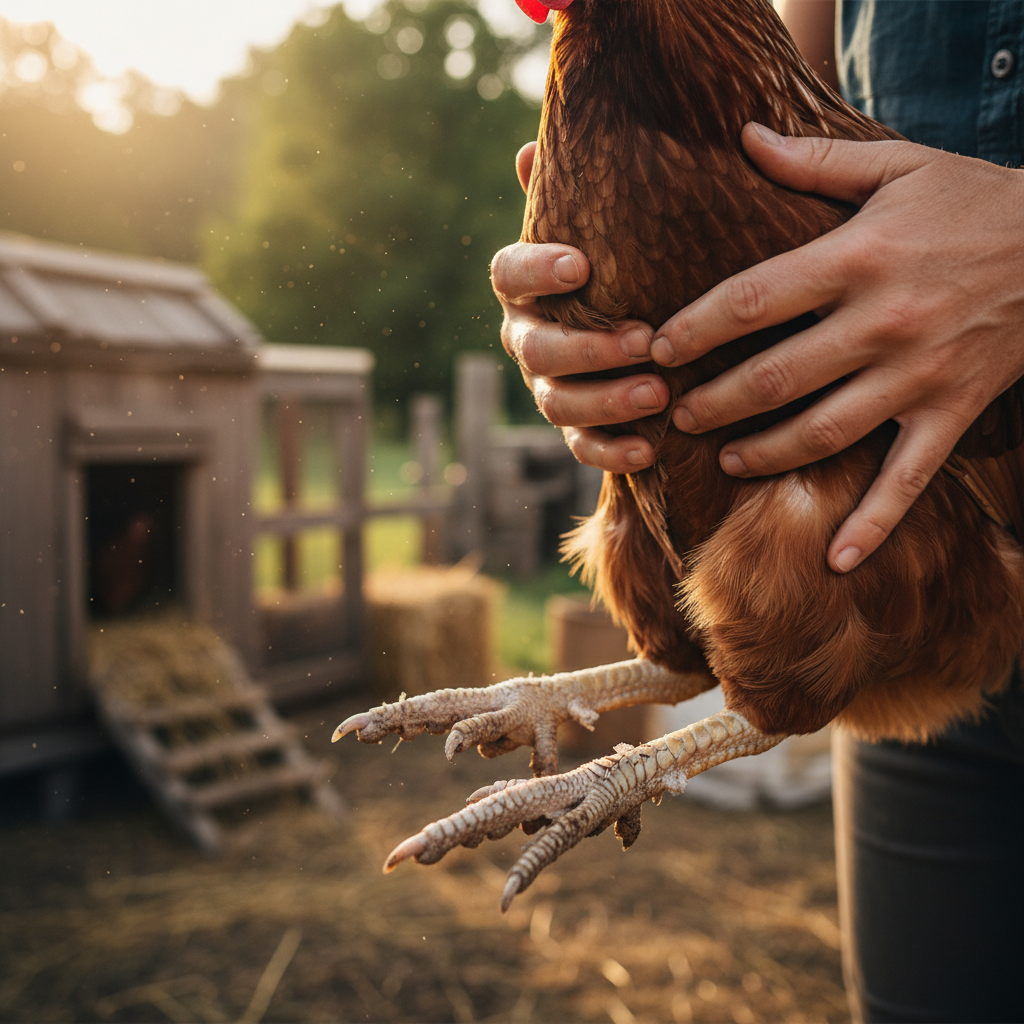
Scaly leg mites in chickens: signs and treatment
Scaly leg mites burrow under the leg scales, causing raised, white, crusty buildup. Treatable at home, but you need to be consistent.
Monitor closely
Diagnose your chicken in 30 seconds
Upload a photo + describe symptoms. Our AI vet returns likely causes, urgency, and home care.
Open AI Chicken DoctorMost likely causes
1. Knemidocoptes mutans mite
The microscopic mite that burrows under leg scales. Spreads bird-to-bird and via perches.
2. Older or immunocompromised birds
Older hens and stressed birds are more susceptible.
3. Dirty or overcrowded coop
Built-up droppings and shared perches accelerate spread.
What to check first
- Are leg scales raised, lifting, or crusty white instead of flat and smooth?
- Is the hen limping or scratching at her legs?
- Are roosters affected (often hit first because of larger scales)?
- Other birds in the flock showing early signs?
Home care that works
- Coat the legs in petroleum jelly (Vaseline) twice a week for 3-4 weeks, smothers the mites.
- Alternatively, dip legs in warm cooking oil weekly.
- Treat all flock members at once, even ones who look fine.
- Clean the coop thoroughly; treat perches with permethrin.
- Scales will look bad for weeks even after mites are dead, they regrow at the next molt.
Call a vet if
- Severe limping or refusal to walk.
- No improvement in 6 weeks of treatment.
- Open sores or bleeding on the legs.
Frequently asked questions
How long until scaly leg mites are gone?
Mites are usually dead in 3-4 weeks of consistent treatment, but the damaged scales take 6-12 months to fully regrow.
Can I use WD-40 on scaly leg mites?
No, never use solvents or industrial products on chicken legs. Petroleum jelly or food-grade oil only.