

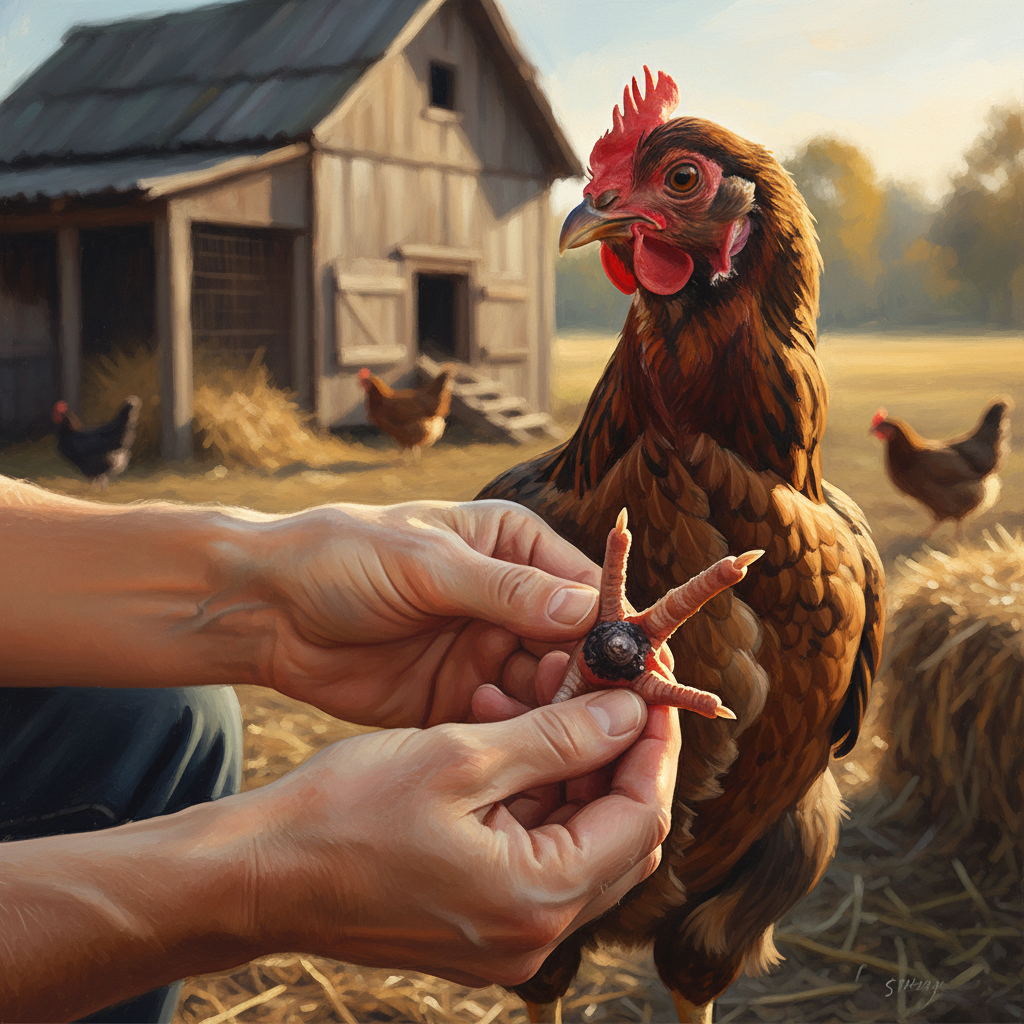
Bumblefoot in chickens
Bumblefoot is a staph infection of the foot pad. Caught early it's easy to treat. Left alone, it can spread up the leg and become life-threatening.
Diagnose your chicken in 30 seconds
Upload a photo + describe symptoms. Our AI vet returns likely causes, urgency, and home care.
Open AI Chicken DoctorMost likely causes
1. Hard landings from high roosts
Roosts over 24" with hard floors cause tiny foot punctures that get infected.
2. Rough surfaces
Sharp wire, splintery wood, gravel, or wet droppings irritate foot pads.
3. Heavy breed obesity
Brahmas, Orpingtons, and other big breeds carry more weight per foot.
4. Vitamin A deficiency
Weakens skin and immune defense against staph.
What to check first
- Lift each foot, any black scab on the underside?
- Swelling, redness, or warmth around the foot pad?
- Limping or favoring one leg?
- Tracing red lines up the leg (spreading infection)?
Home care that works
- Mild (black scab, no swelling): soak foot in warm Epsom salt water 15 min twice a day; apply Vetericyn or Manuka honey; wrap with vet wrap.
- Moderate (scab + swelling): same as mild, but consider removing the scab with sterile tweezers and squeezing out the pus core; pack with Neosporin (no pain reliever) and wrap.
- Lower the roosts to 18" max and add soft pine shavings underneath.
- Repeat soak/dress every 1-2 days for 7-10 days until healed.
Call a vet if
- Red streaks running up the leg.
- Foot pad badly swollen or hot.
- Hen is lethargic or not eating (systemic infection).
- Home treatment hasn't improved after 1-2 weeks.
Frequently asked questions
Can bumblefoot kill a chicken?
Yes, untreated, the staph infection can spread systemically and cause sepsis. But caught early, almost all cases heal at home.
Do I have to cut out the bumblefoot core?
Not always, many mild cases heal with daily soaks and Vetericyn alone. Cutting is for deep, well-established cases with a hard pus core.
Related symptoms
Treating bumblefoot at home and knowing when to stop
Bumblefoot is an infection in the foot, usually from staph bacteria that get in through a small cut. You see a round swelling on the footpad, often with a black scab. Caught early it is easy to manage. Left alone it can spread into the bone.
Early care
- Separate her on soft, clean bedding.
- Soak the foot in warm water with Epsom salt for 10 to 15 minutes to soften the scab and clean the area.
- Dry it well.
- Apply a wound spray or ointment made for animals and wrap with a light, padded bandage.
- Change the dressing daily and watch the swelling.
Soaking helps clean and soften, but it does not cure the infection on its own.
Should you cut it?
Many keepers try to remove the core. It can work, but it is painful and messy, and it is easy to make things worse. A vet can do it properly and prescribe antibiotics if needed.
Look-alikes
Rough raised scales are scaly leg mites. A limp with a normal foot may be a sprain or Marek's, covered on limping.
When to call a vet
Call if the swelling is large, hot or spreading up the leg, if she cannot walk, or if it keeps coming back.
Prevention
- Lower roosts so birds do not land hard.
- Use smooth, wide perches.
- Keep bedding dry and clear of sharp debris.
Eggs and hygiene
Eggs are fine to eat unless she gets medication, in which case check the product label or ask a vet. Wear gloves, since staph can infect cuts on your hands.
Common questions about bumblefoot in chickens
Is bumblefoot contagious?
Not directly, but the same coop conditions can cause it in other birds.
Can bumblefoot heal without surgery?
Mild cases sometimes improve with soaks and dressings. Deep ones usually need a vet.
What does bumblefoot look like?
A round swelling on the bottom of the foot, often with a black scab.

