

Botulism (Limberneck)
Paralysis caused by a toxin from Clostridium botulinum, usually picked up by eating decaying animal matter or wet rotting feed. Limp paralysis that creeps up the body is classic.
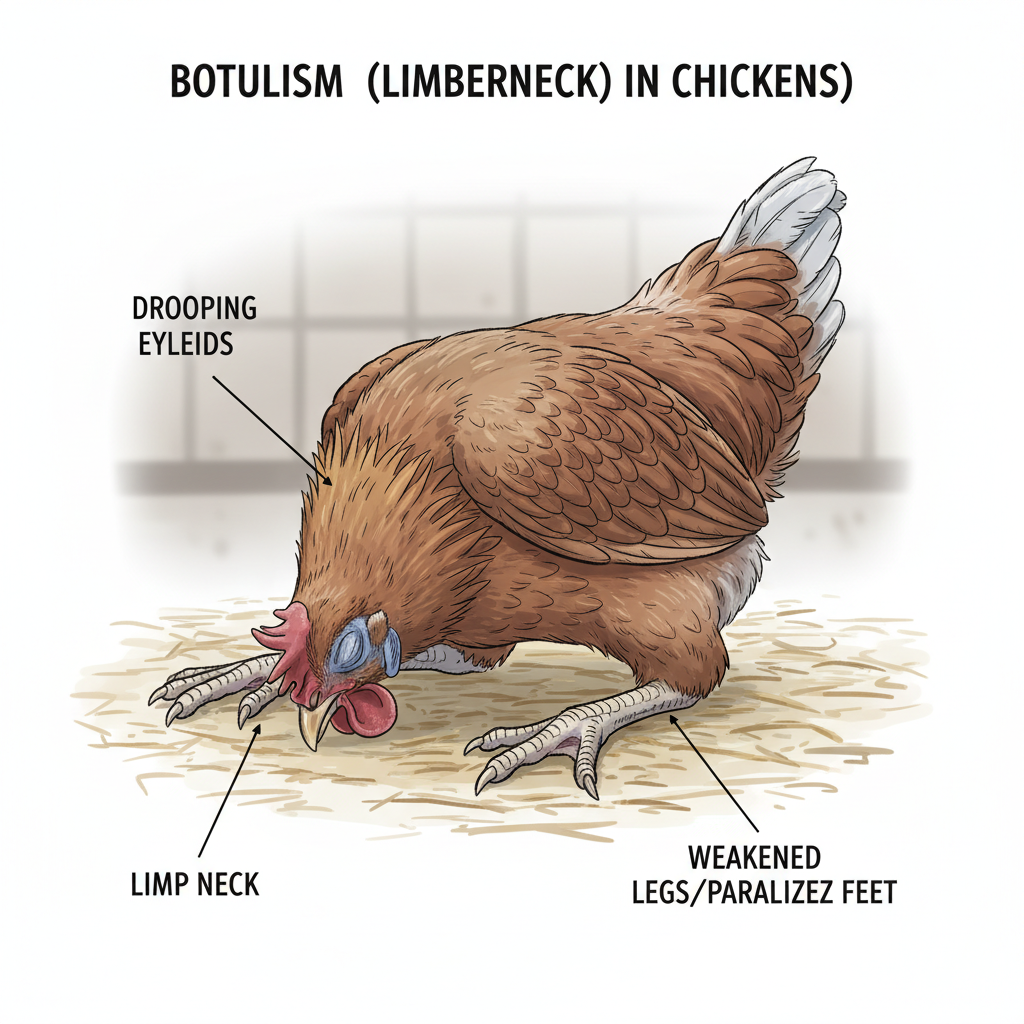
Mix of AI illustrations and anonymized real cases shared by community keepers. Visual severity varies by bird, age, and stage.
Symptoms
- Limp paralysis from feet up
- Drooping eyelids
- Loose neck
- Lethargic / not moving
- Sudden death
Treatment
Remove the source immediately. Flush the gut with activated charcoal or molasses water (1 cup molasses per gallon, once). Keep the bird warm, quiet, and hydrated. Antitoxin exists but is rarely available for chickens. Mild cases can recover in 1 to 3 days.
Prevention
Remove animal carcasses (mice, dead chicks) from the coop and run. Do not let feed get wet and moldy. Cover ponds and standing water that can host dead aquatic life.
What to do if a chicken shows signs of botulism
Botulism is not an infection that spreads from bird to bird. It is poisoning from a toxin made by bacteria that grow in rotting material, like a dead animal, spoiled food or stagnant water. Chickens get it by eating that material, or the maggots that feed on it. The toxin causes paralysis that usually starts in the legs and works its way up to the wings and neck. That limp, floppy neck is where the name limberneck comes from.
Signs to look for
- Weak legs, sitting down and unwilling to stand.
- Drooping wings.
- Neck lying flat on the ground, unable to hold the head up.
- Eyelids drooping or half closed.
- In bad cases, breathing trouble.
Step by step, right now
- Search the run, coop and nearby area for the source. Look for a dead rodent, bird or other animal, rotting kitchen scraps, spoiled feed or a puddle of stagnant water.
- Remove it, wearing gloves, and double bag it.
- Move the sick bird to a quiet, shaded, cool pen.
- Get water into her. A bird that cannot lift its head cannot drink. Offer water often by dribbling small amounts on the side of the beak, carefully, so she does not inhale it.
- Check the rest of the flock for early leg weakness.
- Call an avian or poultry vet.
How to tell this apart from look-alikes
Botulism paralysis is floppy and climbs upward, and the bird is usually alert in the eyes. Marek's disease also causes leg paralysis, but often one leg forward and one back, and usually in younger birds over a longer time. A twisted neck that turns or tilts the head, rather than letting it hang, is more like wry neck. Sudden paralysis in several birds with deaths and other signs should also be reported to your state veterinarian, since Newcastle disease can cause nerve signs.
When to call a vet
Call a vet right away. Mild cases sometimes recover with good supportive care over days. Severe cases, especially birds with breathing trouble or a neck that is fully limp, are often fatal. A vet can advise on care and on whether any treatment is worth trying.
Supportive care
Keep her cool, quiet and comfortable on soft bedding. Prop her upright with a rolled towel so she can breathe more easily. Keep up with water. Home remedies do not cure botulism. Supportive care just gives her body time to clear the toxin.
Prevention
- Remove dead animals from the run and coop area promptly.
- Do not feed spoiled food or rotting scraps.
- Drain or fill low spots where water sits stagnant in summer.
- Control flies and maggots around compost and manure.
Eggs and your own safety
Do not eat eggs from a hen sick with botulism. Wear gloves when handling carcasses and rotting material, and wash your hands well afterwards.
Common questions about botulism in chickens
Is botulism contagious between chickens?
No, but birds sharing the same source can all get sick. Find and remove it.
Can chickens survive botulism?
Some recover with supportive care, especially mild cases. Severe paralysis is often fatal.
What causes limberneck?
Eating toxin from rotting material, dead animals or maggots that fed on them.

