
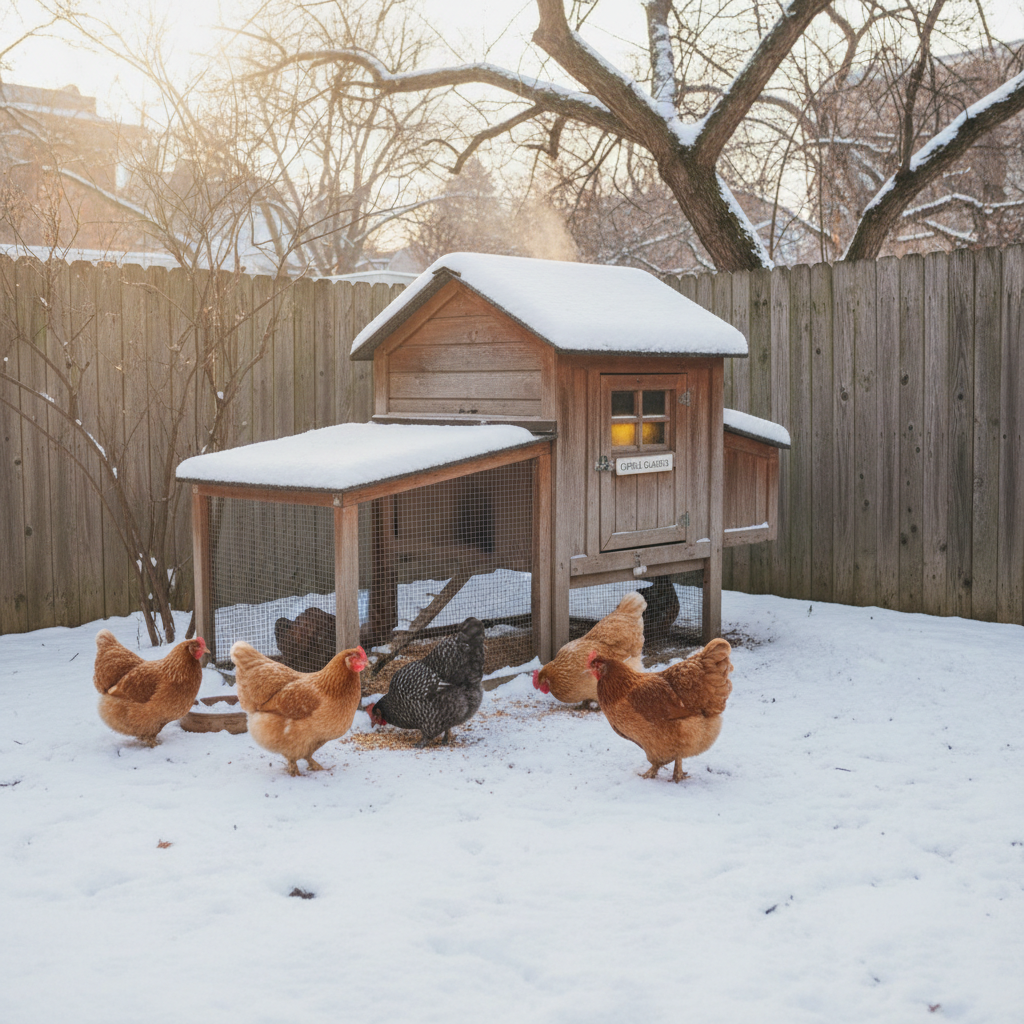
Winter Chicken Care in Washington, DC: Tips for Urban Coops
By Mara K. · Updated September 27, 2026
Quick answer
Winter chicken care in Washington, DC, entails providing 2-4 square feet of space per bird, maintaining coop ventilation, and choosing breeds like Rhode Island Reds. The mild winters require less insulation but frequent checks for mites. Local resources in Georgetown and Columbia Heights can assist with supplies.
Key facts
- Space per bird
- 2-4 square feet
- Winter low temperatures
- 30-40°F
- Breeds laying rate
- 250-300 eggs/year
- Coop ventilation clearance
- 12-24 inches
- Local supply cost
- $15-20 per 50 lbs of feed
Living in Washington, DC, we don't face the harsh winters some of our northern neighbors endure, but there's still plenty to keep in mind when caring for chickens during the cooler months. With humid summers and mild, short winters, the focus here is less on insulation and more on ensuring good ventilation and health checks.
How to Ventilate Your Coop in DC's Winter
Coop ventilation is crucial for winter chicken care in a humid subtropical climate like ours. In areas like Georgetown and Capitol Hill, maintaining 12-24 inches of ventilation clearance near the roofline prevents moisture build-up, which could lead to respiratory issues. The mild winter lows, usually between 30 and 40°F, allow for coops to be ventilated without causing stress to the birds. Make sure to check out our coop plans that accommodate these ventilation needs.
Choosing the Right Breeds for Winter
When it comes to breeds that thrive in Washington's climate, Rhode Island Reds and Leghorns are top choices, consistently laying 250 to 300 eggs annually. These breeds are not only heat-tolerant enough to handle our sweltering summers but are also hardy in the face of our mild winters. You can learn more about Rhode Island Reds and Leghorns to see if they suit your backyard flock.
Managing Pests and Parasites
With the mild weather comes the year-round threat of mites and worms. Regular deworming is essential, and keeping an eye out for any signs of infestation is key. I use diatomaceous earth and a rotation of feed brands like Purina to keep things under control. The chicken health map can help you stay updated on local outbreak data to avoid any nasty surprises.
Local Resources for Feed and Supplies
In regions like Columbia Heights and Adams Morgan, access to quality feed and supplies is a breeze. Expect to pay around $15 to $20 for a 50-lb bag of feed. If you're just starting or need to stock up, our local feed and supply page is a handy resource for finding what you need without leaving the city.
Keeping Temperature Consistent Without Insulation
With winter temperatures rarely dipping into the severe cold, heavy insulation isn't necessary. Instead, focus on ensuring your coop isn't drafty, which can be more of a concern. Check that your coop plans accommodate for this kind of weather, and for any questions, the chicken doctor can offer advice tailored to our local conditions. The NWS is a good source for keeping up with any sudden weather changes you might need to respond to.
Final Thoughts from the Coop
While winters in DC might be mild, they still require some thoughtful preparation. With proper ventilation, the right breeds, and regular health checks, your backyard flock will thrive. Keep local resources handy, and you'll find caring for your chickens easy and rewarding, even in an urban setting.
More for Washington chicken keepers
Got questions or your own tips?
Jump into the community and swap notes with other backyard chicken keepers.
Discuss in the community →Comments
Sign in to join the conversation.