
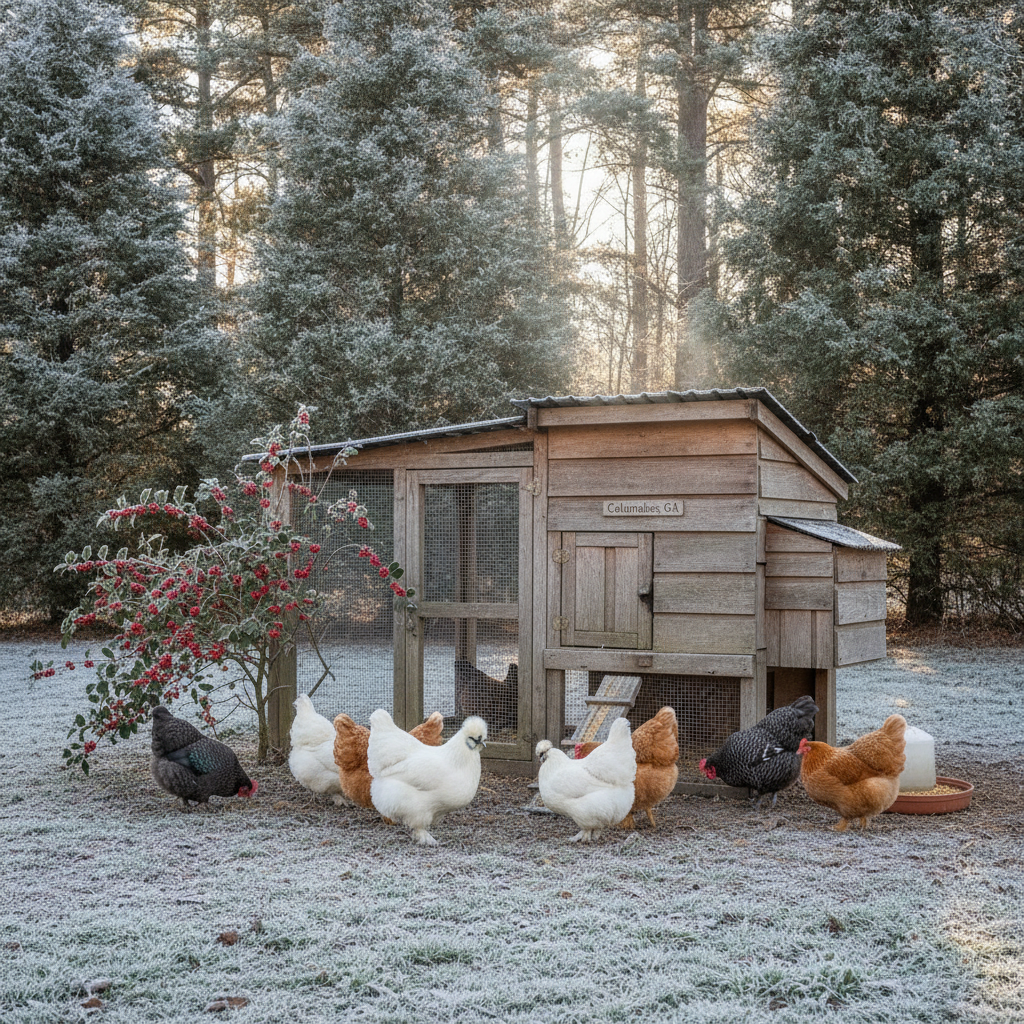
Winter Chicken Care Tips for Columbus, Georgia
By Mara K. · Updated August 28, 2026
Quick answer
Winter chicken care in Columbus, GA involves ensuring proper ventilation, space, and predator protection. Provide each bird with at least 4 square feet of coop space and use 1/4-inch hardware cloth for security. Choose heat-tolerant breeds like Leghorns and Rhode Island Reds to cope with the humid climate.
Key facts
- Coop Space per Bird
- 4 square feet
- Hardware Cloth Gauge
- 1/4 inch
- Average Winter Low
- 37°F
- Columbus Summer High
- 92°F
- Frost-Free Days
- 240 days
Winter's not much to fret about here in Columbus, Georgia, with our mild short winters and all. However, keeping chickens comfortable in our humid-subtropical climate takes some planning. Whether you live near Bibb City or out in Midland, these tips will help ensure your flock stays healthy and cozy.
How Much Space Do Chickens Need in Winter?
Chickens in Columbus need at least 4 square feet of coop space per bird to stay comfortable during winter. Even though the cold spells are brief, the wet conditions can keep them inside more than you'd like. We've got 14 hens here, housed in a coop with ample roosting space, and it makes all the difference when the weather turns.
For those considering coop designs, your best bet is to look at some coop plans specifically designed for the Georgia climate. Sometimes, a quick rebuild or expansion can ensure your chickens have enough room to roost without stress.
Why Ventilation Matters in Columbus
In Columbus, proper ventilation is more crucial than insulation during winter. The humid air can breed bacteria and mites, so your coop should have vents near the roof to let out moisture and ammonia fumes. I suggest 1/4-inch hardware cloth for covering openings, which keeps out predators without restricting airflow.
Which Breeds Are Best for Humid Climates?
Leghorns, Rhode Island Reds, and Easter Eggers are top picks for Columbus's climate. These breeds handle the heat well and still lay plenty of eggs in winter. You can learn more about each breed through our detailed guides on Leghorns, Rhode Island Reds, and Easter Eggers. In Midland, my neighbor's Rhode Island Reds keep up a steady egg supply even when the temperatures dip.
Managing Mites and Worms in Mild Winters
Mites and worms thrive in the humid conditions of Columbus, so proactive treatment is necessary year-round. Rotate treatments and consider natural remedies or consult a chicken doctor if your flock shows signs of infestation. Keeping the coop dry and clean can help keep these pests at bay.
The NWS predicts that Columbus will maintain its typical mild yet wet winter pattern, so staying vigilant will save you a headache.
Where to Get Supplies Locally
For folks around Phenix City or those closer to the heart of Columbus, you can find feed and other supplies locally. Check out the list of local feed and supply stores to keep your flock well-fed through the winter months with brands like Purina or Kalmbach, which offer balanced nutrition suitable for Georgia's climate.
Final Thoughts from the Coop
Winter in Columbus doesn't bring much in the way of frost, but the humidity can be a challenge. By ensuring your flock has ample space, good ventilation, and effective pest control, you'll keep them happy and healthy until the warm Georgia sun returns. And remember, for more insights on keeping chickens healthy year-round, our health map is a great resource to stay informed about any regional outbreaks or health concerns.
More for Columbus chicken keepers
Got questions or your own tips?
Jump into the community and swap notes with other backyard chicken keepers.
Discuss in the community →Comments
Sign in to join the conversation.