
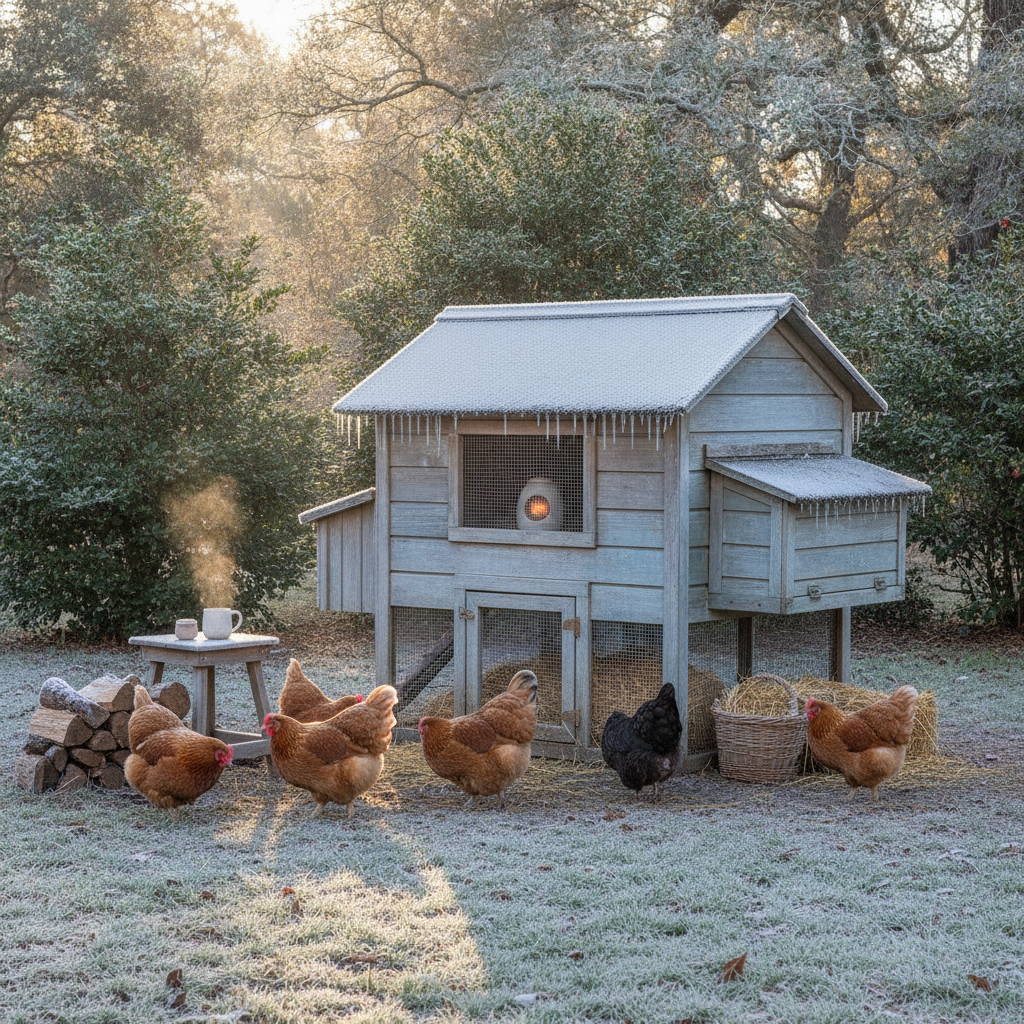
Winter Chicken Care in Charleston: Tips and Tricks
By Mara K. · Updated July 17, 2026
Quick answer
Caring for your chickens in Charleston during winter involves maintaining a well-ventilated coop, using deep litter bedding for insulation, and monitoring for mites and worms. Temperatures rarely drop below 20°F, making ventilation critical to prevent frostbite. Consider breeds like Leghorns and Rhode Island Reds for year-round success.
Key facts
- Minimum Winter Temperature
- 20°F
- Optimal Coop Ventilation
- well-ventilated
- Deep Litter Bedding
- composts for insulation
- Humidity Problem
- mites and worms
- Pest Prevention
- deworming regularly
Charleston, WV, might not have the harshest winters, but caring for your flock still requires some thoughtful planning. With our humid, subtropical climate, where summers are hot and sticky, winter is short and mild. So, let's talk about what you need to know to ensure your chickens are happy and healthy during the colder months, whether you're in Kanawha City, South Hills, or over in Dunbar.
Preparing the Coop for Charleston Winters
In Charleston, where the winter lows rarely dip below 20°F, it's crucial to have a well-ventilated coop. Ventilation helps prevent moisture build, up, which can lead to frostbite on your chickens' combs and wattles. Make sure you're keeping those vents open, even when it feels counterintuitive. We built our own chicken palace with coop plans from this site, and it’s made all the difference.
If your coop needs a little sprucing up, consider some straw bales for extra insulation around the outside walls. You don’t want to seal it up airtight, but the materials can buffer against strong winds. This setup worked perfectly when we had a particularly windy spell last January.
Choosing the Right Breeds for Charleston
Since Charleston summers can hit the high 80s and beyond, heat, resistant breeds are your best bet year-round. Some of my favorites for our area include the Leghorn and Rhode Island Red. They're hardy enough to deal with our short winters too. I’ve also heard wonderful things about Easter Eggers, especially from folks out in East End.
Make sure to visit this local supply page for feed and gear suited for our climate. Keeping your chickens healthy through the seasons starts with having the right supplies.
Managing Mites and Worms
With the humidity here, mites and worms can be a nasty problem. I learned the hard way after a particularly humid October, which is why deworming should be on your regular to, do list. Keep an eye out, especially during the warm months leading into winter. Dewormers available locally can keep these pests at bay and ensure your hens are winter, ready.
Handling Cold Spells and Frost
While winters are mild, Charleston does see frost, generally around early November through late March. A simple way to keep your flock warm is by using deep litter bedding. This method involves letting bedding materials like straw or wood shavings build up on the coop floor throughout the winter. Not only does it provide insulation, but it also generates a little heat as it composts.
Keep waterers from freezing by using heated waterers or adding a bit of warmth, such as placing them on a heated pad. I’ve also seen folks around the Kanawha City area use black rubber buckets to absorb sunlight, which seems to work quite well.
Tracking Local Chicken Health
It's always wise to be aware of local poultry health concerns. The US chicken health and outbreak map can offer vital updates that help keep your flock in peak condition. Staying informed about local disease outbreaks can prevent issues before they start.
FAQ: Winter Chicken Care in Charleston
How cold is too cold for chickens in Charleston?
Chickens can handle cold fairly well, especially with the right care. In Charleston, even when temperatures dip below freezing, proper ventilation and insulation can keep them comfortable.
Should I add a heat lamp in the coop?
In Charleston's mild winters, a heat lamp is generally not necessary and can be a fire hazard. Focus on ventilation and insulation instead.
How can I tell if my chickens have mites or worms?
Check for signs like feather loss, scaly legs, or decreased egg production. Regular inspections will help you catch any issues early.
For broader knowledge, explore our learn section for more articles tailored to chicken keeping.
Final Thoughts from the Coop
Winter in Charleston might not be as severe as other places, but it still offers its own challenges for chicken keepers. By picking the right breeds, maintaining your coop, and keeping pests under control, you’ll be setting your flock up for a successful winter season. For more on what to expect from Charleston's unique climate, NOAA's climate site can be a handy resource. Keep those birds cozy, and they’ll reward you with fresh eggs and healthy clucks all winter long.
More for Charleston chicken keepers
Got questions or your own tips?
Jump into the community and swap notes with other backyard chicken keepers.
Discuss in the community →Comments
Sign in to join the conversation.