
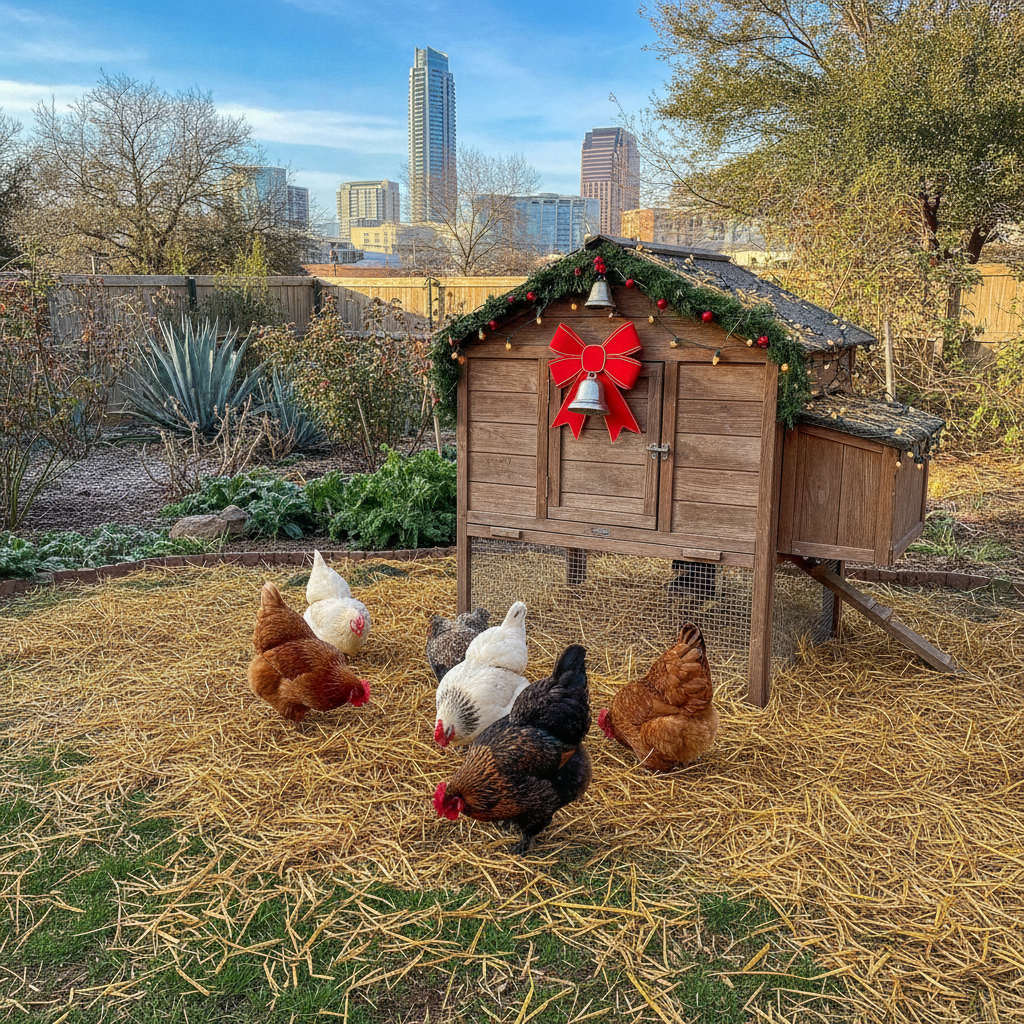
Winter Chicken Care in Austin: Keep Your Flock Happy
By Mara K. · Updated September 9, 2026
Quick answer
In Austin's mild winter, focus on ventilation and select breeds like Rhode Island Reds and Leghorns, as temperatures rarely drop below 30°F. Ensure 4-5 square feet per bird to avoid overcrowding and be proactive against mites and worms given the humidity.
Key facts
- Temperature range
- 30°F to 60°F
- Space per bird
- 4 to 5 sq ft
- Ventilation
- 10 sq ft window area
- Humidity
- Average 65%
- Frost date
- Late November
When it comes to winter chicken care in Austin, you're in luck. Our winters are mild compared to the rest of the country, but that doesn't mean you can rest easy. While the temperatures might not drop too low, Austin's humidity can be a challenge for your flock.
How to Handle Austin's Winter Temperatures
Austin's winter temperatures generally hover between 30°F and 60°F, rarely causing frost. This means you don't need heavy insulation for your coop, but it's essential to maintain proper ventilation. With Austin's average humidity sitting around 65%, consider installing a window or two that provides at least 10 square feet of ventilation area to keep fresh air circulating. This helps prevent respiratory issues which can be aggravated by damp conditions. If you're building or modifying a coop, you'll find helpful designs on our coop plans page.
Choosing the Right Breeds for Austin's Climate
Picking heat-tolerant breeds that can also handle mild winters is wise. Breeds like Rhode Island Reds and Leghorns are excellent choices for Austin. These birds handle both the summer heat and winter chill well. I've got five Rhode Island Reds myself, and they're happy cluckers all year round. Don't overlook Easter Eggers either; they're hardy and add a splash of color to your egg basket.
Ensuring Adequate Space and Shelter
Space is another critical factor. Each chicken should have about 4 to 5 square feet inside the coop to prevent overcrowding, which can lead to stress and health issues. Use sturdy materials like 2x4 lumber for framing and consider chicken wire with a gauge of at least 16 for protection against curious critters. Folks in neighborhoods like East Austin or Round Rock might already know the importance of predator-proofing, with raccoons and hawks occasionally making trouble.
Be Proactive with Health Measures
In Austin's climate, mites and worms are prevalent all year. Regularly check your flock for pests and consider deworming your birds as a preventative measure. Using products like Purina's worm guard can make a big difference. Additionally, keep an eye on our chicken health and outbreak map for any regional issues that might arise.
Finding the Right Supplies Locally
For those in suburbs like Cedar Park or Pflugerville, getting the right supplies is key. Check out the local feed and supply options in Austin to find everything from feed to deworming kits. This can save you time and ensure you're prepared for any weather.
When to Expect Frost and Other Weather Concerns
Austin's frost date usually comes around late November, so by then you'll want to have your coop set up to handle the chill. According to the National Weather Service, we can expect increased humidity after rainfalls, so always be ready to adjust ventilation to keep the coop dry.
Final Thoughts from the Coop
Caring for chickens in Austin during winter means focusing on ventilation and the health of your birds. With the right breeds, proper space, and proactive measures against pests, your flock can thrive year-round. Remember, a happy chicken is a productive chicken, even when the weather is a bit colder than usual. If you're ever in a pickle, our chicken doctor is on standby to help you out.
More for Austin chicken keepers
Got questions or your own tips?
Jump into the community and swap notes with other backyard chicken keepers.
Discuss in the community →Comments
Sign in to join the conversation.