
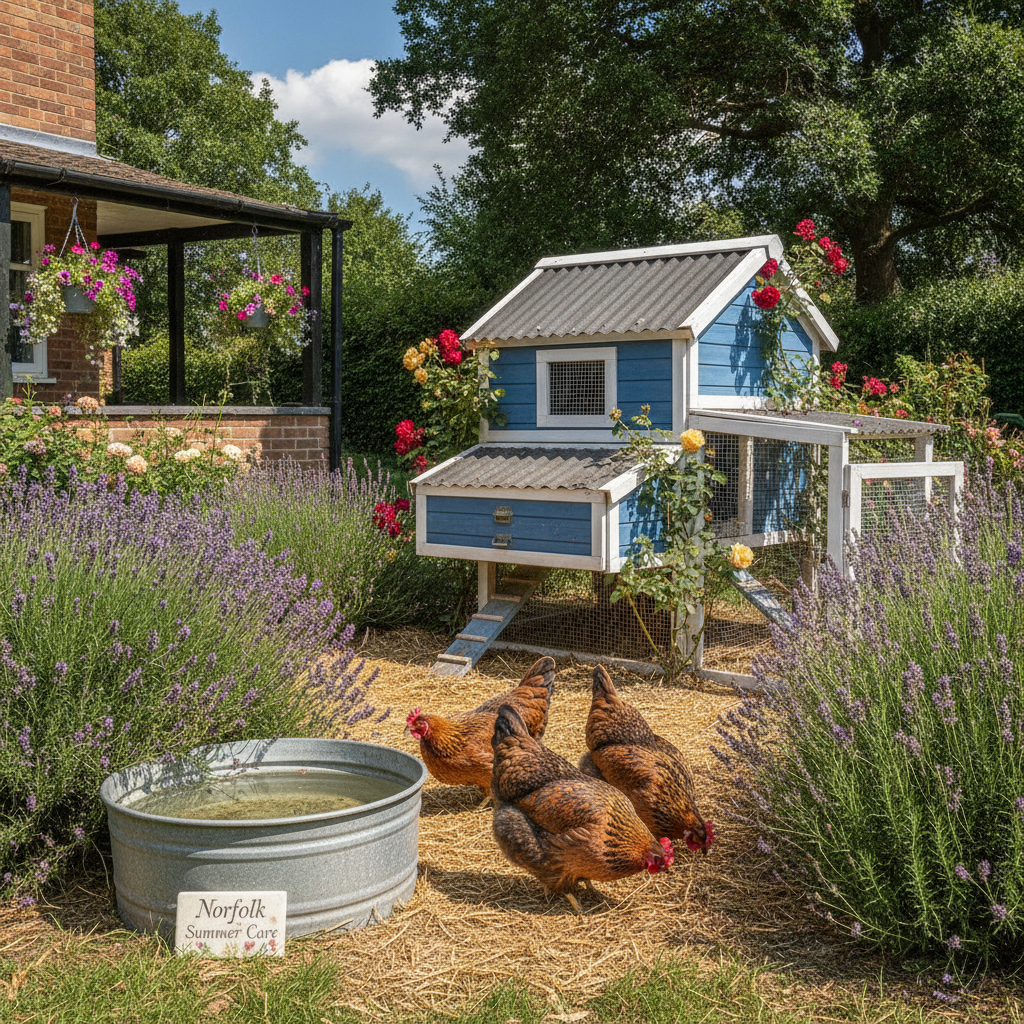
Summer Heat Chicken Care in Norfolk
By Mara K. · Updated July 30, 2026
Quick answer
In Norfolk, VA, summer heat chicken care means focusing on ventilation and hydration to combat average highs around 87°F. Ensure each chicken has at least 10 square feet of shaded outdoor space and use fans for airflow. Consider breeds like Leghorn and Rhode Island Red for heat tolerance.
Key facts
- Summer Highs
- 87°F
- Outdoor Space per Chicken
- 10 sq ft
- Recommended Wire Gauge
- 14
- Average Humidity
- 80%
In Norfolk, Virginia, summer heat can pose a real challenge for chicken keepers. With temperatures averaging around 87°F and humidity often reaching 80%, it's crucial to adapt your chicken care routine to keep your flock happy and healthy.
How to Choose Heat-Tolerant Chicken Breeds
For Norfolk's sweltering summers, choosing the right breeds can make all the difference. Leghorns, Rhode Island Reds, and Easter Eggers are excellent choices due to their proven heat tolerance. Leghorns, in particular, are not only good layers but handle heat well thanks to their lighter body weight. Rhode Island Reds are also a great option, producing 250 to 300 eggs a year while withstanding higher temperatures. Learn more about their attributes in our Leghorn breed guide and Rhode Island Red breed guide.
Ensuring Proper Ventilation
Proper ventilation is essential to prevent your coop from turning into an oven. I recommend using a 14-gauge wire for coop windows and vents to ensure durability while allowing airflow. Consider installing fans if you're in neighborhoods like Ghent or Ocean View, where summer breezes may not reach. Use our coop plans for designs incorporating optimal airflow.
Providing Ample Shade and Water
Every chicken should have access to at least 10 square feet of shaded outdoor space. This space can include natural shade from trees or artificial covers like shade cloths. Additionally, ensure fresh, cool water is always available. I often use a mix of ice cubes and water in bowls around the coop to keep things cool.
Monitoring for Mites and Worms
The warmth and humidity in Norfolk create a haven for mites and worms, which can harm your flock. Regularly inspect your chickens for signs of mites, such as scaly legs or feather loss. Consider using diatomaceous earth in dust baths as a preventative measure. Deworm your chickens proactively following guidance from our chicken health resources. For more information on regional health concerns, check the US chicken health and outbreak map.
Local Resources for Chicken Supplies
Finding local supplies is key to quick and successful chicken care. For feed and supplies, local stores in nearby towns like Chesapeake and Portsmouth are invaluable. For more information, visit our local feed and supply page for Norfolk.
FAQs About Summer Chicken Care
How often should I change water during Norfolk summers?
It's best to refresh water bowls at least twice daily, especially during peak heat.
Can I leave my chickens outside all day in the summer?
Yes, as long as they have access to adequate shade and water.
Are certain coop designs better for hot climates?
Open-air designs with plenty of ventilation are ideal. You can find suitable designs in our coop plans.
How do I know if my chickens are overheated?
Look for signs like panting, holding wings away from their bodies, and lethargy.
Is there a government resource for local climate data?
Yes, the National Weather Service provides detailed climate data specific to Norfolk.
Final Thoughts from the Coop
Norfolk's climate requires a bit of planning to keep your flock comfortable, but with the right strategies in place, your chickens can thrive even in the heat. Be sure to choose heat-tolerant breeds, optimize your coop's ventilation, and monitor your flock for any signs of distress. Keeping these tips in mind, you'll be well-prepared to handle the challenges of summer chicken care.
More for Norfolk chicken keepers
Got questions or your own tips?
Jump into the community and swap notes with other backyard chicken keepers.
Discuss in the community →Comments
Sign in to join the conversation.