
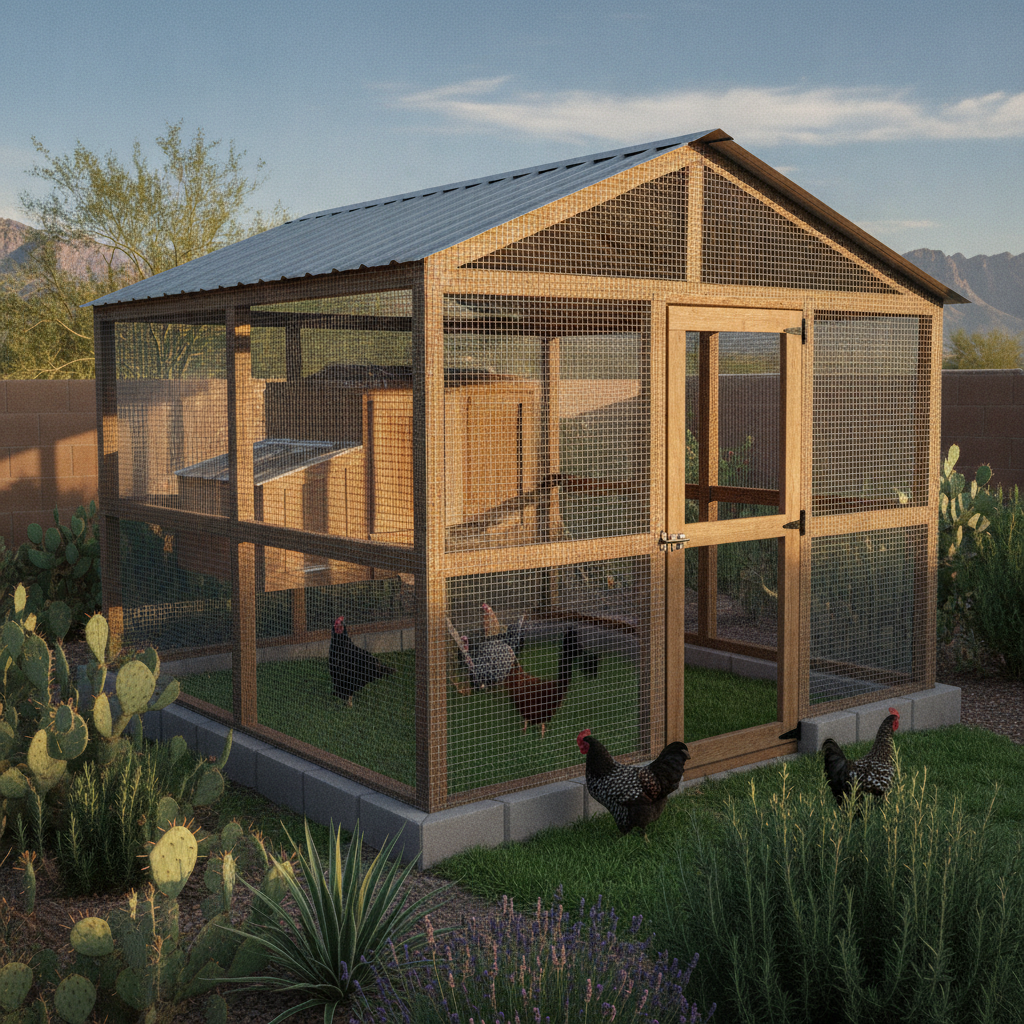
Predator Proofing Chicken Coops in Tucson: Essential Tips
By Mara K. · Updated August 29, 2026
Quick answer
Predator proofing chicken coops in Tucson involves using 1/2 inch hardware cloth for ventilation and protection, securing doors and windows, and burying wire 12 inches deep to prevent digging from predators like coyotes and raccoons. Local temperatures can reach 105°F, so shade and ventilation are crucial.
Key facts
- Hardware cloth gauge
- 1/2 inch
- Bury wire depth
- 12 inches
- Shade temperature drop
- 20°F
- Summer highs
- 105°F
- Frost dates
- May 15 to Nov 30
Keeping your feathered friends safe is a top priority for backyard chicken enthusiasts, especially in the unique climate of Tucson, Arizona. With summer highs reaching 105°F and low humidity, creating a safe and comfortable environment for your hens can be challenging. Let's look at how to effectively predator-proof your chicken coop in this desert setting, covering everything from materials to local threats.
How to Use Hardware Cloth for a Predator-Proof Coop
For predator-proofing, using 1/2 inch hardware cloth is essential to keep out Tucson's crafty predators such as coyotes, raccoons, and even snakes. Compared to regular chicken wire, hardware cloth offers much more durability and security. Secure it over all openings including windows, vents, and the entire perimeter of the run. This mesh size is perfect to prevent raccoons from reaching in and ensures snakes can't slither through.
Living in an area with predators like these, it's crucial to think about door and window locks too. Strong latches and locks are necessary to keep those persistent paws from prying open enclosures.
Why Burying Wire Matters
Predators like coyotes and bobcats are known to dig under fences to get to a meal. Burying your hardware cloth at least 12 inches underground can deter these determined diggers. This can be especially important in Tucson’s outskirts like Catalina Foothills or Tanque Verde, where wildlife is more prevalent.
For an added layer of protection, consider an 'apron' of wire that extends outward from the base of your coop, discouraging digging at the fence line.
Providing Shade and Ventilation
While predator-proofing is crucial, don't forget about the intense Tucson heat. Strategic placement of shade cloth can help reduce temperatures inside the coop by up to 20°F. Coupled with good ventilation, this can make a significant difference to your chickens' comfort and health.
Avoid placing the coop in direct sunlight all day, and consider adding a misting system to help combat the dry heat that characterizes neighborhoods like Midtown or Casas Adobes. For more tips on keeping chickens healthy in hot climates, see our detailed guides.
Understanding the Local Environment
Tucson's unique climate brings its own set of challenges. With the frost-free period typically stretching from May 15 to November 30, extreme heat rather than cold is the primary concern. Ensure your coop design considers these factors. You can find various coop plans that accommodate the specific needs of heat-hardy breeds like Leghorns and Rhode Island Reds, which thrive here.
Monitoring local predator activity is also wise. Keeping an eye on our health map can help you stay informed about any outbreaks or rising predator threats.
Legal Considerations and Local Resources
Remember, it’s important to comply with local regulations. The Pima County Animal Control provides guidelines on keeping backyard chickens, including predator control tips. And don't forget to visit local supply stores for the best materials specific to the Tucson area.
Final Thoughts from the Coop
Predator proofing your chicken coop in Tucson is all about using the right materials and being mindful of both wildlife and climate challenges. From securing your coop with sturdy hardware cloth to providing essential shade and ventilation, these steps will help keep your chickens safe and happy. Stay informed, prepared, and keep those hens cozy and secure in the Arizona sun.
More for Tucson chicken keepers
Got questions or your own tips?
Jump into the community and swap notes with other backyard chicken keepers.
Discuss in the community →Comments
Sign in to join the conversation.