
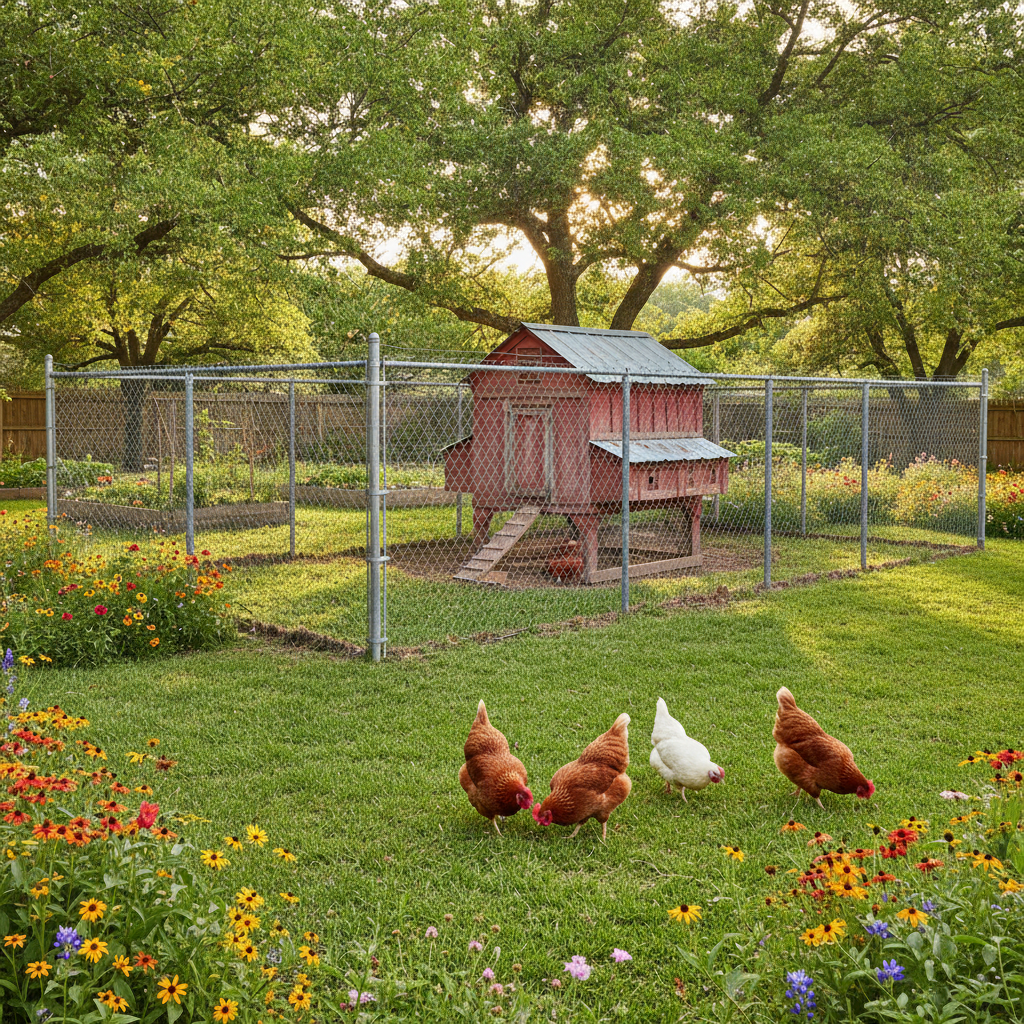
Effective Predator Proofing for Chicken Coops in San Antonio
By Mara K. · Updated June 17, 2026
Quick answer
To effectively predator proof your chicken coop in San Antonio, use a sturdy 2x4 treated lumber frame and install half-inch gauge hardware cloth fencing. Cover the top with netting and provide good ventilation with small mesh screens. Nighttime security features like automatic doors can protect against nocturnal predators.
Key facts
- Frame material
- 2x4 treated lumber
- Fencing gauge
- half-inch hardware cloth
- Ventilation screen size
- small mesh
- Summer heat index
- above 100°F
- Nighttime predator prevention
- automatic coop doors
Raising chickens in San Antonio is a rewarding venture, but keeping your flock safe from predators is a top priority. With the city's humid subtropical climate, long hot summers, and mild winters, you'll need a coop that stands up to both weather and wildlife.
What Predators Threaten San Antonio Flocks?
In San Antonio, you need to be on the lookout for predators like raccoons, opossums, hawks, and even stray dogs. Urban areas such as Alamo Heights and Terrell Hills, as well as suburban locales like Helotes, are not immune to these crafty critters.
Raccoons, in particular, can be surprisingly clever. They can open simple latches and squeeze through tight spaces. Hawks are another aerial menace, especially around open fields and yards. Understanding your area's most common threats is crucial to fortifying your coop.
Building a Secure Coop Frame
Start with a solid frame. I built mine out of 2x4 treated lumber, which stands up well to both the climate and the few times my unruly dog tried to get in. The frame should be sturdy enough to handle severe weather and persistent predators. If you're starting fresh, check out our detailed coop plans for guidance.
Choosing Predator-Proof Wire Fencing
When it comes to fencing, hardware cloth is your best friend. Go for the half, inch gauge if you want to keep out even the littlest rodents. Here in San Antonio, the mild winters mean pests stay active year-round, so don't skimp on quality.
I ran hardware cloth along the bottom three feet of my coop. No breaches to report yet! Stapling it securely to the wood frame with heavy, duty staples can make all the difference.
Deterring Aerial Attacks
Covering the top of your run is as important as fencing the sides. In places like Leon Valley, hawks are a real concern, especially if your chicks like to roam in open grassy areas. Using a combination of netting and wire can keep your flock safe from above.
A chicken's natural predators can be incredibly persistent, and if you've got heat, loving breeds like the Leghorn or Rhode Island Red, you'll want to ensure their safety while they enjoy San Antonio's sunny days.
The Role of Ventilation in Predator Proofing
Good ventilation is a must in San Antonio's humid climate, but it shouldn't compromise security. Use small, mesh screens on windows and vents to keep critters out while still allowing for airflow. Heat indices often climb above 100°F in the summer, so pick breeds like Easter Eggers that handle the heat well.
For a comprehensive view on chicken health in various climates, check out our health map to stay ahead.
Nighttime Security Tips
Most predators are nocturnal, so nighttime security is critical. Automatic coop doors that close at dusk and open at dawn can be a lifesaver. Motion, activated lights and even a good rooster can deter night raiders. Austin's Edgewood neighborhood reports fewer nighttime incidents when these measures are in place.
Local Resources for Coop Supplies
For top, notch supplies, you can't go wrong visiting local feed and supply stores in San Antonio. They'll have the best advice on local predators and the materials to keep your coop secure.
For more information on local climate and predator behavior, the Texas A&M AgriLife Extension offers excellent insights.
Final Thoughts from the Coop
Predator-proofing your chicken coop in San Antonio involves understanding both your local environment and the crafty nature of the critters that share it. Keep your hens safe with a well, built coop, smart fencing choices, and proper ventilation. If you're just getting started or need more tips, check out our articles for beginners or consult a chicken doctor for any health concerns.
More for San Antonio chicken keepers
Got questions or your own tips?
Jump into the community and swap notes with other backyard chicken keepers.
Discuss in the community →Comments
Sign in to join the conversation.