
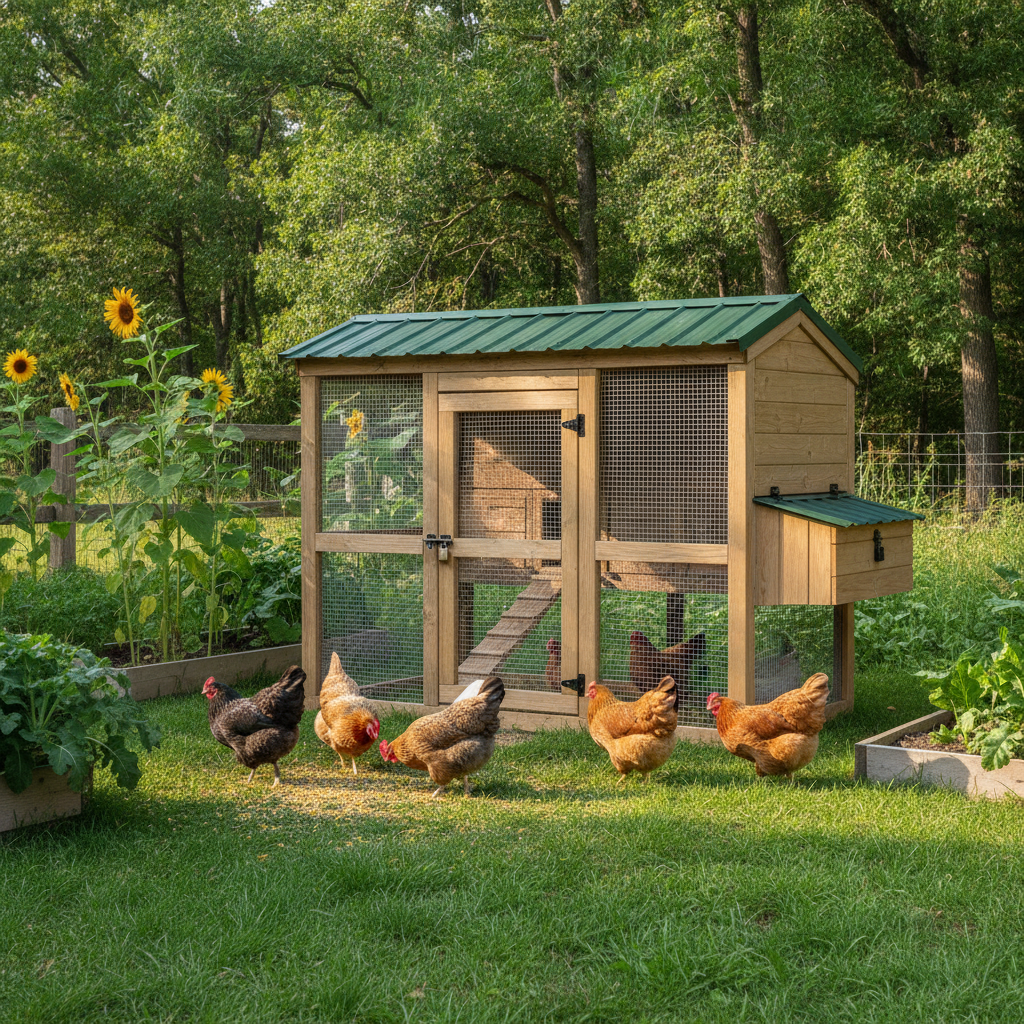
How to Predator Proof Your Chicken Coop in Charlotte
By Mara K. · Updated August 5, 2026
Quick answer
To predator proof chicken coops in Charlotte, use 1/2 inch hardware cloth and secure every opening, including the top. Charlotte's humid climate requires extra ventilation without sacrificing security. Ensure latches and doors are tightly secured to protect from raccoons and snakes.
Key facts
- Hardware cloth size
- 1/2 inch
- Recommended coop space per bird
- 4 sq ft
- Minimum fence height
- 5 feet
- Average summer high
- 89°F
- Frost-free season
- April to October
Keeping your flock safe in Charlotte, North Carolina's unique climate and environment requires some thoughtful planning, especially when it comes to predator proofing chicken coops. With the mix of hot, humid summers and occasional frosty nights, a well-ventilated yet secure coop becomes essential.
What Materials Best Predator Proof a Chicken Coop?
The best way to predator proof a chicken coop in Charlotte is by using hardware cloth with 1/2 inch openings. This size keeps out pesky critters like raccoons and snakes, which are common in the Ballantyne area and Huntersville. Chicken wire won't cut it since small predators can easily rip through it. I recommend investing in good quality hardware cloth for peace of mind.
How to Secure Coop Doors and Latches
Ensuring your coop doors and latches are secure is vital. Raccoons, known for their dexterity, are notorious in SouthPark for prying open simple locks. Use locks that require two actions to open, like carabiner clip latches, which can deter these crafty bandits. Make sure to check the coop regularly, especially after storms, as wind and rain can weaken structures.
Proper Ventilation with Predator Protection
In Charlotte's humid climate, with average summer highs reaching 89°F, ventilation is as crucial as predator protection. Create vent openings on the upper part of the coop, covered with hardware cloth to keep out pests while letting the hot air escape. Without sufficient airflow, your chickens can suffer heat stress. Consider breeds like the Leghorn and Rhode Island Red, which are well-suited for heat.
Fence and Run Considerations
Your coop's surrounding run needs attention too. A fence of at least 5 feet high is recommended to keep out foxes and stray dogs. Bury the fence at least 6 inches deep in the ground to prevent predators from digging under. Folks in the University City area often opt for a 24-inch apron of hardware cloth laid flat on the ground to add another layer of protection.
Local Regulations and Resources
Before building or modifying your coop, check local regulations and guidelines. The Mecklenburg County Ordinance provides detailed information on keeping backyard chickens. You can also visit local stores listed on our supplies page for Charlotte, NC to get the right materials.
Dealing with Common Predators
Charlotte's chicken coops face threats from a variety of predators. Besides raccoons, snakes are a notable concern. Regularly inspect your coop for any signs of digging or gnawing and take proactive steps by consulting our chicken health map to stay informed about potential disease outbreaks.
Final Thoughts from the Coop
Keeping chickens around Charlotte requires balancing ventilation and security. By using proper materials like 1/2 inch hardware cloth and ensuring your coop is well-secured, you can enjoy happy, healthy chickens while thwarting local predators. For more tips on coop building, check out our coop plans. And remember, if you need expert advice, our chicken doctor is just a click away.
More for Charlotte chicken keepers
Got questions or your own tips?
Jump into the community and swap notes with other backyard chicken keepers.
Discuss in the community →Comments
Sign in to join the conversation.