
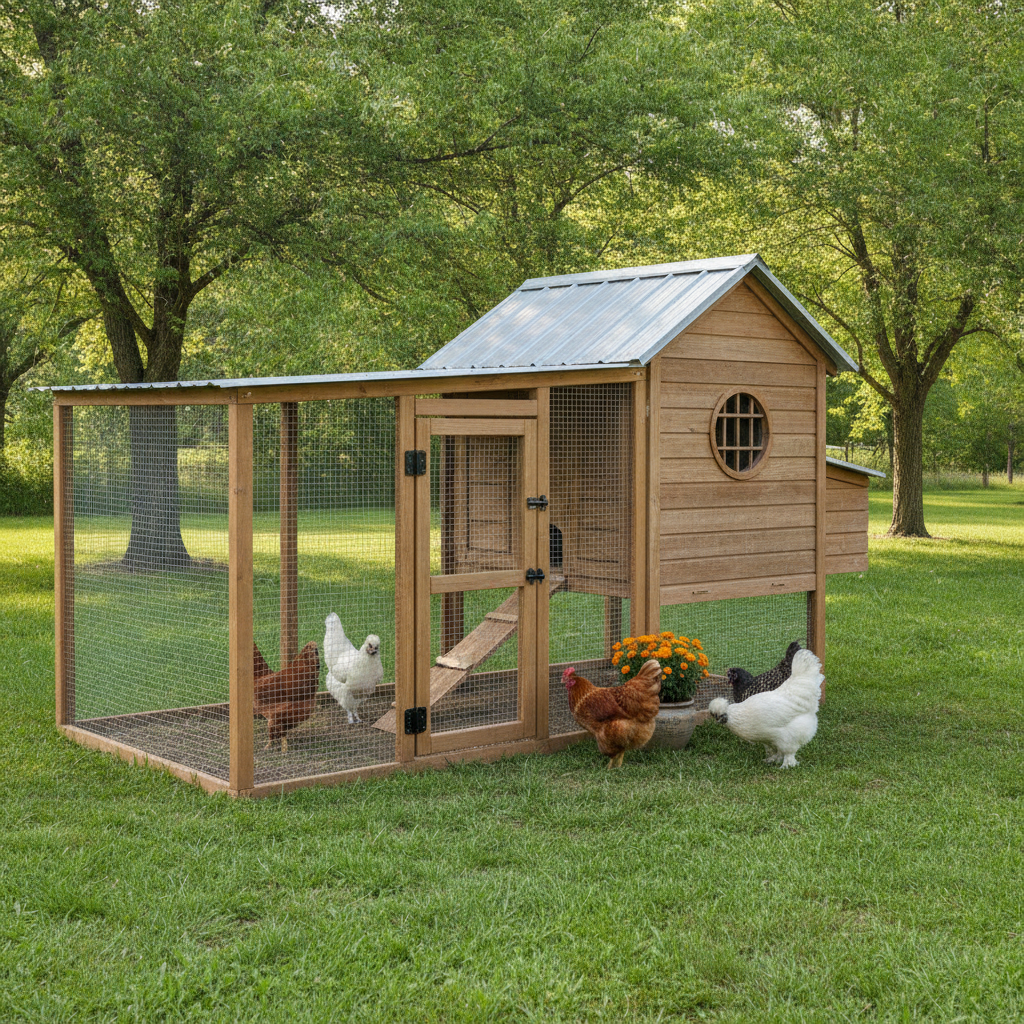
Essential Tips for Predator Proofing Chicken Coops in Charleston
By Mara K. · Updated August 22, 2026
Quick answer
Predator proofing chicken coops in Charleston, WV involves using hardware cloth with a 1/2-inch gauge for secure fencing, and installing locks on all doors and windows. This will protect your flock from raccoons, foxes, and other local predators. The cost typically ranges from $100 to $300, depending on coop size.
Key facts
- Wire gauge
- 1/2 inch
- Coop protection cost
- $100-$300
- Frost date
- Late October
- Summer highs
- 85-90°F
- Humidity
- 70-80%
When it comes to keeping chickens in Charleston, WV, predator proofing your coop is essential. With local wildlife like raccoons and foxes roaming areas like South Hills, Kanawha City, and North Charleston, you'll want to ensure your feathered friends are secure.
How to Keep Predators Out of Your Coop
To effectively predator proof chicken coops in Charleston, WV, use a hardware cloth with a 1/2-inch gauge. This is crucial because chicken wire alone won't stand up to determined critters. The NWS highlights our area's humid summers and mild winters, meaning predators are active most of the year.
Investing in sturdy latches and locks for coop doors and windows also helps keep those pesky raccoons at bay. My coop doors have been fitted with padlocks from the hardware store, keeping curious paws out.
Accounting for Charleston's Climate
Charleston's humid subtropical climate leads to long, hot summers with temperatures often reaching 85-90°F, and humidity levels between 70-80%. This environment not only makes chickens susceptible to heat stress, but it also encourages pests like mites and worms.
Choosing heat-tolerant breeds like the Leghorn or Rhode Island Red can help your flock cope with the summer heat. Adequate ventilation in your coop is a must to keep air circulation healthy.
You might consider adding some fans in the coop or increasing the size of vents to aid in cooling. We've found that putting in a few more vents made a huge difference during the humid July days here.
Predators to Watch For
In Charleston and nearby towns like Dunbar and Cross Lanes, raccoons and foxes are common threats. They can dig under fences and squeeze through small gaps. Burying your fence at least 12 inches into the ground and extending it outward can prevent digging predators from sneaking in.
Owls and hawks are also a concern, especially during the twilight hours. A covered run can help protect your birds from these aerial predators.
Securing the Run
For the chicken run, use the same 1/2-inch hardware cloth as for the coop. Make sure to cover the top to prevent hawks from swooping in. The run should be tall enough for you to enter comfortably, which might mean investing in some extra lumber. Here, we found that 2x4s worked best for framing the run securely.
Local Resources and Regulations
Check out our local feed and supply page for Charleston for materials and expert advice on setting up your coop. Additionally, understanding local ordinances is crucial. The Kanawha County website has detailed information on livestock regulations.
Preventative Health Measures
Due to the high risk of mites and worms thriving in Charleston's climate, proactive measures are essential. Deworming and regular health check-ups should be part of your routine. You can consult the US chicken health and outbreak map or talk to a chicken doctor for tailored advice.
Final Thoughts from the Coop
Predator proofing your chicken coop in Charleston is all about combining strong materials with smart design. From using 1/2-inch hardware cloth to ensuring proper ventilation and securing the chicken run, you're setting up for success. Remember, keeping your hens safe doesn't just give you peace of mind, it also ensures you continue getting those fresh eggs day in and day out.
For more articles on improving your chicken keeping practices, check out our learning section or explore various coop plans that suit Charleston's unique needs.
More for Charleston chicken keepers
Got questions or your own tips?
Jump into the community and swap notes with other backyard chicken keepers.
Discuss in the community →Comments
Sign in to join the conversation.