
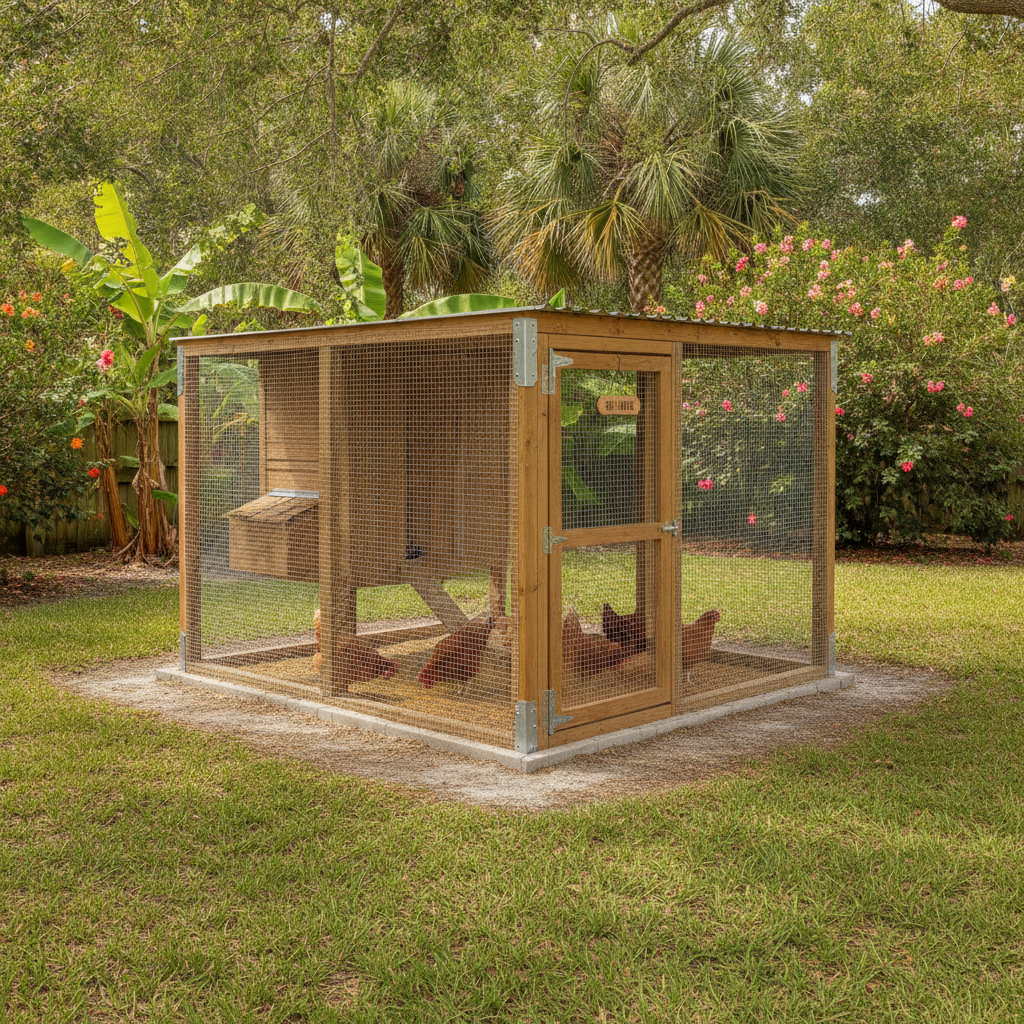
Predator Proofing Chicken Coops in Cape Coral
By Mara K. · Updated September 25, 2026
Quick answer
Predator proofing chicken coops in Cape Coral involves using hardware cloth with at least a 1/2-inch mesh and a minimum 19-gauge thickness to keep out raccoons and snakes. Given Cape Coral's subtropical climate, ensure your coop has plenty of shade and ventilation to manage the heat.
Key facts
- Minimum wire gauge
- 19-gauge
- Hardware mesh size
- 1/2 inch
- Summer high temperatures
- 92°F
- Common predators
- raccoons, snakes
Living in the subtropical climate of Cape Coral means you're up against unique challenges when it comes to predator proofing your chicken coop. With hot, humid summers and mild winters, ensuring your chickens stay safe from predators and comfortable in the heat is a balancing act every backyard chicken keeper here must master.
What Wire Gauge Is Best for Predator Protection?
Using the right wire gauge is crucial for keeping predators like raccoons and snakes out of your chicken coop. For folks in Cape Coral, hardware cloth with at least a 1/2-inch mesh and a minimum thickness of 19-gauge is recommended. This gauge is strong enough to prevent raccoons from tearing it apart and small enough to keep snakes from slipping through. I ran 14 hens in my backyard near Pelican, using 19-gauge hardware cloth, and never had a loss to predators.
How to Build a Secure Base
A secure base is essential to prevent digging predators from getting in. Bury your hardware cloth at least 12 inches deep around the perimeter of your coop. This creates an effective barrier against animals like foxes and raccoons. Some folks in nearby Pine Island also recommend adding a skirt of wire mesh extending 18 inches outward for additional security.
Managing Heat in Your Coop
Cape Coral's summer highs can soar to around 92°F, so it's important to ventilate your coop well. Large windows covered in hardware cloth can offer both airflow and protection. Include plenty of shade with roof overhangs or nearby trees, and consider frozen treats like chilled watermelon to keep your flock cool. For more local tips, check out our coop plans designed for hot climates.
Knowing Local Predators
Understanding the local wildlife in areas like Matlacha and Burnt Store Marina helps in planning your coop's defense. Raccoons, snakes, and even hawks are common threats. A covered run made with the same 19-gauge hardware cloth can prevent aerial attacks. Visit our health map for more information on local predator activity.
Additional Tips for Cape Coral Residents
- Choose Heat-Hardy Breeds: Breeds like Leghorns and Rhode Island Reds do well in the heat.
- Regular Health Checks: With the humidity, respiratory issues can arise, so keep an eye on your flock's health. Our local chicken doctor can help with any concerns.
- Local Resources: For supplies, local feed and supply stores in Cape Coral offer predator-proofing materials and feed options suitable for the climate.
Final Thoughts from the Coop
Keeping chickens in Cape Coral means protecting them from both the sweltering heat and local predators. By using robust materials and smart planning, you can build a fortress that's both safe and comfortable. The key is to understand the unique challenges of our local climate, and always be ready to adapt as nature demands. For more advice tailored to our area, check out our learn section for a treasure trove of tips and tricks.
More for Cape Coral chicken keepers
Got questions or your own tips?
Jump into the community and swap notes with other backyard chicken keepers.
Discuss in the community →Comments
Sign in to join the conversation.