
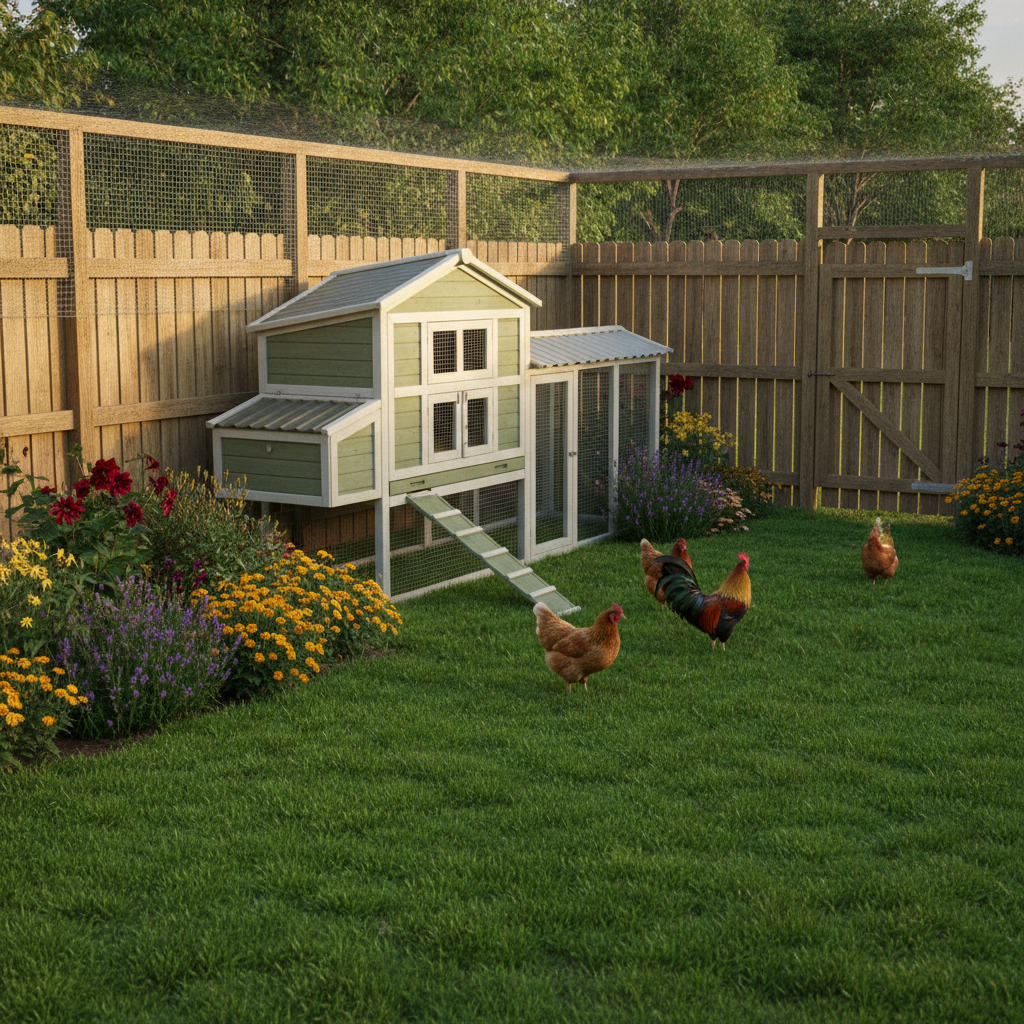
Effective Predator Proofing for Chicken Coops in Atlanta
By Mara K. · Updated July 4, 2026
Quick answer
Effective predator proofing for chicken coops in Atlanta requires using 1/2 inch hardware cloth for construction, elevating coops at least 12 inches off the ground, and implementing digging barriers. This will protect your flock from common predators like raccoons, foxes, and hawks year-round in this humid climate.
Key facts
- Wire Mesh Gauge
- 1/2 inch
- Elevation Height
- 12 inches
- Predator Types
- 3 (raccoons, foxes, hawks)
Living in Atlanta, Georgia, where summers are hot and humid with temperatures often reaching the upper 90s, keeping chickens safe from local wildlife predators is a critical part of backyard chicken keeping. Folks in neighborhoods like Buckhead, Decatur, and Sandy Springs know that raccoons, hawks, and even the occasional fox can pose threats to your flock.
Why Predator Proofing is Crucial in Atlanta
The unique climate of Atlanta, with its long, humid summers and brief, mild winters, creates an environment where predators can be active for most of the year. Those hot summer months, when the heat index soars, can be especially challenging because animals are more eager to find easy meals around urban areas. Protecting your leghorns, rhode, island, reds, and australorps from these dangers is vital. According to the Georgia Department of Natural Resources, urban wildlife interactions are frequent, so ensuring your coop is predator-proof is non, negotiable.
How to Build a Secure Coop
When building or retrofitting your chicken coop, there are several critical components to consider to keep predators at bay:
, Strong Wire Mesh: Use a sturdy gauge wire, like 1/2" hardware cloth instead of chicken wire, which raccoons can easily tear through. , Elevated Coops: Raising the coop off the ground a foot or more can keep burrowing animals like foxes and coyotes from gaining access. , Sturdy Latches: Raccoons are notorious for their dexterity. You'll want latches that are raccoon-proof. Regular padlocks or carabiner clips can do the trick.
You'll find these supplies locally, which you can check out at Atlanta's feed and supply stores.
Deterring Aerial Predators
Atlanta is home to many birds of prey, such as hawks and owls, which require specific strategies to counteract:
, Netting and Roofing: Cover the run with strong netting or a solid roof. This keeps aerial predators from swooping in. , Reflective Deterrents: Hang old CDs or reflective tape, as their shine can deter some birds.
Dealing with Ground Predators
Animals like raccoons and foxes are common across Georgia, sneaking in during the night. Here’s how to stop them:
, Digging Barriers: Bury hardware cloth at least 12 inches deep around the coop perimeter to stop diggers. , Motion, Activated Lights: Predators often avoid lit areas. Install some solar, powered motion lights around the coop.
Proactive Health Measures
Atlanta’s humid climate can lead to an increase in pests like mites and worms. Keep your flock healthy with regular checkups. Track any outbreaks using our US chicken health and outbreak map and consult with a chicken doctor if you suspect health issues. Consider deworming regularly as a preventative step.
When You're Not Sure
If you're in a bind and need some guidance, we have a collection of coop plans that might inspire your setup. For more specific advice, check out our articles in the learning section.
FAQs on Predator Proofing
What are the most common chicken predators in Atlanta?
Raccoons, foxes, and hawks are the most common threats to backyard chickens in the Atlanta area.
Can I use chicken wire for my coop?
Chicken wire is not strong enough to withstand persistent predators. Opt for hardware cloth instead.
How do neighbors in areas like Decatur mitigate predator risks?
Many folks in Decatur use elevated coops and deep dig barriers to protect their flocks effectively.
What's the first step in predator proofing?
Start by assessing your coop's weak spots and reinforce them with heavy, duty materials like hardware cloth.
Can predators attack during the day?
Yes, especially hawks and some bold raccoons. Keeping your chickens inside a covered run can help.
Final Thoughts from the Coop
Keeping your chickens safe in Atlanta's wild urban environment takes some planning and thoughtfulness. Whether you're in Sandy Springs or East Point, taking these steps will give you peace of mind and keep those lovely leghorns, rhode, island, reds, and easter, eggers happy and safe. Remember, a well, protected coop means your flock can thrive even with the challenges posed by our unique Southern climate.
More for Atlanta chicken keepers
Got questions or your own tips?
Jump into the community and swap notes with other backyard chicken keepers.
Discuss in the community →Comments
Sign in to join the conversation.