
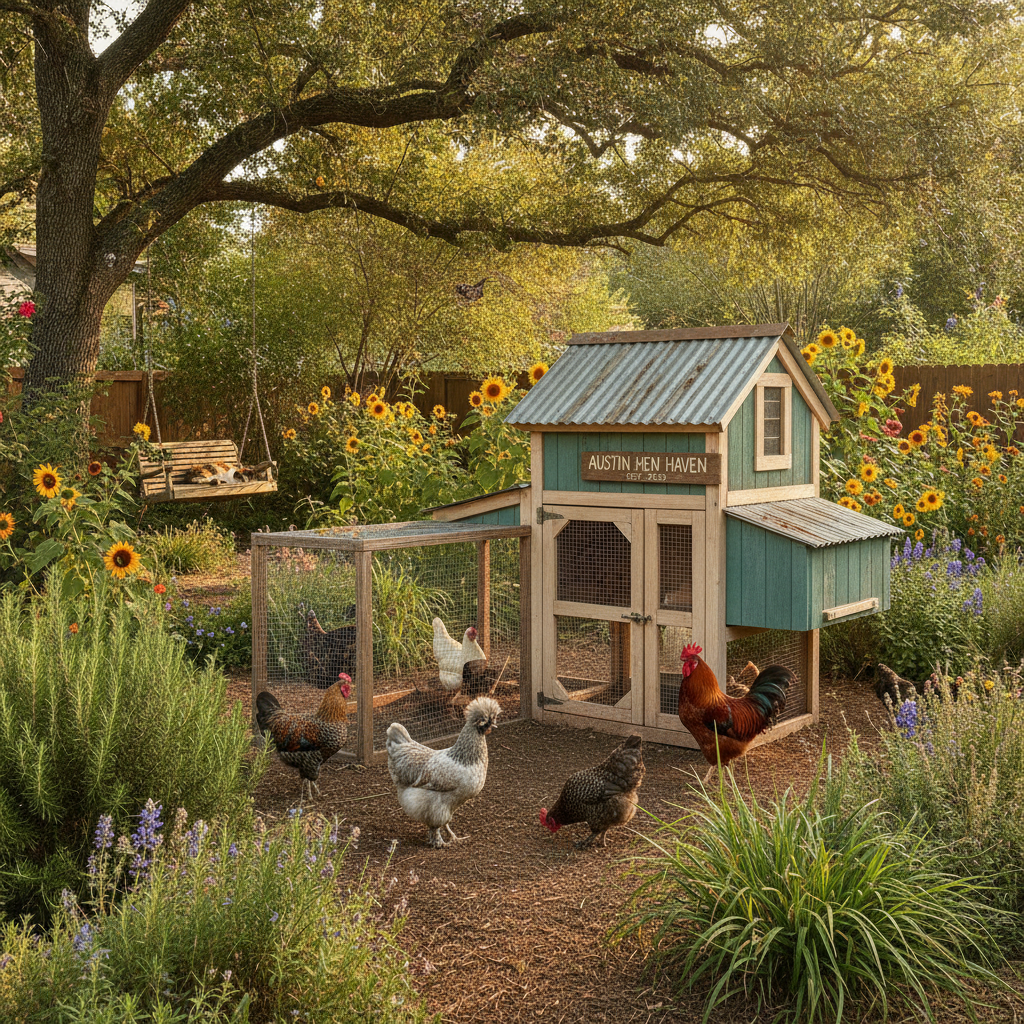
Chicken Keeping Laws in Austin: Everything You Need to Know
By Mara K. · Updated October 9, 2026
Quick answer
In Austin, keeping chickens requires following specific laws, including a limit of 10 chickens and coops set back 50 feet from neighbors. The hot, humid climate means choosing heat-tolerant breeds like Leghorns and ventilating coops well. Check local ordinances and supply sources to ensure compliance.
Key facts
- Chicken limit
- 10 birds
- Coop setback
- 50 feet
- Summer highs
- 100°F
- Frost-free period
- March to November
- Coop cost range
- $300-$2000
Raising chickens in Austin is a rewarding and popular venture, but it's important to follow local laws to keep both your flock and neighborhood happy. The chicken keeping laws in Austin require that you keep no more than 10 chickens, with coops set back at least 50 feet from any neighboring structures. This ensures you avoid any unwanted squabbles over backyard boundaries.
Understanding Austin's Chicken Keeping Laws
In Austin, chicken owners are limited to keeping 10 chickens per household. This law aims to maintain a harmonious relationship between poultry enthusiasts and the rest of the community. Further, the coops must be placed at least 50 feet away from neighboring residences. That might sound like a lot, but many backyards in neighborhoods like Hyde Park and Zilker can accommodate this space with some creative planning.
For those living in nearby areas like Round Rock or Cedar Park, it's wise to double-check your local ordinances, as they can differ from Austin's. Travis County ordinances provide a good resource to ensure you're abiding by all regulations.
Navigating Austin's Hot, Humid Climate
With summer temperatures often hitting the triple digits, sometimes reaching up to 100°F, it's crucial to prepare your coop to handle Austin's heat. Choose heat-tolerant breeds like Leghorns and Rhode Island Reds to withstand these conditions. Good ventilation in your coop is non-negotiable, given the high humidity and heat index.
Because of the long frost-free period from March to November, you can plan your flock's growth and egg production cycles effectively. It's also a great time to fortify against common pests, as mites and worms thrive in this climate. Regular deworming and checking for mites will keep your chickens happy and healthy. Explore our health map to stay updated on any local health concerns.
Building Your Coop in Austin
When it comes to building your coop, costs can vary widely. A basic setup might run you around $300, while more elaborate designs can climb to $2000. To comply with Austin regulations, consider using a ready-made plan available on our coop plans page. These plans will ensure you get the appropriate dimensions and ventilation features.
If you're sourcing materials locally, our guide to local feed and supply stores in Austin can point you in the right direction for everything from lumber to Purina feed.
Choosing the Right Breeds for Austin
Given the climate, picking the right chicken breeds can make all the difference. Breeds like the Easter Egger are popular choices here due to their hardiness and adaptability. They're excellent layers and can handle the heat better than some others.
These breeds not only survive but thrive during Austin's hot summers. And since Easter Eggers are known for their unique egg colors, they add a splash of character to any backyard flock.
Final Thoughts from the Coop
Keeping chickens in Austin is a delightful experience that connects you with nature and your community. By adhering to local laws and tailoring your coop and flock to fit the local climate, you'll be well on your way to enjoying happy, healthy chickens. Remember to keep an eye on local ordinances and resources to stay updated, and don't hesitate to contact a chicken doctor if your flock needs some TLC. Happy chicken keeping!
More for Austin chicken keepers
Got questions or your own tips?
Jump into the community and swap notes with other backyard chicken keepers.
Discuss in the community →Comments
Sign in to join the conversation.