
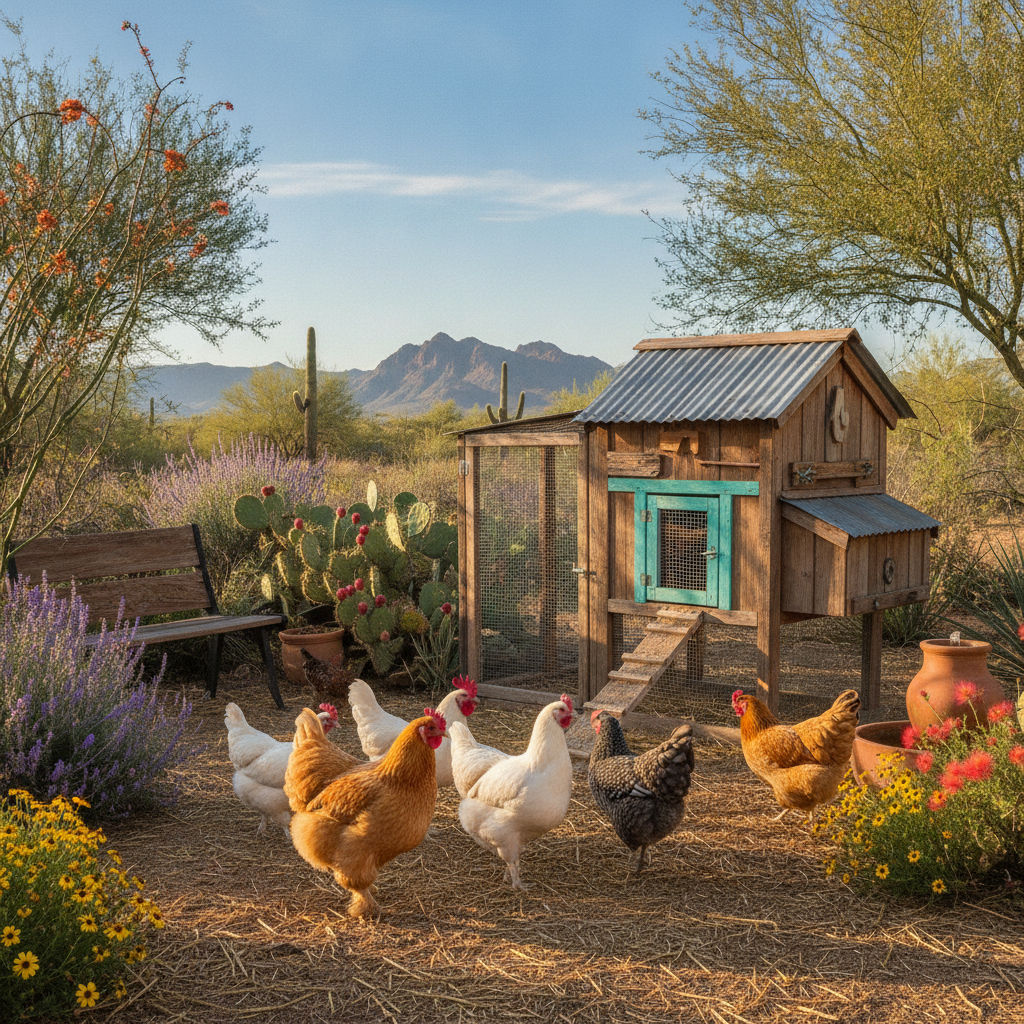
Best Chicken Breeds for Tucson Weather
By Mara K. · Updated September 12, 2026
Quick answer
Chickens like the Leghorn and Rhode Island Red thrive in Tucson's desert climate, enduring summer highs of 100°F+. Provide at least 4 square feet per bird, plenty of shade, and misting systems to combat the heat. Electrolytes in water can help during peak summer months.
Key facts
- Summer Highs
- 100-110°F
- Space per Bird
- 4 sq ft
- Coop Ventilation
- 1 sq ft per 10 sq ft of floor
- Humidity Level
- 10-20%
Raising chickens in Tucson's extreme desert climate presents unique challenges. With summer temperatures often soaring between 100°F and 110°F and humidity levels dropping to a mere 10-20%, selecting the right chicken breed is crucial. Here's a guide to the best breeds for Tucson, where neighborhoods like Catalina Foothills, Tanque Verde, and Oro Valley roast under that blazing sun.
Which Chicken Breeds Thrive in Tucson?
Leghorns are a top choice for Tucson due to their heat tolerance and efficient laying of around 280 eggs annually. Their combs are large, helping with heat dissipation. Pair them with shade and a misting system for best results.
Rhode Island Reds are another solid pick. Not only are they good layers, producing 250-300 eggs a year, but they're also hardy in various temperatures. Keeping their coop well-ventilated with at least 1 square foot of ventilation per 10 square feet of floor space is key.
Easter Eggers, known for their colorful eggs, handle Tucson's climate well too. They aren't heavy layers but make up for it with personality. Ensure ample water and consider adding electrolytes during the hottest months.
For details on these and other breeds, check out our guides on Leghorns and Rhode Island Reds.
Coop Setup for Extreme Heat
A proper coop is vital to help your flock survive the Tucson summer. You'll want at least 4 square feet per bird inside the coop with plenty of shade outside. Coop plans should incorporate good ventilation and possibly even reflective roofing to reduce heat absorption.
In summer, high temperatures can be mitigated with systems that cool the air. Misters can drop temps significantly-just remember to monitor humidity as too much can lead to health issues.
Managing Water and Feed
Hydration is crucial. Chickens in Tucson need more water than you'd expect. Providing fresh water with added electrolytes during the hotter months can be a lifesaver. Stick to high-quality feeds from local suppliers like those listed on our Tucson supplies page.
Health Tips for Desert Living
Desert climate means unique health challenges. Be on the lookout for heat stress signs like panting and lethargy. The US chicken health map can help you stay updated on any local health advisories.
Nighttime temperatures can drop significantly, sometimes to the low 40s in winter. While Tucson's official frost date is typically in early December, some areas like Marana might experience colder spells sooner. A heat lamp may be necessary for those chilly nights. Consult a chicken doctor if you're unsure about your flock's health needs.
Final Thoughts from the Coop
Living in Tucson, I've come to appreciate how resilient chickens can be when given the right care. By choosing breeds like Leghorns, Rhode Island Reds, or Easter Eggers, and setting up a well-ventilated coop, you can enjoy fresh eggs even in the middle of the desert heat. Remember to keep those waterers full and shade plentiful, and your hens will be clucking with joy.
For more insights on raising chickens in various climates, check out our range of articles that cover tips and tricks for every chicken keeper.
More for Tucson chicken keepers
Got questions or your own tips?
Jump into the community and swap notes with other backyard chicken keepers.
Discuss in the community →Comments
Sign in to join the conversation.