

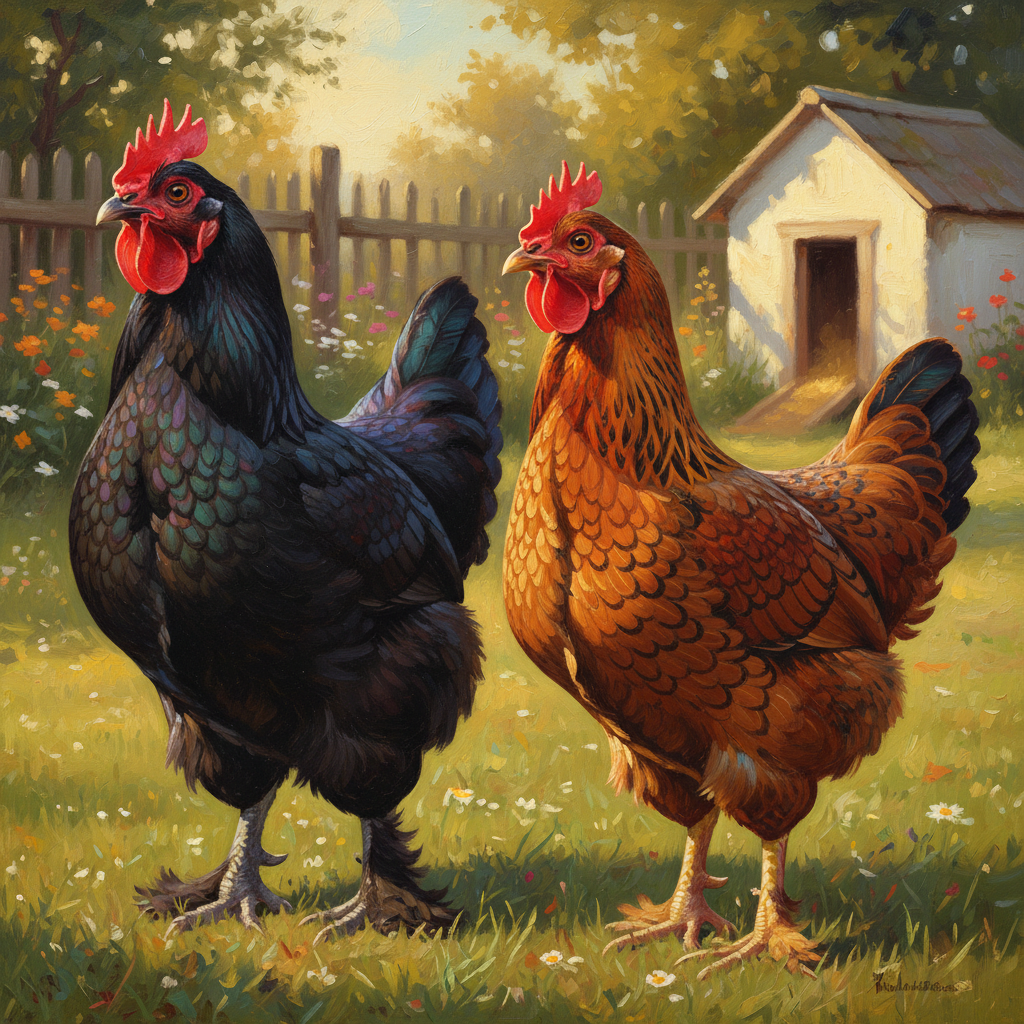
Marans vs Welsummer
Both lay deep chocolate-brown eggs. Marans (especially Black Copper) lay darker, more uniform eggs. Welsummers are friendlier and lay slightly more.
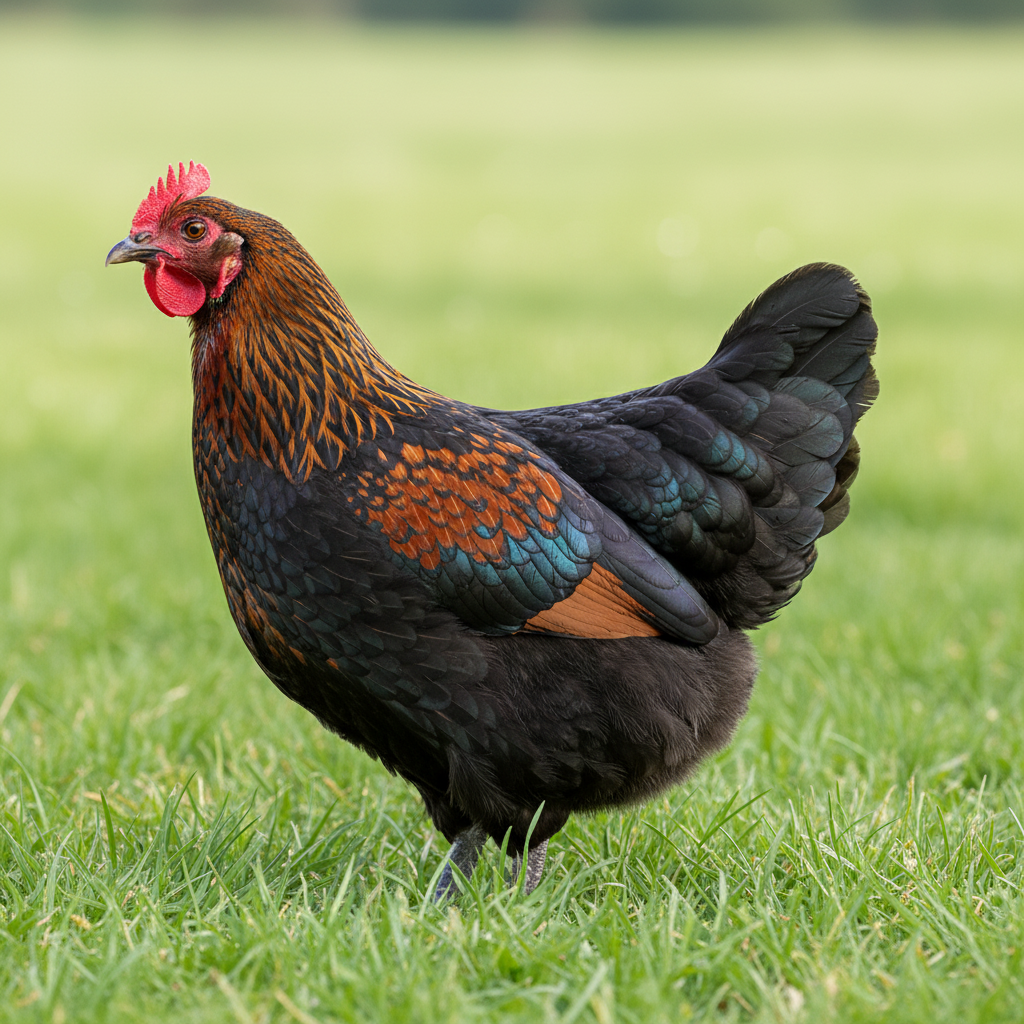
Marans
Lays the famous chocolate-brown egg.
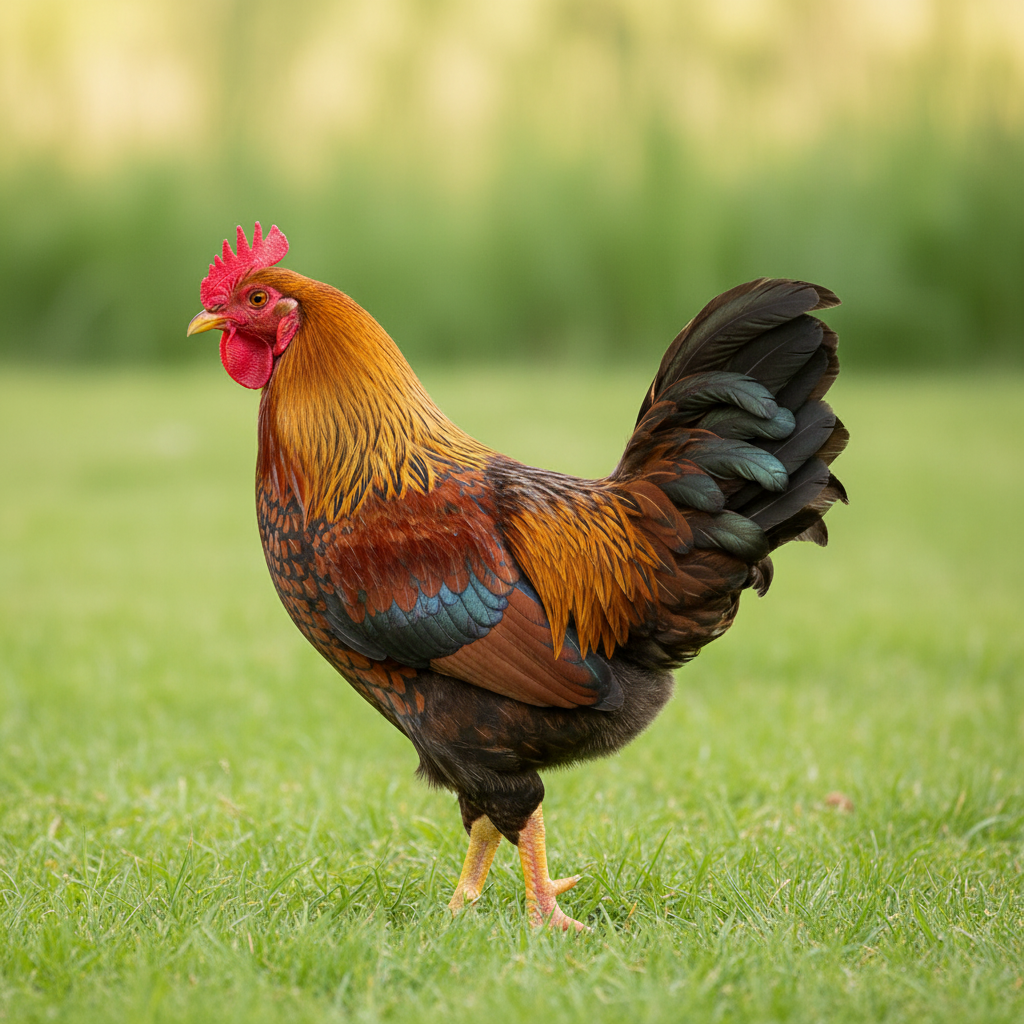
Welsummer
Cornflake rooster - lays speckled chocolate eggs.
Side-by-side
| Trait | Marans | Welsummer |
|---|---|---|
| Purpose | dual | dual |
| Eggs / year | 180 | 200 |
| Egg color | dark chocolate brown | dark terracotta brown speckled |
| Egg size | large | large |
| Temperament | calm, quiet, friendly | friendly, intelligent, alert |
| Size | large | medium |
| Cold-hardy | Yes | Yes |
| Heat-hardy | No | Yes |
| Broody | No | No |
| Beginner-friendly | Yes | Yes |
| Noise level | quiet | moderate |
Pick Marans if you…
Want the darkest, most show-stopping brown eggs.
Pick Welsummer if you…
Want chocolate eggs from a friendlier, more productive bird.
Still can't decide?
Answer 6 quick questions and our AI matches you to the right breed for your yard, climate, and goals.
Take the Breed Matcher quizFrequently asked questions
Which lays darker eggs?
Black Copper Marans, graded on a 1-9 scale, top hens hit 7-9. Welsummers typically score 4-6.
How many eggs per year?
Marans: 150-200. Welsummers: 160-220.
More breed comparisons
Marans or Welsummer for dark eggs?
If you are shopping for dark brown eggs, these two are the names you keep hearing. The Marans, from France, is known for the darkest chocolate eggs of any common breed. The Welsummer, from the Netherlands, lays a warm terracotta egg, often with darker speckles. Both are beautiful. Here is how to choose.
By goal
- Egg color. Good Marans lines lay the darkest eggs. Welsummer eggs are a rich reddish brown, and the speckling is their signature.
- Egg numbers. Both are moderate layers. Neither matches a production hybrid.
- Temperament. Marans are usually calm and quiet. Welsummers are friendly but busy and active.
- Kids. Both can be good. Calm Marans may be easier to pick up.
- Climate. Both are fairly cold-hardy. Both have single combs, so keep the coop dry in winter.
- Meat. Marans are often kept as a dual-purpose bird and dress out well. Welsummers are lighter.
- Noise. Both are moderate. Welsummers can be a bit chattier when foraging.
Raising them side by side
They get along well and make a lovely pair in the yard. The bigger difference is in daily habits. Welsummers love to forage and range widely if allowed, while Marans are happy to stay closer. Both generally fit into a mixed flock without much drama. If you mix them with blue egg layers, you have the start of a great colorful carton, and you can even breed Olive Eggers.
The real deciding factors
Line matters more than breed. Many hatchery Marans lay medium brown eggs, not the dark chocolate seen in photos. If deep color is the goal, buy from a breeder who selects for it and ask to see eggs from the parent flock.
Do you free-range? Welsummers are better foragers and more predator aware, with coloring that blends into the ground.
Do you want speckles? If you love a speckled, painted look, Welsummers are hard to beat.
Both breeds' eggs fade through the laying season and darken again after a rest. The dark egg guide explains why.
Common questions about Marans vs Welsummers
Which lays darker eggs, Marans or Welsummer?
Well-bred Marans usually lay darker eggs. Welsummers lay a reddish brown with speckles.
Can I cross Marans and Welsummers?
Yes. The chicks will usually lay brown eggs, with shade depending on the parents.
Why are my Marans eggs not very dark?
The line may not be selected for color, or the hen is in the later part of her laying cycle.

