

Vent Gleet (Cloacitis)
A yeast and bacterial inflammation of the vent. Yellow paste, fishy smell, and a generally unhappy hen are the classic combo.
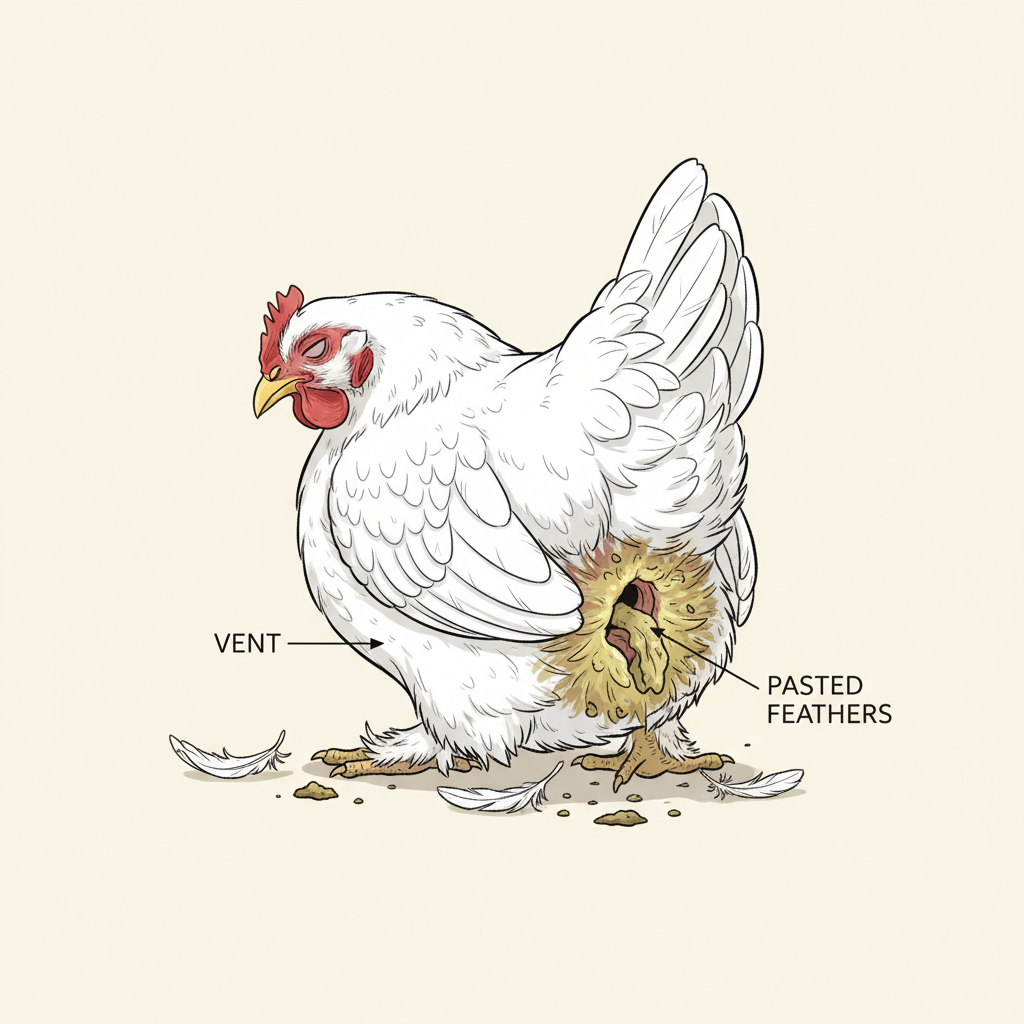
Mix of AI illustrations and anonymized real cases shared by community keepers. Visual severity varies by bird, age, and stage.
Symptoms
- Yellow or messy vent
- Fishy or foul vent smell
- Pasted feathers around vent
- Drop in egg production
- Lethargic / not moving
Treatment
Bathe the vent in a warm Epsom salt soak for 15 minutes daily. Trim soiled feathers. Apply an antifungal cream (miconazole). Probiotics and apple cider vinegar in water help rebalance the gut. A vet may prescribe nystatin in stubborn cases.
Prevention
Keep the coop and run dry. Avoid high sugar treats and moldy feed. Add probiotics after antibiotic courses. Trim vent feathers on fluffy breeds.
Typical recovery
5 to 14 days with prompt care.
Cleaning up and treating vent gleet
Vent gleet is an infection or inflammation of the cloaca, the chamber just inside the vent. It is often caused by yeast, sometimes by bacteria. It is messy and smelly rather than a sudden emergency, but it needs attention because it does not usually clear by itself and can make the bird miserable.
Signs to watch for
- White, yellow or creamy discharge from the vent.
- Crusty, matted feathers below the vent.
- A strong, sour or foul smell.
- Red, swollen or sore-looking vent skin.
- Drop in laying.
What to do
- Separate her so you can treat her and keep her clean.
- Give her a warm water soak to loosen the crust around the vent.
- Clean the area gently with mild soap and warm water. Trim badly matted feathers if needed.
- Dry her well. A damp hen in a cool coop gets chilled.
- Look closely at the vent for a stuck egg, a wound or tissue sticking out.
- Call a vet for a diagnosis and the right treatment.
Wear gloves
Wear disposable gloves when cleaning her, and wash your hands well afterwards. Droppings and discharge can carry germs like salmonella even if the gleet itself is yeast.
How to tell this apart from look-alikes
Pasty, stuck droppings in chicks are pasty butt, not gleet. A swollen, squishy belly with discharge and lethargy points more to egg yolk peritonitis. Pink or red tissue pushing out of the vent is a prolapse. Watery droppings with a clean, non-smelly vent are covered on watery droppings. Dirty-looking vent feathers with crawling specks are mites.
When to call a vet
Call an avian or poultry vet if the discharge does not improve within a few days of cleaning, if she seems ill, has a swollen belly or stops eating, or if it keeps coming back. A vet can test the discharge and prescribe the right antifungal or antibiotic.
Home remedies
Some keepers use probiotics or apple cider vinegar in water. These may support gut health, but they do not cure an established infection. Keep cleaning and get a proper diagnosis.
Prevention
- Keep feed fresh and dry, and never feed moldy food.
- Keep waterers clean.
- Keep bedding dry.
- Limit sugary or bread treats.
- Watch hens closely after any antibiotic treatment, which can let yeast grow.
The flock and the eggs
Whether it spreads between birds is debated, and mating may play a part, so keep her apart until she is healed. Do not eat eggs that are soiled with discharge. If she gets medication, check the product label or ask a vet about egg withdrawal.
Common questions about vent gleet
What causes vent gleet in chickens?
Usually yeast, sometimes bacteria, often after diet changes, antibiotics or moldy feed.
Is vent gleet contagious?
It is not clear. Keep her apart and clean until she heals to be safe.
Can vent gleet go away on its own?
Rarely. It usually needs cleaning and treatment from a vet.

