

Infectious Coryza
A fast-spreading bacterial respiratory infection that causes swollen faces, smelly discharge, and one-sided sinus swelling. Recovered birds often stay lifetime carriers.
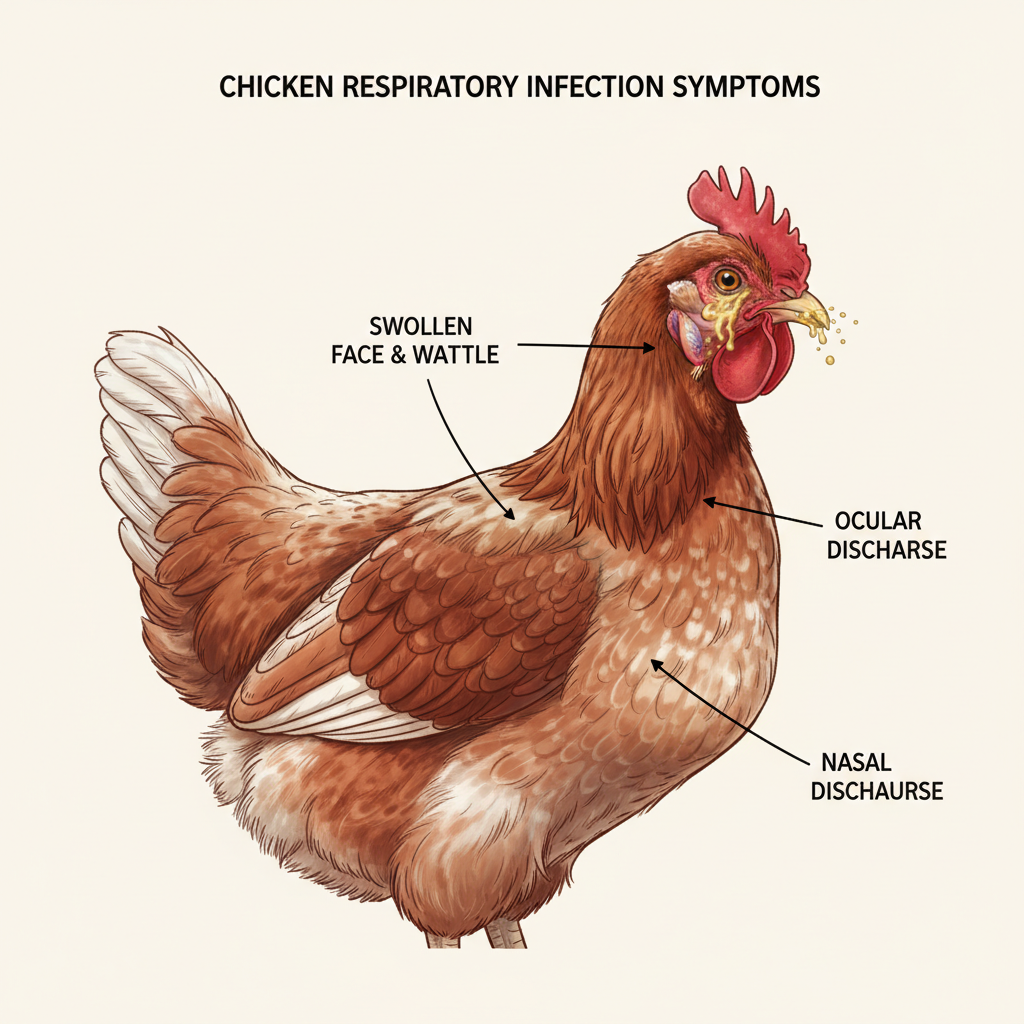
Mix of AI illustrations and anonymized real cases shared by community keepers. Visual severity varies by bird, age, and stage.
Symptoms
- Swollen face or wattles
- Discharge from eyes or nostrils
- Sneezing / coughing
- Foul-smelling discharge
- One-sided facial swelling
- Lethargic / not moving
Treatment
Isolate the affected bird immediately. Most cases need antibiotics from a vet (sulfa drugs, tetracyclines, or erythromycin are common choices). Keep the bird warm, dry, and well hydrated. Clean nostrils with warm saline if crusted. Do not introduce recovered birds into a clean flock, they remain carriers.
Prevention
Quarantine all new birds for at least 30 days. Keep the coop dry and well ventilated. Disinfect feeders and waterers weekly. Do not mix flocks at swaps or shows without a quarantine. Cull or permanently isolate recovered carriers if you want to keep the rest of the flock clean.
Typical recovery
14 to 30 days with prompt care.
What to do if coryza shows up in your flock
Infectious coryza is a bacterial respiratory disease that spreads quickly between chickens. It comes on fast, often within days of exposure, and the bad smell is the giveaway. Birds that recover usually stay carriers for life, which changes how you manage the whole flock going forward.
Signs to watch for
- A swollen face and wattles, sometimes one side more than the other.
- Eyes swollen or closed, with sticky discharge.
- Thick, smelly nasal discharge.
- A foul smell around the head, often noticed before anything else.
- Sneezing, drop in laying and poor appetite.
Step by step
- Separate sick birds right away into a clean, well-ventilated space.
- Check every other bird. Smell around their heads, and look at eyes and nostrils.
- Clean the eyes and nostrils gently with saline.
- Call an avian or poultry vet. Testing confirms it, and a vet can decide whether treatment makes sense.
- Stop adding, selling or showing birds until you know what you have.
How to tell this apart from look-alikes
Bubbly eyes and slower onset point more to mycoplasma. Coughing up bloody mucus suggests ILT. A swollen eye with no smell and no other signs may just be an injury, covered on the swollen eye page. Sudden swelling of the head with purple combs and fast deaths can be avian influenza, which must be reported to your state veterinarian.
When to call
Call a vet as soon as you suspect it. Some states track coryza, so ask your vet or extension office whether it needs reporting where you live. Treatment from a vet can ease signs, but it does not clear the carrier state.
Supportive care
Keep birds warm, dry and out of drafts. Make water and food easy to find, since swollen eyes can make that hard. Wipe discharge away. Home remedies may comfort, but they do not cure coryza.
Long-term flock decisions
Because recovered birds carry the bacteria, many vets recommend a closed flock, meaning no new birds in and no birds out, or starting fresh after a full clean-out. Talk this through with a vet. Do not sell or give away birds from an infected flock.
Prevention
- Buy from clean, tested sources.
- Quarantine new birds for about a month.
- Avoid mixing ages and sources.
- Do not share equipment with other flocks.
See small flock biosecurity for more.
Eggs and people
Coryza is not known to infect people. Wash hands after handling sick birds anyway. If birds are treated, check the product label or ask a vet about egg withdrawal.
Common questions about infectious coryza
What does coryza smell like?
A strong, foul, rotten smell around the face and nostrils.
Can chickens recover from coryza?
Many recover from the signs, but they usually stay carriers.
Can I add new chickens after coryza?
New birds will likely catch it from carriers. Talk to a vet before adding any.

