

Avian Influenza (HPAI)
Highly pathogenic avian influenza is a reportable disease that can wipe out a flock in 48 hours. Dark combs, swollen heads, and sudden death are red flags. Report immediately.
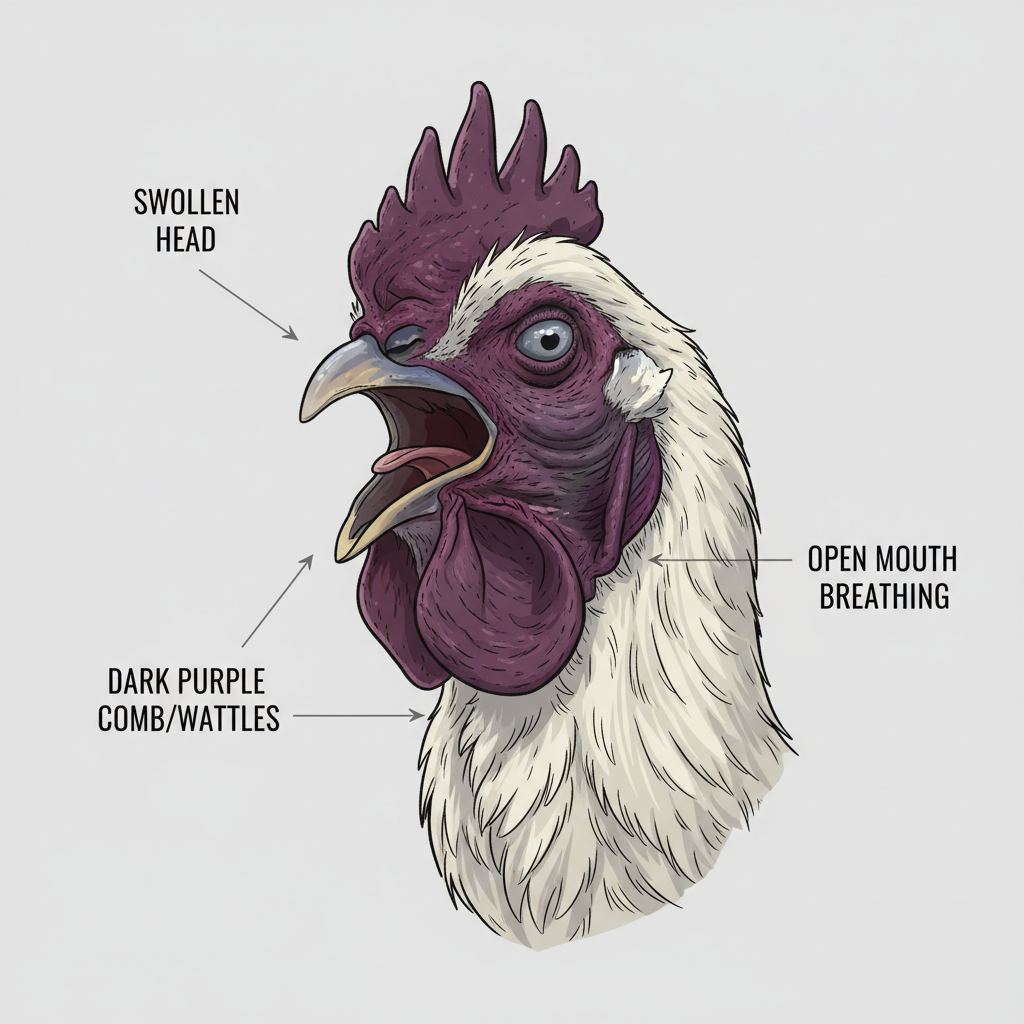
Mix of AI illustrations and anonymized real cases shared by community keepers. Visual severity varies by bird, age, and stage.
Symptoms
- Sudden death
- Dark or purple comb
- Swollen head
- Gasping / open mouth breathing
- Twisted neck / star gazing
- Greenish watery diarrhea
- Drop in egg production
Treatment
There is no treatment. Call your state vet or USDA APHIS at the first suspicion (1-866-536-7593 in the US). Do not move birds, eggs, or equipment off the property. Federal teams will guide depopulation and cleaning.
Prevention
Keep your flock away from wild waterfowl. Cover runs near ponds or migration paths. Disinfect boots and tools. Quarantine any bird returning from shows or sales for 30 days. Watch outbreak alerts in your county.
If you think your flock has bird flu
Highly pathogenic avian influenza (HPAI) is a fast-moving, often deadly virus in poultry. It spreads through wild birds, especially waterfowl, and on shoes, equipment and clothing. It is a reportable disease. If you suspect it, you are required to report it, and reporting fast helps protect every flock around you.
Signs that should make you call right away
- Several birds dying suddenly, sometimes with no warning signs.
- Swelling around the head, eyes, comb or wattles.
- Purple or blue discoloration of the comb, wattles or legs.
- Severe drop in laying, soft or misshapen eggs.
- Coughing, sneezing, gasping, nasal discharge.
- Lack of energy, poor appetite, twisted necks or stumbling.
- Diarrhea.
What to do right now
- Call your state veterinarian or your local extension office. They will tell you how to proceed and can arrange testing.
- Do not move any birds, eggs, manure or equipment off your property.
- Do not take dead birds to a lab or vet unless officials tell you to. Bag them and keep them cold, away from other animals.
- Keep people and pets away from the flock.
- Keep your other birds confined and away from wild birds.
How to tell this apart from other problems
Many diseases cause coughing or a drop in laying. What sets HPAI apart is the speed and the death rate, often several birds lost in a day or two. Newcastle disease can look very similar and is also reportable. Single birds that slowly get sick are more likely to have something else, like infectious coryza or mycoplasma. Only lab testing can confirm HPAI, which is why calling officials is the right first step.
Protecting yourself and your family
Bird flu can infect people, though it is uncommon. Avoid touching sick or dead birds with bare hands. Wear gloves, a mask and eye protection if you must handle them, and wash your hands with soap afterwards. Change clothes and shoes after coop work and wash them. Keep children away. Tell your doctor if you get eye redness, fever or flu-like symptoms after contact with sick birds.
Prevention
- Keep wild birds away from feed, water and the run. Cover runs if waterfowl are nearby.
- Use dedicated coop shoes or boot covers.
- Do not share equipment with other flocks.
- Quarantine new birds and be cautious at swaps and shows during outbreaks.
The Defend the Flock biosecurity page goes deeper.
Eggs and the rest of the flock
Do not eat, sell or give away eggs from a flock suspected of HPAI. Follow the instructions officials give you. There is no home treatment, and home remedies do not cure it.
Common questions about avian influenza in chickens
Do I have to report bird flu in backyard chickens?
Yes. Contact your state veterinarian or extension office if you suspect it.
Can I eat eggs during a bird flu outbreak nearby?
If your own flock is healthy, properly cooked eggs are generally considered safe. If your birds are sick, do not eat or share their eggs.
How does bird flu get into backyard flocks?
Mostly from wild birds and their droppings, and on shoes, equipment and visitors.

