

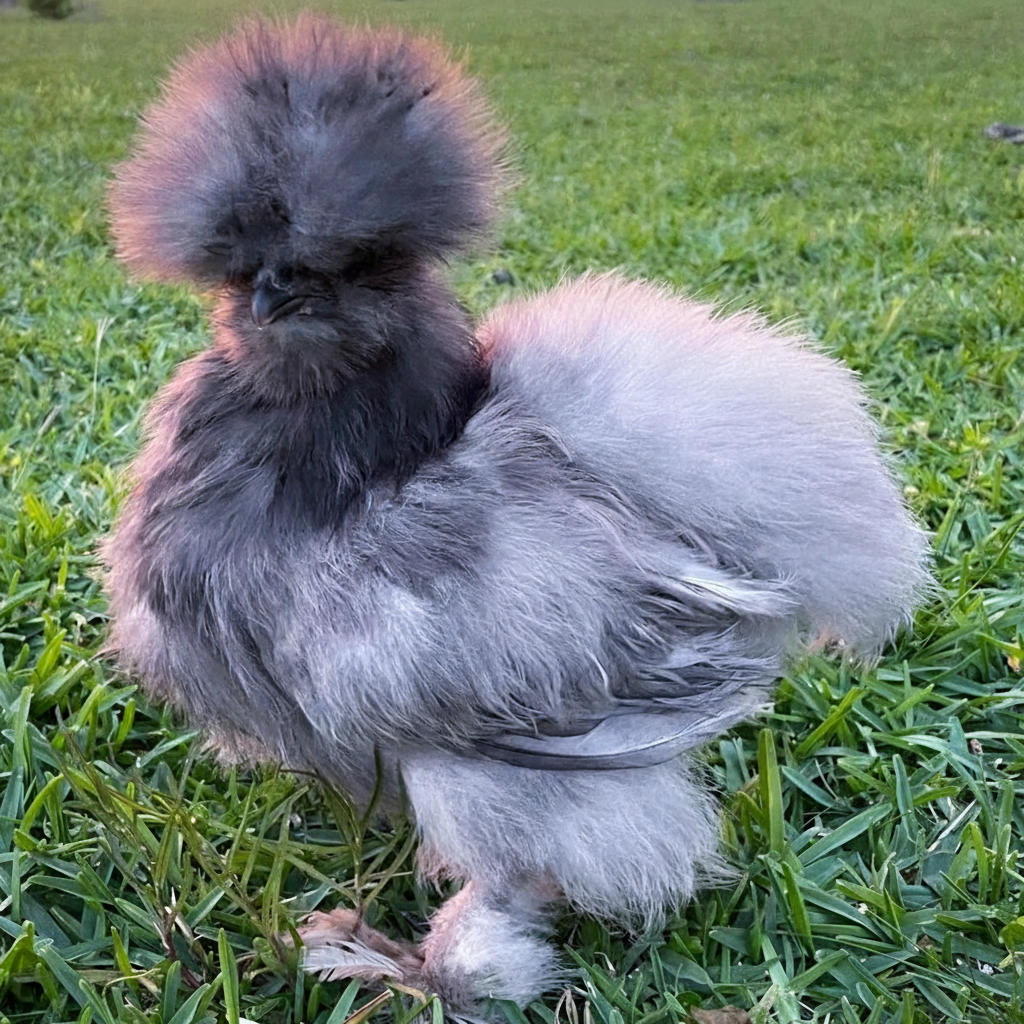
Silkie
Fluffy bantam with black skin and 5 toes.
Is the Silkie right for you? Take the Breed Matcher →About the Silkie
Silkies are small, fluffy bantams known for their unique feathering, which offers a soft, silky texture resembling fur. They have distinct black skin, five toes on each foot, and a calm, friendly temperament, making them great pets. Their charming appearance and affectionate nature make them a popular choice among backyard keepers. Additionally, they are often recognized for their distinctive crest of feathers on their heads.
History
Silkies are believed to have originated in China, with their history dated back to at least the 13th century. They were possibly brought to Europe via trade routes, where they gained popularity for their unique looks and friendly nature. Over the years, Silkies have been selectively bred, leading to various colors and shapes appreciated by fanciers worldwide.
Care tips
Silkies are hardy and can adapt to different climates, but they prefer a sheltered coop to protect their soft feathers. They are known to go broody, often wanting to hatch eggs, so having fertile eggs available can be beneficial. Providing ample space for them to roam and forage is essential, as they enjoy interacting with their environment. Because of their gentle nature, they are best kept with docile breeds.
Color varieties
Fun facts
- Have black bones and skin
- Have 5 toes instead of 4
- Excellent broody mothers – often used to hatch other breeds’ eggs
What keeping Silkies is really like
Silkies look more like stuffed toys than chickens. Their feathers lack the tiny hooks that hold normal feathers together, so they feel like fur. They also have black skin and bones, five toes on each foot, feathered legs, a walnut comb, blue earlobes and, in most birds, a fluffy crest. They have been known in Asia for centuries, and today they are one of the most popular pet breeds anywhere.
Most Silkies are calm, gentle and easy to hold, which is why kids love them. They are slow movers and rarely fly. In mixed flocks they tend to sit near the bottom of the pecking order.
Broody is the default setting
Silkies are famous for going broody, often several times a year. Many keepers use them to hatch eggs from other breeds, and they make good, careful mothers. If you want eggs, though, a broody Silkie stops laying for weeks. Collect eggs often, and if needed, break the broodiness by moving her to a wire-floored crate for a few days. When not broody, Silkies lay small cream to tinted eggs at a modest pace.
Their feathers are not waterproof
Silkie fluff soaks up water and does not shed it. A Silkie caught in cold rain can get chilled fast. Give them a covered run, dry bedding and a coop without leaks. Mud is also hard on feathered feet. Keep the run dry so their toes and leg feathers do not cake with dirt, and check legs for scaly leg mites.
Crest care and vision
Big crests can block their view, which makes them jumpy and an easy target for hawks. Trim the feathers around the eyes if they seem to bump into things. Check the crest for lice and mites during your regular checks.
Health notes
Silkies are often said to be more prone to Marek's disease than many breeds. Buying vaccinated chicks is a good idea. If a Silkie suddenly loses balance or has a paralyzed leg, talk to a vet.
Space and climate
Silkies are bantam-sized in the US, so they need less room than standard breeds. Low roosts or no roosts at all work, since many prefer to sleep in a pile on the floor. They handle cold well when dry. Heat is manageable with shade. Our Silkie vs Cochin comparison is useful if you want a fluffy bird but are not sure which.
Bearded and non-bearded
Silkies come bearded and non-bearded. Bearded birds have muffs of fluff around the face. Common colors include white, black, buff, blue, splash, partridge and gray, with lavender and others from breeders. Frizzled Silkies and Satin-type crosses are also popular.
Where to get them
Almost every hatchery sells Silkies, often straight run because they are notoriously hard to sex as chicks. Many owners do not know if they have a hen or rooster until it crows or lays. For show quality birds, look for breeders at poultry shows.
Common questions about Silkies
How can you tell a Silkie hen from a rooster?
It is hard when they are young. Roosters often have bigger combs, a swept-back crest and crow by a few months old. Laying is the only sure sign of a hen.
Do Silkies need a heated coop?
Not usually. A dry, draft-free coop is enough for most climates. Wet is the real enemy.
Can Silkies live with bigger chickens?
Yes, with calm breeds. Watch for bullying, and make sure they can reach food and water.

