

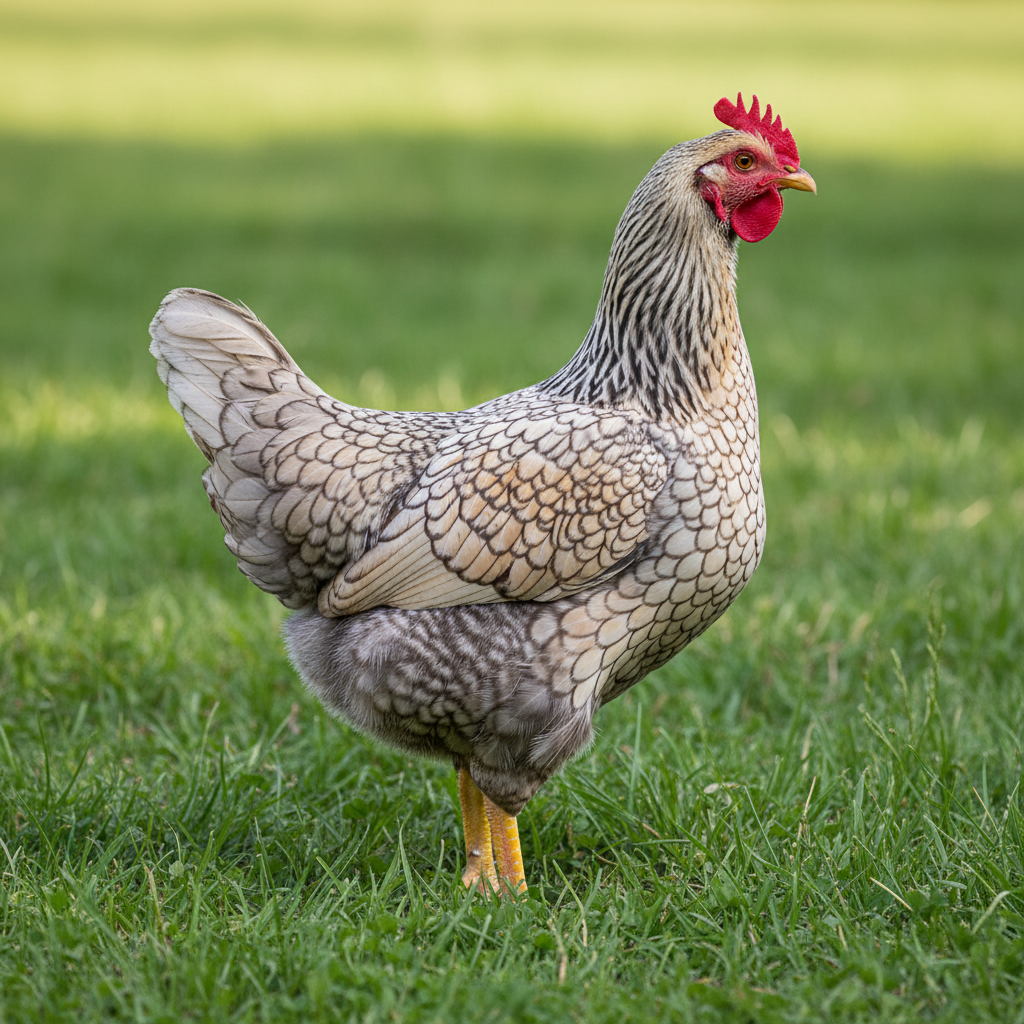
Plymouth Rock
Also known as Barred Rock
Also known as: Barred Rock
Is the Plymouth Rock right for you? Take the Breed Matcher →About the Plymouth Rock
Plymouth Rocks are easily recognized by their striking black and white striped feathers. They are friendly and sociable birds, making them ideal for backyard flocks. Known for their excellent egg production, they typically lay brown eggs and are also good for meat, due to their dual-purpose nature. Their calm demeanor and adaptability to various environments further enhance their appeal among poultry keepers.
History
The Plymouth Rock breed was developed in the early 19th century in Massachusetts. Its development is attributed to various crossbreeds, including the Dominique and Black Cochins. The breed gained popularity quickly, spreading across the United States and becoming a staple for homesteaders due to its hardworking nature. By the late 1800s, Plymouth Rocks were recognized as a distinct breed, contributing to the American poultry scene.
Care tips
Plymouth Rocks are known for their hardiness and can adapt well to different climates. They require adequate space to roam and forage, as they enjoy being active. While not particularly broody, they can occasionally exhibit broodiness. Regular health checks and a balanced diet will ensure they thrive as productive members of the flock.
Color varieties
Fun facts
- Plymouth Rocks were one of the first breeds to be accepted into the APA in 1874.
- They are known for their distinctive ‘barred’ feather pattern.
- These chickens are friendly and often become curious companions.
- Plymouth Rocks can be good foragers, enjoying a diet that includes greens.
Why Plymouth Rocks are such a reliable backyard bird
The Plymouth Rock was developed in New England in the 1800s and became one of the most common farm chickens in America. The Barred Rock is the classic, with its black and white striped feathers, but White, Buff, Partridge, Silver Penciled, Columbian and Blue are all recognized too. White Rocks were also a key part of the modern meat chicken.
In the backyard, Rocks are about as steady as chickens get. They are calm without being lazy, curious without being flighty, and most hens are easy to handle. They forage well if you let them out, and they cope fine in a run if you do not. Roosters are generally decent, though like any breed you can get a pushy one.
Laying through the seasons
Expect a good number of light to medium brown eggs. Rocks often start laying around five to six months and keep a solid pace through their first two years. They usually lay better in winter than the fluffier heavy breeds. The molt will stop them for a while each fall. After year three, output drops, but many Rock hens keep laying at a slower rate for years. Some go broody, though less often than Orpingtons or Cochins.
Sexing barred chicks
Barred Rock chicks are black with a white spot on the head. Males often have a bigger, more blurry spot, while females have a smaller, sharper one and darker legs. It is not perfect, but it gives you a decent guess. As adults, roosters look lighter overall because they carry two copies of the barring gene. If you are unsure, our hen or roo tool can help.
Space and climate
Standard space for a large fowl breed works well. Rocks are heavy enough that they do not fly much, so normal fencing holds them. They are cold-hardy, and their single combs are medium sized, so frostbite is a risk mainly for roosters in very hard cold. They handle summer heat well enough with shade and water. All of this makes them a regular pick for beginner flocks.
How they compare
The Rock is often compared with the Australorp. Australorps tend to lay a few more eggs and are a bit more laid back, while Rocks forage harder and come in more colors. See the Australorp vs Plymouth Rock comparison. The Dominique looks similar but has a rose comb and a slightly different barring pattern, and it is an older American breed.
Hatchery vs heritage Rocks
Hatchery Barred Rocks are lighter and lay well. Heritage or show lines are bigger, blockier and have crisper barring, but often lay a bit less. Both make good backyard birds.
Where to get them
Barred and White Rocks are sold by nearly every hatchery and farm store. Buff and Partridge are common too. For Silver Penciled, Columbian or show-quality barring, look for breeders through poultry shows and breed clubs.
Common questions about Plymouth Rocks
Are Barred Rocks and Plymouth Rocks the same?
Yes. Barred Rock is the barred color variety of the Plymouth Rock breed.
Are Plymouth Rocks loud?
They are moderately quiet. Hens make the usual egg song, but they are not as noisy as many light breeds.
How long do Plymouth Rocks lay?
Their best years are the first two or three, but many keep laying at a slower pace well after that.

