
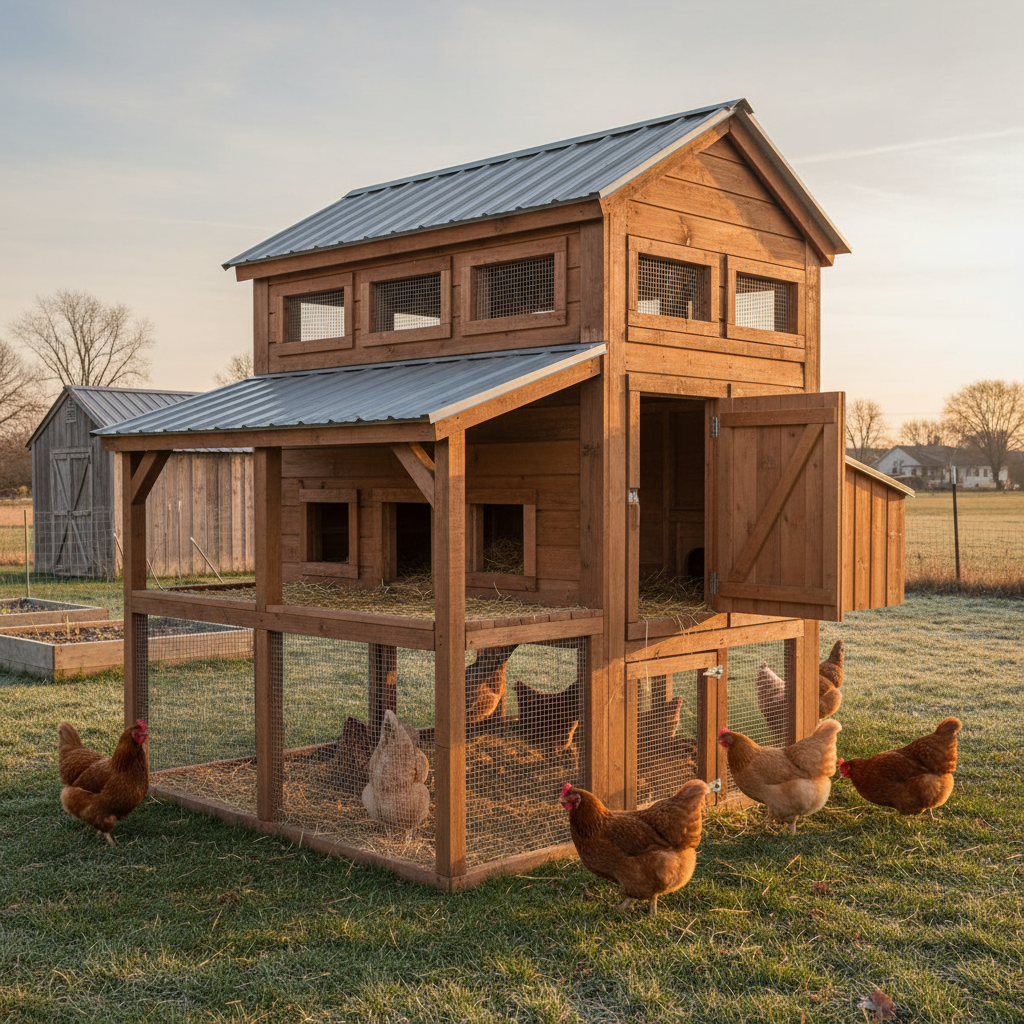
Cold Climate Chicken Coop Plans
Cold-weather coops don't need heat, they need DRY, VENTILATED, and DRAFT-FREE construction. Wet coops kill more hens than cold ones ever will.
Generate your custom build-ready plan
Pre-filled for this style. Get a printable blueprint, cut list, and shopping list.
Open AI Coop PlannerCoop
4×6 ft to 8×10 ft
Run
Covered run for snow drifts
Materials
+$100-$300 vs basic for insulation
Build time
2-3 weekends
Best for
- Northern US, Canada, Northern Europe
- Anywhere -20°F is a normal winter night
- Keepers tired of frostbite combs
What's included
- Insulated walls (R-13 batt or rigid foam)
- Top vents that exhaust moisture without creating drafts
- Solid wood walls (no exposed wire on coop body)
- Wide roosts (2×4 with the flat side up, covers feet)
- Deep litter floor for thermal mass
- Snow-shedding sloped roof
- South-facing windows for passive solar gain
Build steps
- Insulation layer specification (interior vs exterior)
- Ventilation calculation (1 sq ft per 10 sq ft floor)
- Wide flat roost layout
- Deep litter setup
- South-facing window placement
- Snow-shedding roof
- Heated waterer hookup (NOT heated coop)
Frequently asked questions
Do chicken coops need to be insulated?
Helpful in cold climates if dry. Critical to combine with TOP ventilation so moisture escapes, sealed insulated coops cause more frostbite than uninsulated ones.
Should I heat my chicken coop in winter?
Almost never. Cold-hardy breeds tolerate -20°F. Heat lamps cause coop fires and de-acclimate birds, if the power fails on a cold night, you lose the flock.
How do I prevent frozen water in winter?
Heated base for plastic waterers (~$40), heated dog bowls, or rotate two bowls (one inside thawing while the other freezes outside).