
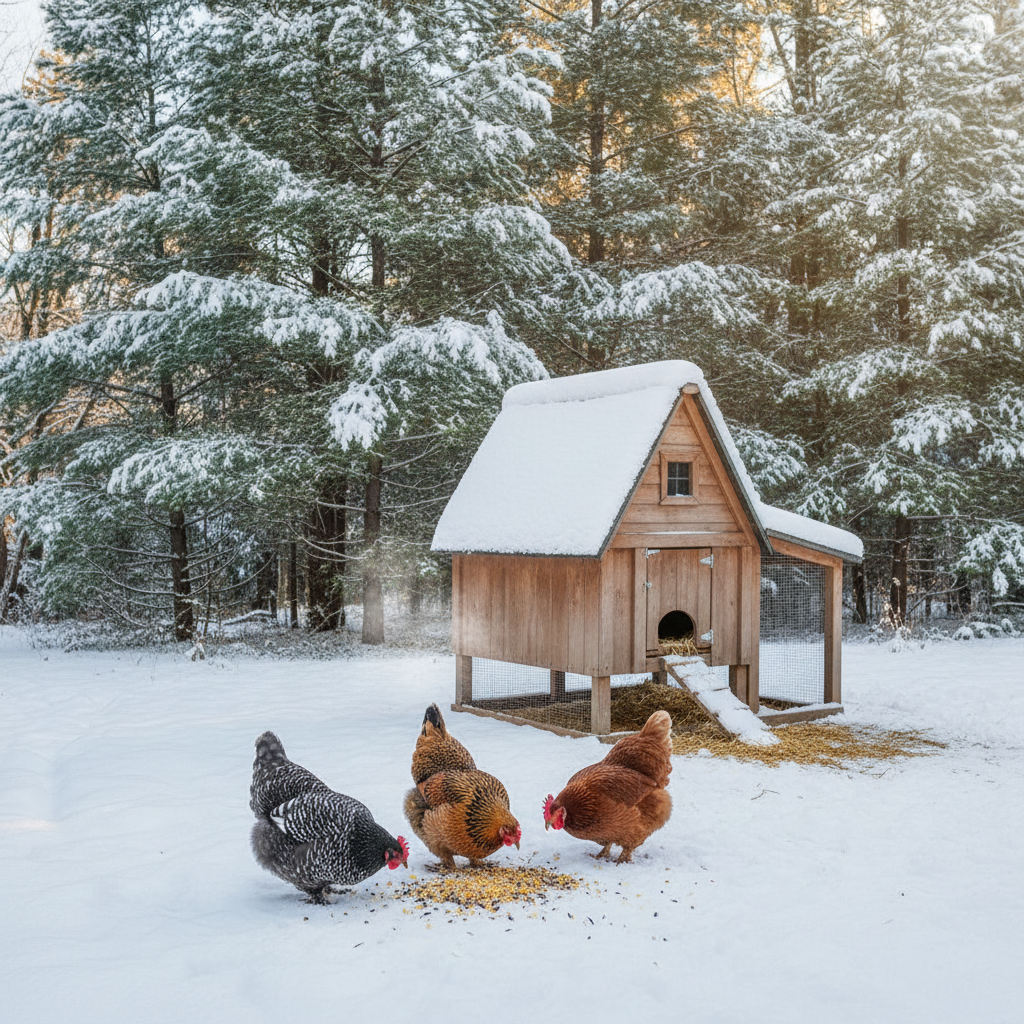
Winter Chicken Care in Asheville: Keeping Your Flock Hardy and Happy
By Mara K. · Updated August 23, 2026
Quick answer
Winter chicken care in Asheville involves ensuring chickens have at least 4 square feet of coop space, a draft-free environment, and access to unfrozen water. Locally suited breeds like Buff Orpingtons and Rhode Island Reds thrive here with minimal extra heat, but predator-proofing is essential due to local wildlife.
Key facts
- Coop space per bird
- 4 square feet
- Average winter low
- 28°F
- Common predator wire gauge
- 16 gauge
- Frost-free days
- April 24 to October 7
Asheville is a charming place with its temperate climate and the Blue Ridge Mountains as a backdrop. The winters here are mild compared to the northern states, but keeping your chickens comfortable and safe is still a priority.
How to Keep Chickens Warm in Asheville's Winter
Chickens in Asheville need a draft-free coop with at least 4 square feet per bird to stay warm during the winter months. While temperatures are usually mild, averaging around 28°F at their lowest, a well-insulated coop helps keep the cold at bay. You don’t need a heater, but some straw bedding will help generate warmth and provide comfort.
I usually pile up straw about 6 inches deep in my coop here in Weaverville. It stays cozy enough for the hens, even when we get the occasional cold snap.
Choosing the Right Breeds for Asheville
Buff Orpingtons, Rhode Island Reds, and Australorps are excellent choices for backyard flocks in the Asheville area. These breeds are cold-hardy and can lay well through the winter. Our Buff Orpington breed guide offers more details on their temperament and care. You can also check out the Rhode Island Red guide and Australorp guide to learn more about their specific needs.
Predator-Proofing Your Coop
Predator-proofing is crucial in Asheville, where wildlife like raccoons and hawks thrive. Using a 16-gauge wire mesh is recommended to keep these critters at bay. The National Weather Service warns that increasing temperatures may lead to more active predators during winter.
Here in West Asheville, I've bolstered my coop with concrete footing and have yet to lose a hen to predators.
Water and Feed Considerations
Ensure water doesn’t freeze by using a heated waterer, available at local supply stores. Layers like Purina and Kalmbach offer good nutrition year-round. With Asheville's climate, keeping water unfrozen and feed plentiful is easier than in harsher climates.
What About Eggs?
Chickens naturally slow down laying in winter, but some breeds can keep going. You might see 2-3 eggs per week from each hen, especially from Rhode Island Reds, known for their winter laying prowess.
Health Monitoring During Winter
Monitoring your flock's health is essential during the colder months. Keep an eye on their combs and wattles for frostbite, although it’s rare in our climate. Check out the US chicken health map for any regional disease outbreaks.
Over here in Black Mountain, I've found that regular check-ins ensure my flock stays healthy and robust through our mild winters.
FAQ
How can I keep my chicken coop warm in Asheville?
You can keep a chicken coop warm by using straw bedding, providing at least 4 square feet of space per bird, and ensuring the coop is draft-free.
Do I need a heater for my chickens in Asheville?
Generally, you don’t need a heater for chickens in Asheville's winters. Proper insulation and bedding should suffice for their comfort.
What are the frost dates for Asheville?
According to the NOAA, the average frost-free period in Asheville runs from April 24 to October 7.
Which predators should I watch out for?
Common predators in the Asheville area include raccoons, hawks, and sometimes foxes. Secure your coop with a 16-gauge wire mesh to prevent attacks.
Final Thoughts from the Coop
Winter in Asheville is a gentle season for both people and chickens. With proper care and attention to coop safety, your flock will stay happy and productive. If you're interested in building or modifying a coop, see our detailed coop plans for guidance. And if any health issues arise, don't hesitate to consult our chicken doctor for expert advice.
More for Asheville chicken keepers
Got questions or your own tips?
Jump into the community and swap notes with other backyard chicken keepers.
Discuss in the community →Comments
Sign in to join the conversation.