
The Complete Chicken First Aid Kit: What Every Backyard Flock Keeper Needs
By The Coop Team · Updated July 13, 2026
Quick answer
A complete chicken first aid kit is essential for every backyard flock keeper, containing items for wound cleaning, bandaging, and supportive care to handle emergencies. Recommended supplies include saline solution, vet wrap, and poultry electrolytes. Having these can mean the difference between life and death for your chickens.
Key facts
- Temperature range
- 105 to 107 F
- Soaking time for bumblefoot
- 15 minutes
- Number of essential supplies
- 6 categories
- Recommended heat source
- heat lamp or heat plate
- Recommended prebuilt kit cost
- priced for a hobby flock
If you have chickens long enough, something will eventually go wrong. A hen will get pecked bloody at the top of the flock order, a rooster will tear a spur on hardware cloth, a broody will step on her own egg, or a bumblefoot lesion will show up on a Sunday night when every vet in the county is closed. That is why a well-stocked chicken first aid kit is not optional gear for backyard chicken keepers, it is right up there with feed, water, and a predator-proof coop.
This guide walks through exactly what belongs in a poultry first aid kit, why each item matters, and how to use them without panicking. If you would rather skip the shopping list and buy a ready-made chicken keeping first aid kit that already has the essentials, we recommend this one on Amazon: The Chicken First Aid Kit on Amazon. It is the kit we point new flock keepers at in our community because it covers the most common backyard emergencies in one grab-and-go box.
Why Every Backyard Flock Needs a First Aid Kit
Chickens hide illness. Prey animals evolved to look healthy until the very last second, because looking sick is how you get picked off in the wild. That means by the time you notice a hen is off, you often have hours, not days, to act. A first aid kit sitting on a shelf near the coop turns those hours into a real chance to save the bird.
The three most common reasons backyard keepers reach for their kit:
- Injuries from other chickens. Pecking order squabbles, broken feathers, torn combs and wattles, vent injuries after laying.
- Environmental injuries. Bumblefoot from rough roosts, splinters, cuts on hardware cloth, frostbite, sunburn on light-combed breeds.
- Predator strikes. Even a chicken that escapes a hawk or raccoon usually leaves with a puncture wound, a torn crop, or shock.
A good kit does not replace a poultry vet. It buys you time, cleans and closes wounds, prevents secondary infection, and keeps a stressed bird stable until you can get real help or ride out a minor issue at home.
The Chicken First Aid Kit Checklist
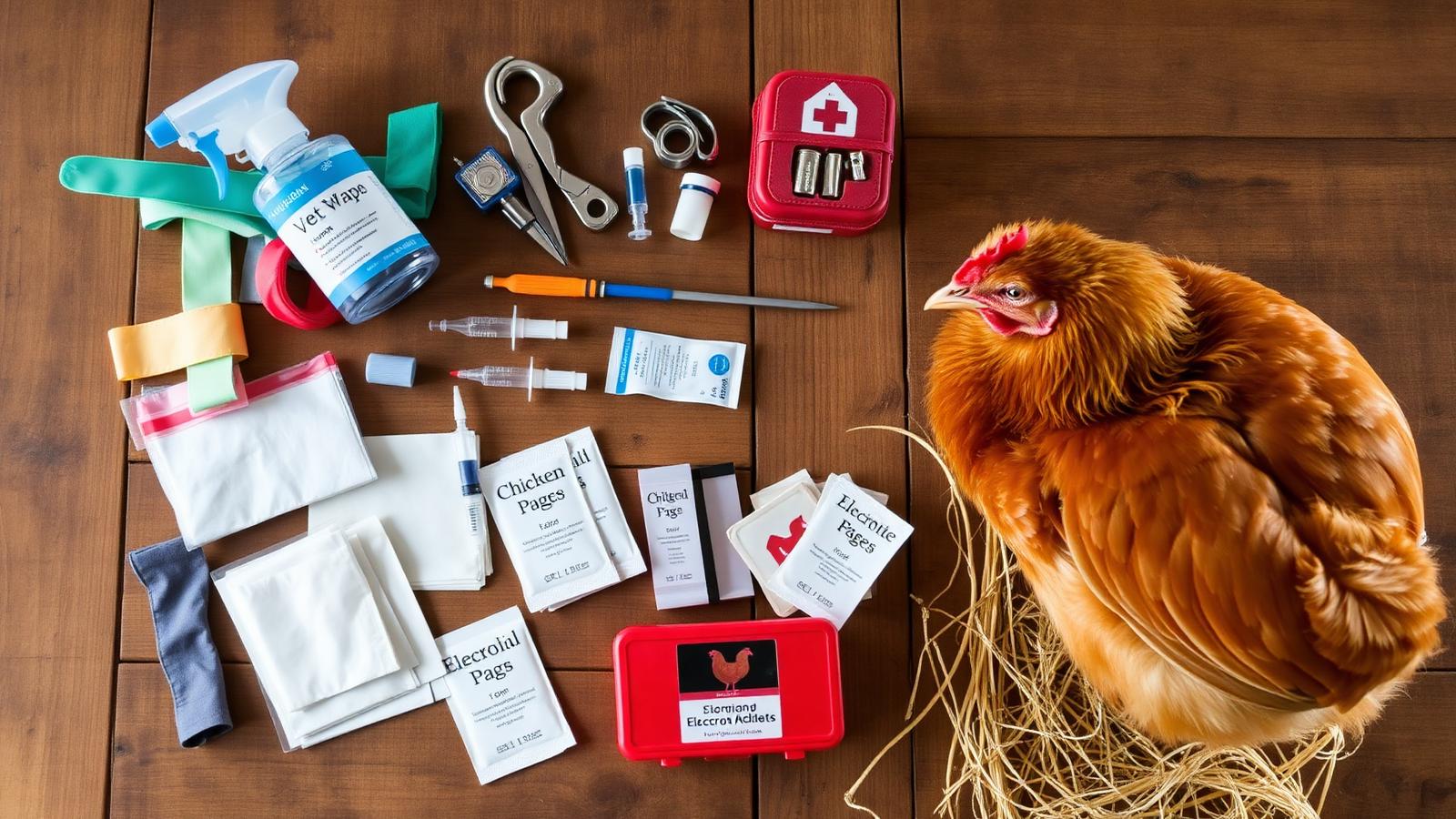
Here is the full list of what belongs in a serious chicken keeping first aid kit. If you are building your own from scratch, work through this list. If you would rather buy the kit pre-built, this Amazon kit covers most of the core items below.
1. Wound Cleaning and Disinfecting
- Saline solution for flushing dirt and debris out of wounds. Plain contact lens saline works.
- Chlorhexidine solution (or diluted Betadine / povidone iodine). Do not use hydrogen peroxide as a routine flush, it damages healthy tissue and slows healing.
- Vetericyn Poultry Care spray or an equivalent poultry wound spray. Safe, no sting, no withdrawal period.
- Blu-Kote (gentian violet spray) to disguise red wounds so flock mates stop pecking at the injury and to help dry out minor scrapes.
2. Bandaging and Wraps
- Self-adhering vet wrap in a few colors. This is one of the most-used items in any poultry first aid kit, from wrapping bumblefoot to splinting a leg.
- Non-stick gauze pads (Telfa pads) so bandages do not tear off scabs when you change them.
- Medical tape for securing gauze under vet wrap.
- Sterile gauze roll for larger wounds.
3. Tools
- Sharp, small scissors for trimming feathers around a wound and cutting vet wrap.
- Fine-point tweezers for splinters, ticks, and pulling bumblefoot cores.
- Needle-nose forceps or hemostats for deep debris.
- Nail clippers or a dog nail grinder for overgrown nails and beaks.
- Small syringes without needles for flushing wounds and giving oral electrolytes or medication.
- A digital thermometer if you want to track a very sick bird. Normal chicken body temperature runs 105 to 107 F.
- A pen light or headlamp because emergencies never happen in good light.
4. Supportive Care
- Poultry electrolytes (Sav-A-Chick, Rooster Booster, or an equivalent). The single best first-line treatment for a stressed, chilled, overheated, or freshly-attacked bird.
- Probiotics to help gut recovery after stress, antibiotics, or a heat event.
- Nutri-Drench or a vitamin B complex for weak, off-feed birds.
- Corid (amprolium) on hand for suspected coccidiosis in chicks and young birds. Not an antibiotic, it is a thiamine blocker for the parasite.
5. Isolation and Comfort
- A dog crate, small pen, or dedicated hospital cage to separate the injured bird from the flock. A hen with a bloody comb left in the coop will get pecked to death, we cannot say this loudly enough.
- A heat source (heat lamp or safer heat plate) for shock, hypothermia, or a chick that got wet.
- A clean towel or two for holding and warming a bird, and for wrapping to safely trim, examine, or medicate.
6. Documentation
Every serious chicken first aid kit should include:
- A printed reference card with normal chicken vitals (temperature, respiration, heart rate).
- Your poultry-friendly vet's phone number and the nearest 24-hour large-animal or exotic clinic.
- A blank notebook or index cards to log symptoms, doses, and dates. Trust us, on day three of nursing a sick hen you will not remember what you gave her on day one.
The Ready-Made Option: A Prebuilt Chicken First Aid Kit
Assembling the list above from scratch is doable, but it usually costs more and takes longer than most keepers expect, and it is very easy to forget something you only need once every two years but desperately need on the day you need it.
For most backyard keepers, a purpose-built kit is the smarter move. The one we recommend is this chicken first aid kit on Amazon. It is priced for a hobby flock, it fits under a shelf in the feed room, and it covers the wound care, bandaging, and support supplies that make up the bulk of real backyard emergencies. Add a dog crate, a heat source, your vet's number, and poultry electrolytes and you are ahead of 90 percent of chicken keepers on your street.
Common Emergencies and How to Use Your Kit
Bumblefoot
Look for a black scab on the bottom of the foot with swelling. Soak the foot in warm Epsom salt water for 15 minutes, work the scab loose, remove the core with sterile tweezers, flush with saline, spray with Vetericyn, pack with a non-stick gauze pad, and wrap with vet wrap. Change the wrap daily and keep the coop bedding clean.
Pecking Wounds
Isolate the bird immediately. Flush the wound with saline, disinfect with diluted chlorhexidine, and spray with Blu-Kote to hide the red color from the flock before you re-introduce her. Deep or gaping wounds may need a vet.
Egg Bound Hen
Warm bath in shallow water for 20 minutes, calcium (a Tums or a crushed calcium tablet), quiet dark space, gentle lubrication around the vent. If the egg does not pass in a few hours, call a vet.
Frostbite
Move the bird somewhere warmer but not hot, do not rub or massage the tissue. Coat combs and wattles with a plain barrier ointment. Ventilation, not heat, prevents most frostbite in the first place.
Predator Attack Survivor
Treat for shock first: warm, dark, quiet, electrolytes by dropper if she will drink. Then assess wounds. Puncture wounds from raccoons and cats infect fast, they usually need antibiotics from a vet.
Storing Your Chicken First Aid Kit
- Keep the kit near the coop, not in the house, so you can grab it one-handed with a chicken in the other arm.
- Check expiration dates twice a year, on the same weekend you check smoke detector batteries.
- Restock the moment you use something. The next emergency is always sooner than you think.
- Keep a weatherproof, sealed container if the coop is not climate controlled.
Final Thoughts from the Coop
A chicken first aid kit is one of those pieces of gear you hope you never open, and are deeply grateful for the day you do. Whether you build your own from the checklist above or grab a ready-made kit off Amazon, having supplies within arm's reach of the coop is the difference between watching a bird decline and giving her a real shot.
If you want the shortcut, here is the kit again: The Chicken First Aid Kit on Amazon. Pair it with a dog crate as a hospital pen, a bag of poultry electrolytes, and your vet's number taped to the lid, and you have a backyard poultry emergency system that will handle almost anything a hobby flock throws at you.
Stay ready, keep the coop clean, and the birds will do most of the rest.
Got questions or your own tips?
Jump into the community and swap notes with other backyard chicken keepers.
Discuss in the community →Comments
Sign in to join the conversation.