
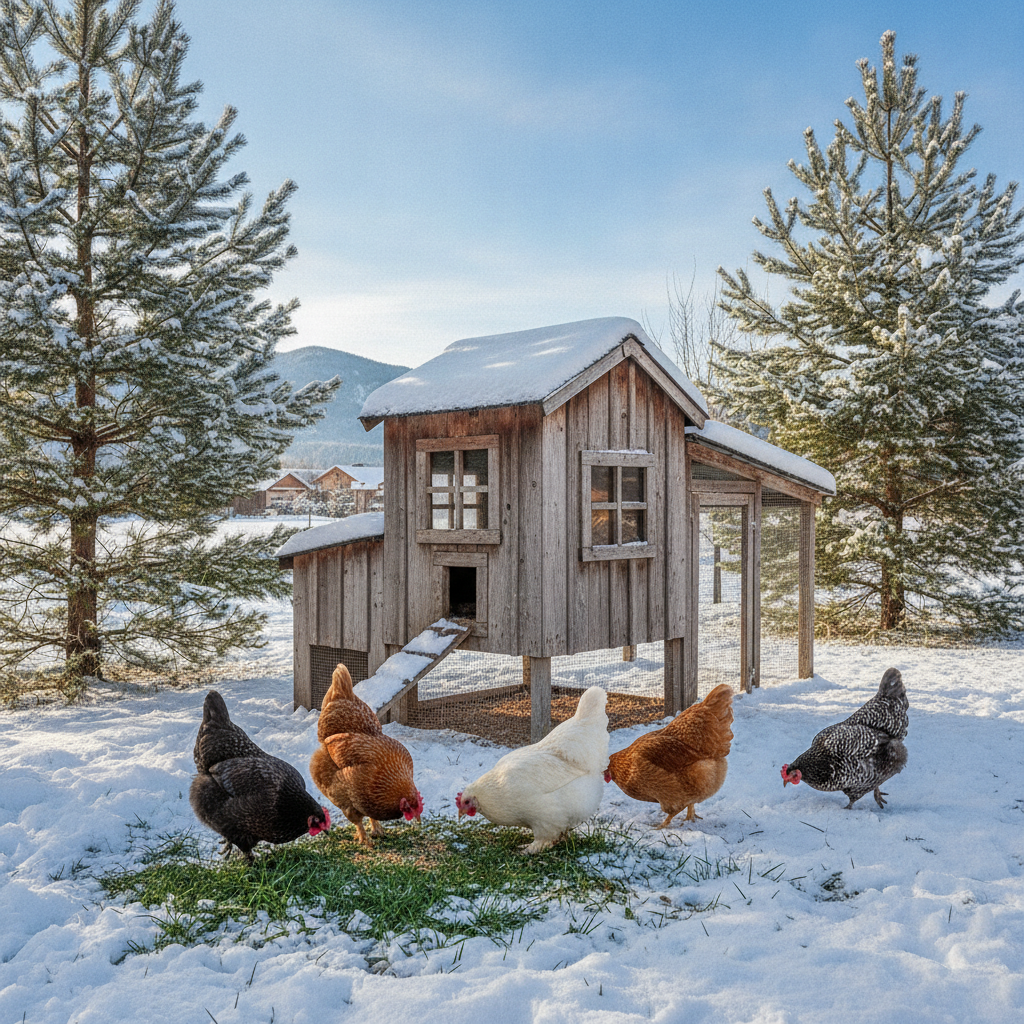
Winter Chicken Care in Aurora: Keep Your Flock Happy and Healthy
By Mara K. · Updated June 20, 2026
Quick answer
To ensure your chickens thrive during Aurora's harsh winters, select cold-hardy breeds, like Wyandottes or Brahmas. Insulate the coop, provide a heated waterer, and monitor for frostbite. Check water at least twice a day to prevent freezing, and use heated pads instead of heat lamps for safety.
Key facts
- Recommended insulated coop size
- at least 4 sq ft per chicken
- Water checking frequency
- twice a day
- Recommended wire gauge for predator-proofing
- 16 gauge
- Temperature drop in winter
- well below 0 degrees
- Types of feed for cold months
- high protein mixes
Aurora, Colorado is no stranger to harsh winters. With frigid temperatures and biting winds, proper winter chicken care is essential. Aurora's climate includes frost dates as early as September and temperatures that can plummet well below zero, so keeping your backyard flock warm and healthy can be a real challenge.
Choosing the Right Breeds for Aurora's Winter
When it comes to selecting breeds that can handle Aurora's cold, continental climate, your best bet is to go for the cold-hardy types. Breeds like the Wyandotte, Brahma, and Buff Orpington are popular choices among local chicken keepers in areas like Centennial, Parker, and Englewood. These breeds come equipped with thick feathering and sturdy builds that help them withstand the long, cold winters.
How to Keep Chickens Warm During Winter
Your coop setup is crucial for keeping your chickens cozy. First off, make sure your coop is well, insulated and free from drafts, yet ventilated to prevent humidity buildup. I remember one winter when I didn’t properly seal a corner in my coop, and my hens were not happy campers! You might want to check out some coop plans to ensure yours is up to snuff. Adding a heated waterer is also a must. Those Colorado nights can freeze water in no time, and chickens need constant access to fresh water to stay warm and healthy.
Coop Heating Options
For Aurora winters, a safe heat option is key. While some folks swear by heat lamps, these can be fire hazards. Instead, consider safer alternatives like heated pads or ceramic heaters designed for chicken coops. It’s all about finding the right balance between warmth and safety.
Feeding Essentials for Cold Climates
Chickens burn more calories in cold months to maintain their body temperature. Here in Aurora, where temperatures are extremely low, you might want to increase their feed slightly and choose high, energy options. Local stores included in our Aurora feed and supply page stock brands like Purina and Kalmbach, which have higher protein mixes perfect for cold weather.
Health Monitoring During the Winter Months
Chickens are generally hardy creatures, but the cold can make them susceptible to certain ailments. Pay attention to signs of frostbite, particularly on combs and wattles. If you’re unsure about any symptoms, checking in with a chicken doctor might be a good idea. Also, keeping an eye on broader trends through resources like our chicken health and outbreak map can provide insights into local health concerns.
Protecting Chickens from Winter Predators
In Aurora, winter predators don’t take a break just because it’s cold. Raccoons, foxes, and even coyotes are known to lurk around suburban areas like Highlands Ranch and Green Valley Ranch. Make sure your coop is predator-proof with sturdy locks and reinforced wire (I use 16, gauge myself).
FAQs About Winter Chicken Care in Aurora
How often should I check my chicken’s water in winter?
It’s best to check at least twice a day. Water can freeze quickly in Aurora, so investing in a heated waterer can save you a lot of hassle.
Do chickens need a heat lamp in Aurora winters?
Heat lamps are not recommended due to fire risks. Use safer heating options like heated pads or ceramic heaters instead.
What should I do if I notice frostbite?
First, bring the affected bird into a warmer environment. Gently apply a protective balm like petroleum jelly to affected areas.
Final Thoughts from the Coop
Winter chicken care in Aurora, with its frosty nights and nippy days, requires a bit of extra effort but is well worth it. With the right breeds, coops, and feeding strategies, your flock can thrive through the harshest months. For more tips and in, depth guides, head over to our learn section to make sure your chickens are snug and secure all winter long. Stay warm out there!
More for Aurora chicken keepers
Got questions or your own tips?
Jump into the community and swap notes with other backyard chicken keepers.
Discuss in the community →Comments
Sign in to join the conversation.