
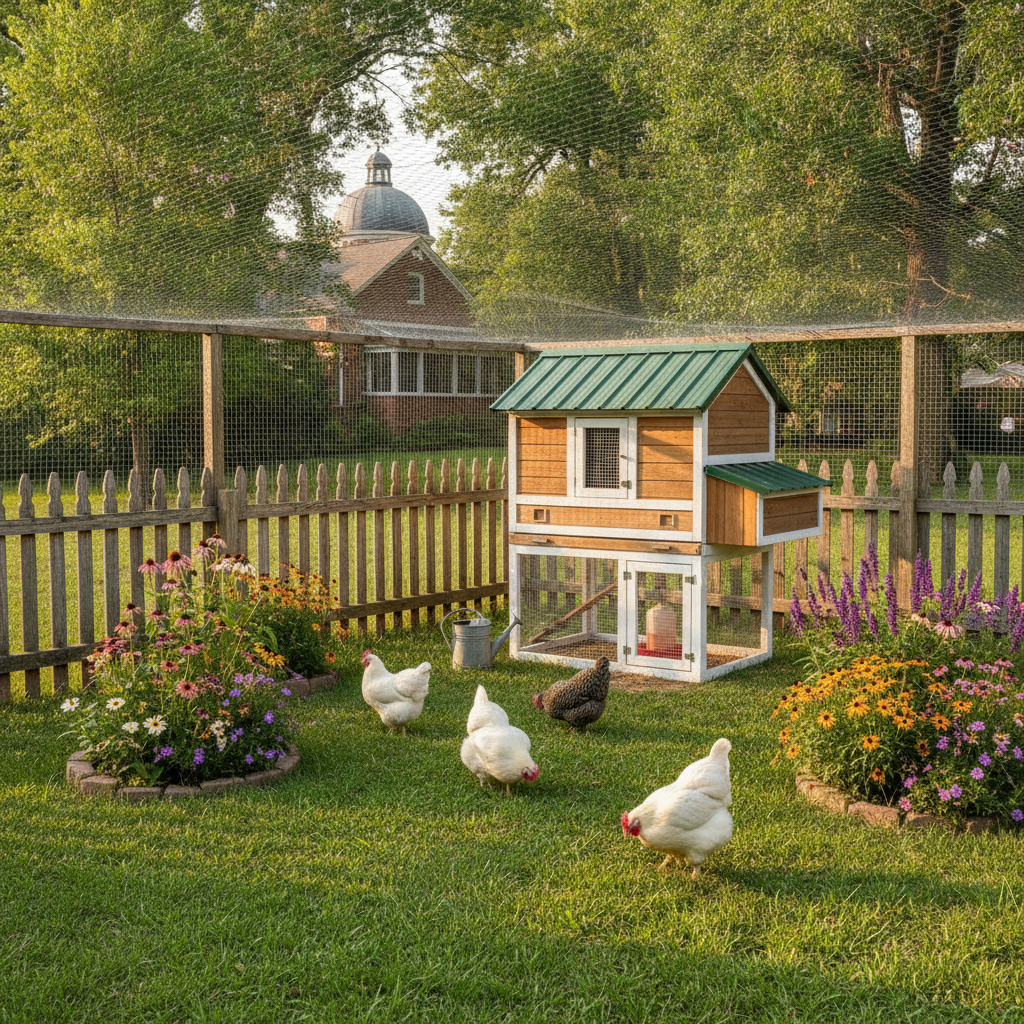
Predator Proofing Chicken Coops in St. Louis
By Mara K. · Updated August 14, 2026
Quick answer
Predator proofing chicken coops in St. Louis involves using 1/2-inch hardware cloth, securing the perimeter with a buried apron, and installing locks on doors and windows. Coops should have sturdy wood walls and roofs, especially necessary during the city's hot, humid summers and cold winters.
Key facts
- Wire gauge
- 1/2-inch hardware cloth
- Buried apron depth
- 12 inches
- Common predator
- raccoons
- Summer highs
- 90°F
- Winter lows
- 15°F
Keeping your backyard chickens safe from predators in St. Louis can be a bit of a challenge, given the local wildlife and climate. Whether you're in Chesterfield, Kirkwood, or right in the city, predators like raccoons, hawks, and foxes are always looking for a free meal. Here's how you can protect your coop and ensure your birds stay safe all year round.
Best Materials for Predator Proofing
Predator proofing chicken coops in St. Louis requires using the right materials. Start with 1/2-inch hardware cloth, as it's much tougher than chicken wire and small enough to keep out most predators. This wire should cover any window openings and ventilation areas. For the coop's perimeter, you'll want to bury the hardware cloth at least 12 inches deep to prevent digging predators from sneaking underneath.
Here in the humid-continental climate of St. Louis, choosing durable materials is key. The hot and humid summers, with highs reaching around 90°F, can cause some materials to warp or degrade faster than you'd expect. I recommend building the coop with pressure-treated lumber for longevity.
Secure Doors and Windows
Doors and windows are often overlooked but are critical points of entry for predators. Install heavy-duty locks on all doors and windows to keep the likes of raccoons from nosing their way in. These critters are clever, so a simple latch won't cut it. Spring-loaded or padlock options work best here.
St. Louis winters can drop to 15°F or lower, so it's equally important to ensure doors and windows seal tightly not just for predator proofing but also for keeping the warmth in. Consider insulating your coop to protect your flock from those cold snaps.
Importance of a Strong Coop Roof
A solid roof is essential to prevent aerial predators like hawks and owls from swooping in. In Shrewsbury, where hawk sightings are common, using a solid wood roof can make a big difference. You might also consider a pitched design to handle the weight of snow. The NOAA advises that snow loads can be significant, especially during those surprise storms.
Nighttime Security Measures
Most predators are nocturnal, so securing your coop at night is crucial. An automatic coop door can ensure your flock is safely locked up as soon as the sun sets. These doors can usually be set to a timer or even light-sensitive, which is handy when you're busy or on vacation.
Consider installing motion-activated lights around the coop. These can startle predators and are especially useful during those long St. Louis nights.
Additional Safety Tips
- Perimeter Fencing: A wide-ranging fence can keep larger predators like dogs or coyotes out. Make sure it's at least 6 feet tall.
- Cover Runs: Use netting or additional hardware cloth to cover exposed runs. This helps protect against birds of prey.
- Keep Feed Secure: Store your chicken feed in a metal container with a tight-fitting lid to avoid attracting pests and predators.
FAQ
How deep should I bury the hardware cloth?
For maximum protection against digging predators, bury the hardware cloth at least 12 inches deep around the coop's perimeter.
What are some common predators in St. Louis?
Raccoons, foxes, hawks, and occasionally coyotes are common predators around St. Louis.
Can cold weather affect my predator-proofing efforts?
Yes, during the cold St. Louis winters, materials can contract and create gaps. Regularly inspect and maintain your coop to ensure it's sealed tight.
How do I protect my flock from extreme weather?
Insulation and proper winterization are key. Consider deep bedding methods to maintain a comfortable temperature inside the coop.
Are there local resources where I can buy materials?
Check out our local feed and supply page for St. Louis for nearby shops that carry predator proofing materials and chicken care supplies.
Final Thoughts from the Coop
Keeping your chickens safe in St. Louis requires some planning and effort, but with sturdy materials and strategic measures, you can rest easy knowing your flock is well-protected. Don't forget to consult the US chicken health and outbreak map for any local advisories. If you're considering expanding your flock, breeds like Wyandottes and Buff-Orpingtons are well-suited to the St. Louis climate. Happy chicken keeping!
More for St. Louis chicken keepers
Got questions or your own tips?
Jump into the community and swap notes with other backyard chicken keepers.
Discuss in the community →Comments
Sign in to join the conversation.