
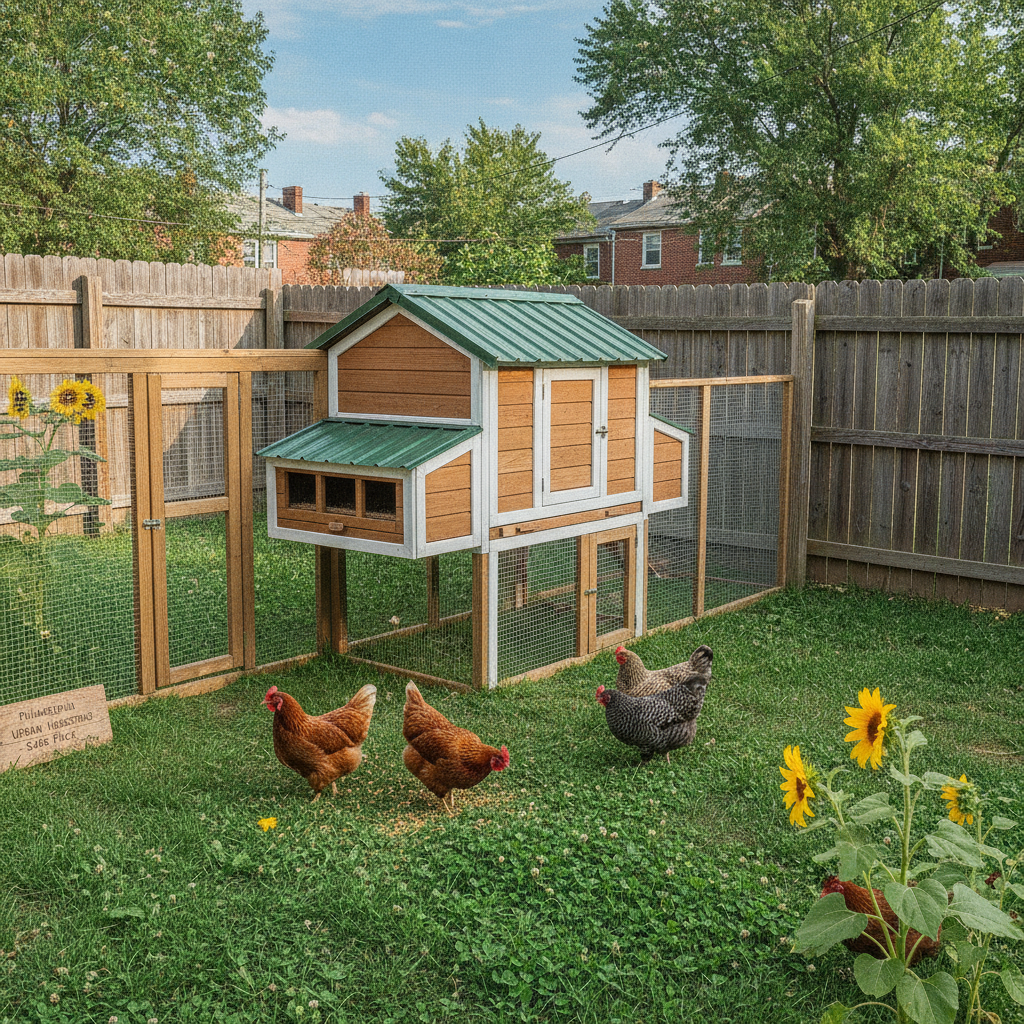
How to Predator-Proof Your Chicken Coop in Philadelphia
By Mara K. · Updated June 29, 2026
Quick answer
To predator-proof your chicken coop in Philadelphia, use 1/2 inch hardware cloth for security. Make sure all gaps are covered and reinforce the floor with buried wire mesh. Consider automatic doors to secure hens at dusk, as predators like raccoons and foxes are active at night.
Key facts
- Coop wire gauge
- 1/2 inch
- Perimeter skirt length
- 12 inches
- Summer highs
- 87°F
- Winter lows
- teens
When it comes to predator proofing chicken coops in Philadelphia, there are plenty of things to consider. With its humid, continental climate, you've got hot summers and bone, chilling winters to contend with, along with a whole host of local wildlife that'd love nothing more than to make a meal of your hens. Let's get into the nitty, gritty of keeping your feathered friends safe all year round.
How Do I Choose the Right Coop Design for Predator Proofing?
Choosing the right coop design is your first line of defense against predators. Philadelphia, with neighborhoods like Germantown, Chestnut Hill, and Manayunk, can experience summer highs around 87°F with considerable humidity. Winters can dip down into the teens. Ensuring your coop is both thermally insulated and predator-proof is key.
For starters, consider using 1/2 inch hardware cloth instead of chicken wire. This is because raccoons and other crafty critters can easily rip through chicken wire. Trust me, I've seen it happen more times than I care to admit. Ensure the coop has no gaps larger than a half inch, and all ventilation openings are covered with hardware cloth.
If you're building your own coop, you can find some great coop plans to guide you. Additionally, reinforcing the floor with buried wire mesh can help prevent digging predators. A skirt of hardware cloth extending out about 12 inches from the perimeter works wonders.
What Are the Common Predators in the Philadelphia Area?
In Philly, we deal with a slew of predators like raccoons, foxes, hawks, and even the occasional stray dog. According to Pennsylvania Game Commission, these critters are quite common in urban and suburban areas. In Montgomery County, known for its wooded suburbs, you might also encounter opossums.
Tips for Urban and Suburban Areas
, Secure Latches: Use predator-proof latches that can't be easily undone. Carabiners work great for this. , Automatic Doors: Consider investing in an automatic coop door. This can help ensure your hens are secured at dusk when predators are most active.
Can Landscaping Help with Predator Protection?
The answer is a resounding yes. Strategic landscaping around your coop in places like West Philadelphia or Ardmore can make a world of difference. Shrubs and hedges can act as natural barriers, but be careful not to create hiding spots for predators.
, Motion, Activated Lights or Sprinklers: These can be a great deterrent for nocturnal predators. , Noise Makers: A simple outdoor radio left on at night can sometimes deter wildlife. It won't work for all, but every little bit helps.
Is My Flock at Risk from Disease?
Predators aren't the only threat. Disease can be just as deadly, especially in densely populated areas. It's wise to monitor local chicken health trends for any outbreaks. Keeping your coop clean and dry can prevent illnesses from taking hold.
Breeds like Wyandottes and Brahmas are hardy and well-suited for Philly's climate, but they aren't invincible to illness. Regular check, ups, perhaps consulting a local chicken doctor, can keep your flock in top shape.
Where Can I Find Local Supplies?
For those of you in Philadelphia, sourcing the right supplies can sometimes be a challenge. Local stores are a treasure trove for specialized items you can't always find online. Check out local feed and supply stores for everything from hardware cloth to feed.
Remember, brands like Purina and Kalmbach offer feeds that cater to specific needs, like high, protein options during molting season or medicated starter feed for chicks.
Final Thoughts from the Coop
Predator proofing your coop takes a bit of effort but it's absolutely worth it to keep your hens safe and sound. Even with Philadelphia's climate challenges and urban setting, a little ingenuity goes a long way. Keep an ear to the ground for any local predator reports or weather warnings through the NOAA or your local extension office, and your flock should thrive just fine. Happy chicken keeping!
More for Philadelphia chicken keepers
Got questions or your own tips?
Jump into the community and swap notes with other backyard chicken keepers.
Discuss in the community →Comments
Sign in to join the conversation.