
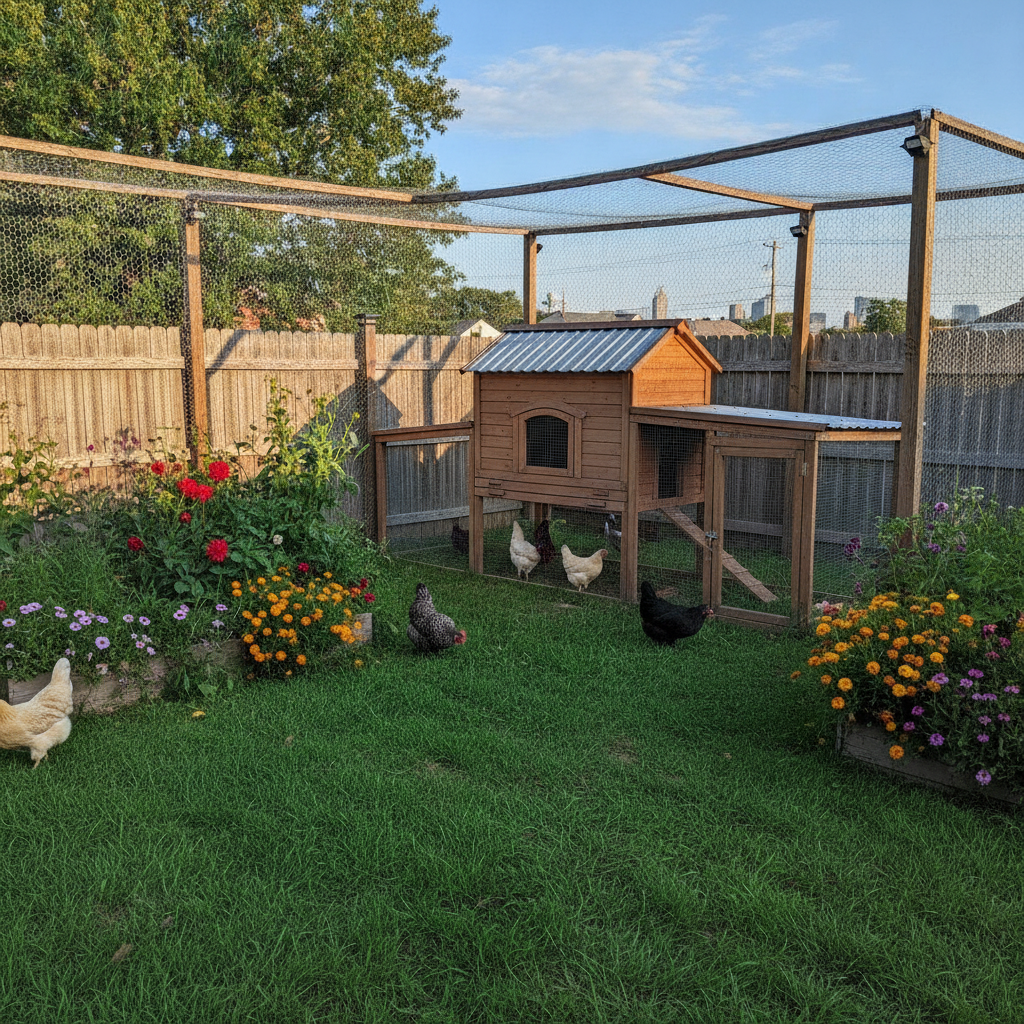
Effective Predator Proofing for Chicken Coops in Newark, NJ
By Mara K. · Updated September 8, 2026
Quick answer
Predator proofing chicken coops in Newark involves using 1/2-inch hardware cloth on windows and vents to prevent foxes and raccoons from entering. Properly securing the coop requires installing heavy-duty latches and ensuring the coop is raised at least 6 inches off the ground to deter digging predators.
Key facts
- Wire gauge
- 19 gauge
- Latches cost
- $5 to $15 each
- Height off ground
- 6 inches
- Frost date
- April 28
- Summer highs
- 85°F
If you're raising chickens in Newark, NJ, you've probably got more than just weather to worry about. From foxes to the ever-curious raccoon, predators can be a real menace to your flock. Luckily, with the right setup, you can keep your feathered friends safe.
How to Use Hardware Cloth for Chicken Coops
Hardware cloth is your best friend when it comes to predator proofing chicken coops in Newark. The 1/2-inch 19-gauge hardware cloth is ideal for covering windows and vents. This prevents sneaky paws from getting in and gives you peace of mind. Unlike chicken wire, hardware cloth is sturdier and can withstand the strength of local predators. Don’t skimp here, as replacing lost hens will cost you more in the long run.
Elevating the Coop Off the Ground
Raising your coop at least 6 inches off the ground can deter digging critters. This simple measure can protect your hens from predators that try to tunnel their way in. In neighborhoods like Ironbound and the Heights, where urban predators are more common, this preventive step is crucial.
Securing Doors and Latches
Heavy-duty latches, priced between $5 to $15 each, are essential for coop doors and access points. Raccoons in areas around East Orange and Harrison are known to figure out simple latches, so opt for something more complex than your average hook-and-eye. Check out local suppliers on our Newark feed and supply page to find what you need.
Considering the Climate
Newark's humid-continental climate means hot summers and cold winters, making insulation important too. This local climate, with summer highs around 85°F and frost dates falling around April 28 (according to NOAA), dictates that the coop should also be well-insulated to keep your hens safe from frostbite. Consider breeds like the Wyandotte, Brahma, and Buff Orpington for their cold hardiness.
More Resources on Keeping Your Flock Safe
Finding the right coop plans tailored to Newark’s unique conditions is a great start. If you ever run into health issues or predator encounters that leave your hens worse for wear, our chicken doctor is just a call away. Additionally, keep an eye on regional outbreaks via our chicken health and outbreak map to stay ahead of any health threats.
Final Thoughts from the Coop
Whether you’re in Newark itself or in nearby areas like Irvington or Bloomfield, predator proofing is just a part of chicken life here. With the right materials and a bit of elbow grease, you'll be setting your flock up for success. Stay vigilant, watch those coops, and enjoy the pecking and clucking that comes from happy, safe hens.
More for Newark chicken keepers
Got questions or your own tips?
Jump into the community and swap notes with other backyard chicken keepers.
Discuss in the community →Comments
Sign in to join the conversation.