
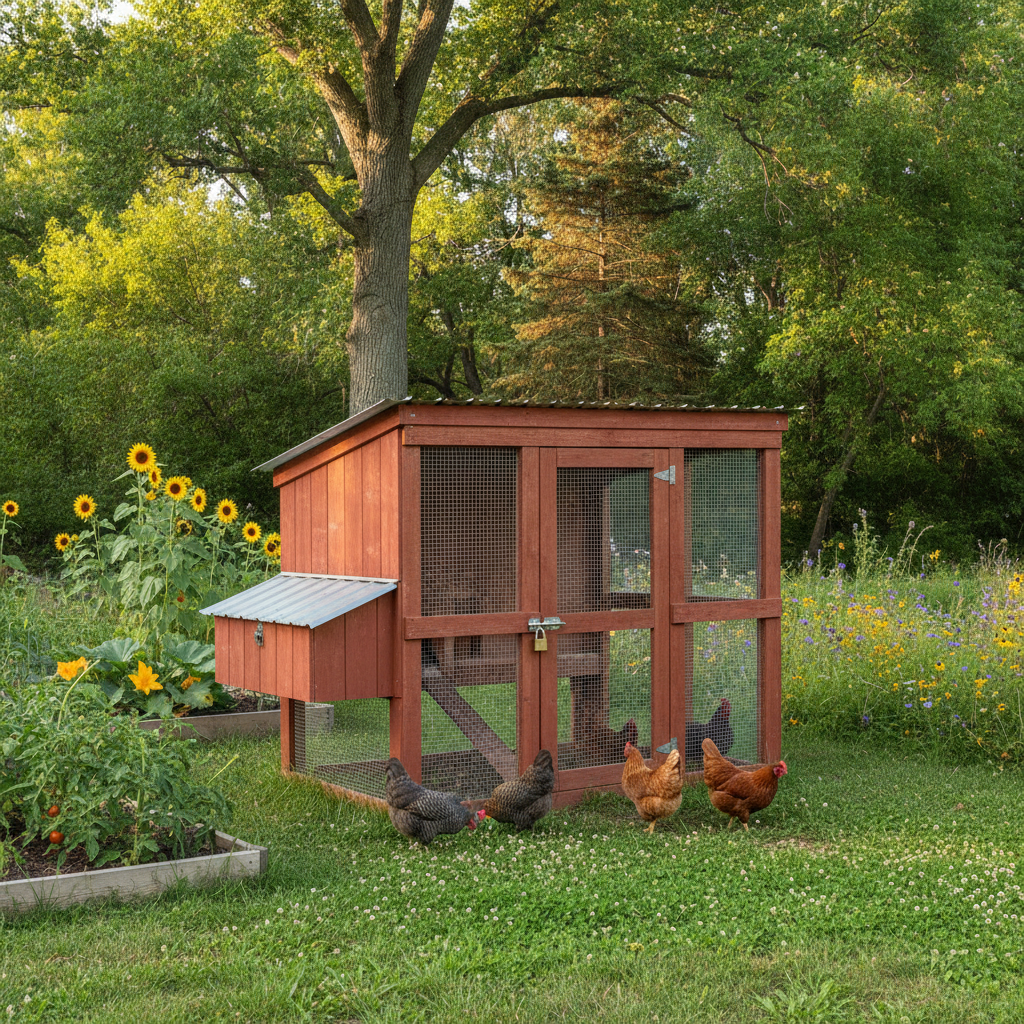
Predator Proofing Chicken Coops in Lincoln: A Complete Guide
By Mara K. · Updated October 12, 2026
Quick answer
To predator proof chicken coops in Lincoln, use hardware cloth with a gauge of 1/2 inch, secure the perimeter with buried wire skirt, and lock doors with predator-resistant latches. Considering Lincoln's humid-continental climate, ensure ventilation and insulation to keep hens safe year-round.
Key facts
- Hardware cloth gauge
- 1/2 inch
- Buried wire depth
- 12 inches
- Common predators
- raccoons, foxes, hawks
- Lincoln frost dates
- October to April
Predator proofing chicken coops in Lincoln is crucial due to a mix of rural and urban threats. Raccoons, foxes, and hawks are common predators that can wreak havoc on your flock if you're not prepared. Thankfully, with Lincoln's humid-continental climate, we can use a few tried-and-true methods to keep our feathery friends safe.
What Materials Work Best for Predator Proofing?
To effectively predator proof your chicken coop, use hardware cloth with a gauge of 1/2 inch. This material is strong enough to deter most predators, unlike chicken wire which some animals can easily tear through. I've seen many coops in neighborhoods like College View and Bethany that have benefited from this upgrade. Bury hardware cloth skirts at least 12 inches deep around the coop's perimeter to prevent digging predators from sneaking in.
Securing Entrances and Exits
The doors and entry points of your chicken coop need locks that are predator-resistant. Simple latches won't do the trick here in Lincoln, where raccoons are notorious for their dexterity. Opt for carabiner-style locks or other mechanisms that require more than a simple flip to open. In nearby suburban areas like Hickman and Waverly, folks have found success with these types of locks.
Climate Considerations for Coop Design
Lincoln experiences hot summers with temperatures reaching up to 90°F and chilly winters with frost dates running from October to April. Insulating your coop and ensuring proper ventilation is key. This helps maintain a comfortable environment for your chickens while keeping predators out. Consider using the deep litter method for added insulation in winter.
Best Breeds for Lincoln
When predator proofing, consider breeds known for their resilience in Lincoln's climate. Wyandottes, Brahmas, and Buff Orpingtons are popular choices here. You can learn more about these breeds at our Wyandotte, Brahma, and Buff Orpington pages. These breeds not only handle the cold well but can also adapt to the coop modifications you'll make for predator proofing.
Keeping Track of Health and Safety
It's always wise to stay informed about any local health concerns. Check out the chicken health map for updates on outbreaks and health issues in the area. If you're ever in doubt about your chickens' health, visiting the local chicken doctor is a smart move.
Where to Get Supplies in Lincoln
If you're looking to buy materials for predator proofing, there are plenty of local suppliers. Visit our local feed and supply page for the best options in Lincoln. Whether you're in SouthPointe or the Haymarket district, there are spots nearby where you can find what you need.
Final Thoughts from the Coop
Predator proofing is an ongoing task, but with the right materials and knowledge, you can significantly reduce risks to your flock. For coop designs tailored to Lincoln's climate, check out our coop plans for inspiration. Remember, keeping your chickens safe is not just about building a fortress but also about ensuring their comfort and health year-round.
More for Lincoln chicken keepers
Got questions or your own tips?
Jump into the community and swap notes with other backyard chicken keepers.
Discuss in the community →Comments
Sign in to join the conversation.