
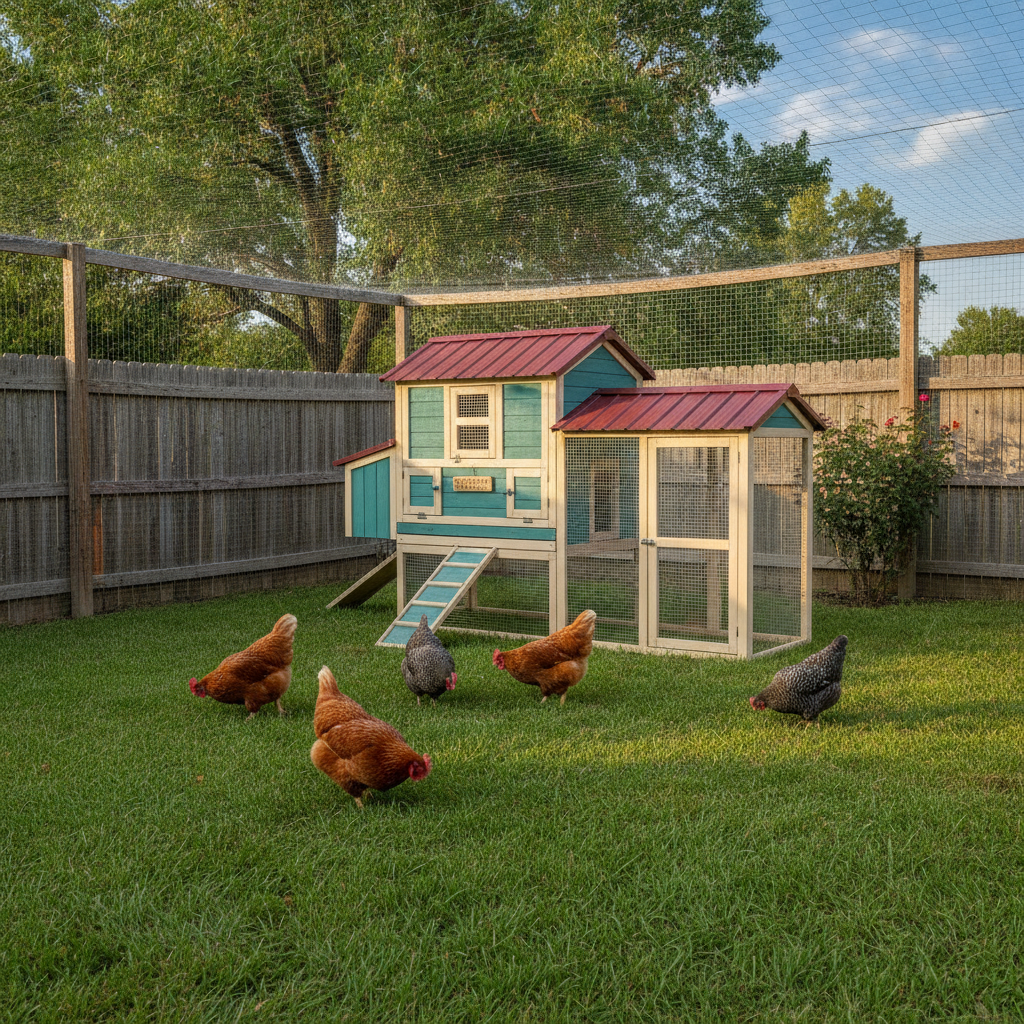
Predator Proofing Chicken Coops in Allentown
By Mara K. · Updated August 24, 2026
Quick answer
To predator proof chicken coops in Allentown, use 1/2-inch hardware cloth instead of chicken wire, bury the wire at least 6 inches underground, and ensure coop doors and latches are secure. This helps protect against local predators like hawks and foxes in neighborhoods such as East Side and Trexler Park.
Key facts
- Hardware cloth size
- 1/2 inch
- Wire burial depth
- 6 inches
- Minimum coop height
- 4 feet
- Frost dates
- Mid-May to Mid-October
- Recommended breeds
- 5 cold-hardy breeds
When it comes to keeping your chickens safe in Allentown, PA, predator proofing your coop is just as crucial as protecting them from the cold. With local predators like foxes and hawks, and cold winters that can dip well below freezing, it's time to make sure your coop is up to snuff.
How to Choose the Right Materials for Predator Proofing
For Allentown chicken keepers, using the right materials can make all the difference. Opt for 1/2-inch hardware cloth rather than standard chicken wire. Chicken wire can keep your birds in, but it won't keep determined predators out. Hardware cloth is strong enough to thwart raccoons and foxes. Bury it at least 6 inches deep around the perimeter to prevent digging.
Coop Design Considerations Specific to Allentown
Due to Allentown's humid-continental climate, you'll want a coop that's both predator resistant and weather-ready. Ensure your coop is at least 4 feet tall to permit airflow, which helps with humidity during those warm summer days when temperatures can rise to the mid-80s. Reinforce doors and latches-raccoons are surprisingly adept at opening simple loops.
If you're looking to build or improve your coop, check out our detailed coop plans to get started.
Address Threats from Above: Hawks and Owls
Allentown is home to a number of birds of prey, including hawks and owls. Keep a watchful eye, especially if you're in neighborhoods like the East Side or Trexler Park. Consider installing a strong roof or netting over the run to prevent aerial attacks. This is particularly important during the nesting season in spring when these birds become more active.
Winter and Frostbite Concerns in Allentown
Winters in Allentown can be brutal, with frost dates stretching from mid-May to mid-October. Cold-hardy breeds like the Wyandotte, Brahma, and Buff Orpington thrive here. Use deep litter methods for additional insulation and warmth. A sturdy coop with a windbreak can prevent frostbite on sensitive combs and wattles.
Don't forget to check our health map for any disease outbreaks that might affect your flock.
Local Resources and Community Support
It's always good to connect with local suppliers and communities. Whether you're in Emmaus or Whitehall, you'll find plenty of resources to keep your coop predator-proof. Visit our local feed and supply page for nearby options.
For further insights, the Penn State Extension offers great advice on chicken care in Pennsylvania.
FAQ
What types of predators are common in Allentown?
Foxes, raccoons, and hawks are the most common predators to watch out for in Allentown, particularly in suburban and rural areas.
How deep should I bury wire around my coop?
Bury hardware cloth at least 6 inches deep to deter digging predators like foxes and raccoons.
What are the best chicken breeds for Allentown?
Cold-hardy breeds like Wyandottes, Brahmas, and Buff Orpingtons are ideal for the cold winters in Allentown.
How do I protect my chickens from aerial predators?
Install a roof or netting over your chicken run to prevent hawk and owl attacks.
How can I keep my chickens warm during Allentown winters?
Use the deep litter method and ensure your coop is well-insulated. Windbreaks can prevent frostbite on birds with large combs.
More for Allentown chicken keepers
Got questions or your own tips?
Jump into the community and swap notes with other backyard chicken keepers.
Discuss in the community →Comments
Sign in to join the conversation.