
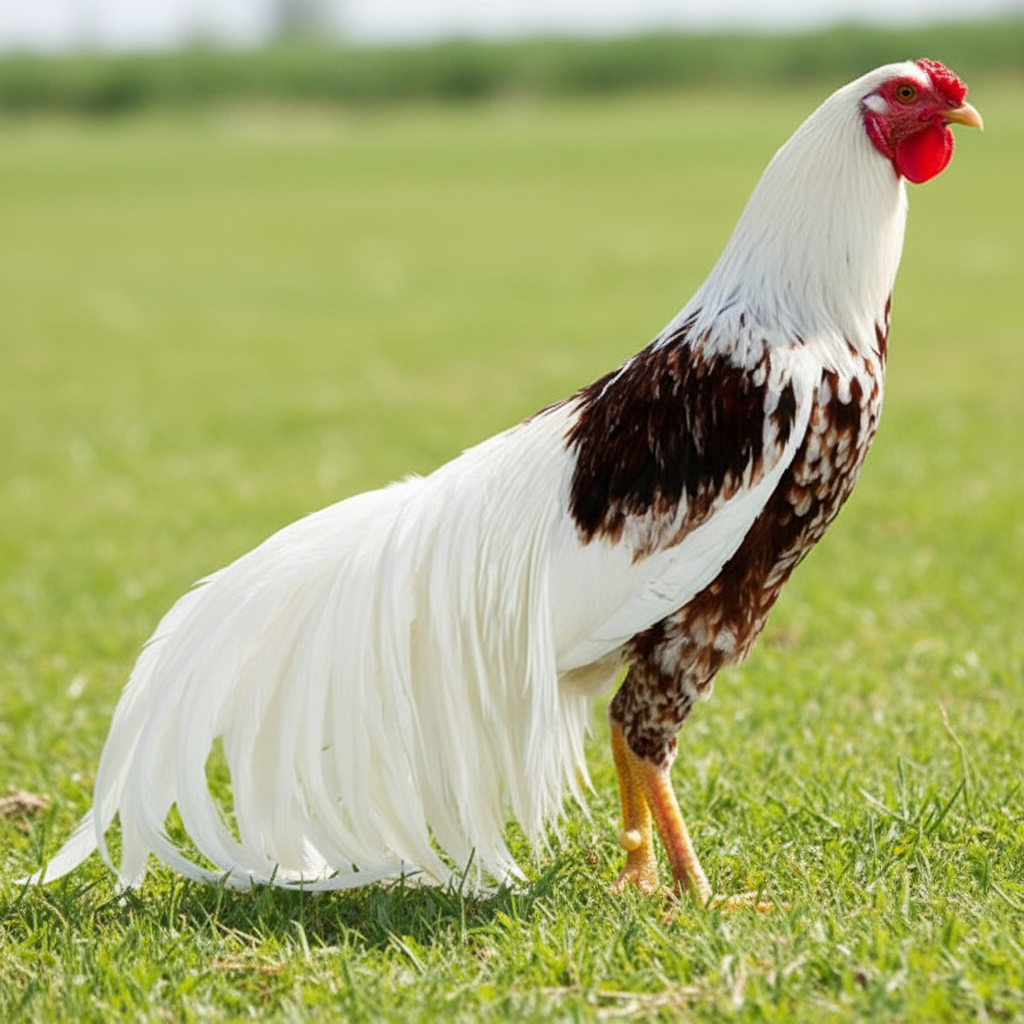
Illustration (AI rendered)
Yokohama
Saddle and tail feathers that never molt.
About the Yokohama
Yokohama chickens are renowned for their striking appearance, featuring long, flowing tail and saddle feathers that never molt. They possess a graceful stature with a slim build and a prominent comb, often in a variety of colors including black-breasted red and white. Known for their gentle temperament, these birds are generally friendly and enjoy human interaction, making them great ornamental pets. The unique feather structure is a hallmark, adding to their visual appeal in any flock.
History
The Yokohama breed was developed in the late 19th century in Japan and later refined in Germany. Its name reflects the port city of Yokohama, where these chickens were likely first bred selectively for their beauty. After being introduced to the West, they gained popularity in poultry shows due to their exquisite plumage and distinctive tail feathers.
Care tips
Yokohamas thrive in spacious environments where they can freely roam, as they are active and enjoy exploring. They are not particularly hardy in extreme weather, so extra care should be taken during harsh winters. While not known for broodiness, they can be prone to stress, so a calm and stable setting is beneficial. Keeping a close eye on their feathered tails is essential, as they can become tangled if not properly cared for.
Color varieties
Fun facts
- Yokohamas are known to have one of the longest feathered tails among all chicken breeds.
- This breed was initially prized in Japan for its ornamental value in exhibitions.
- Yokohama chickens can often be seen at poultry shows, showcasing their elegant plumage.
- They were one of the first ornamental breeds to gain a following outside Japan in the late 1800s.