
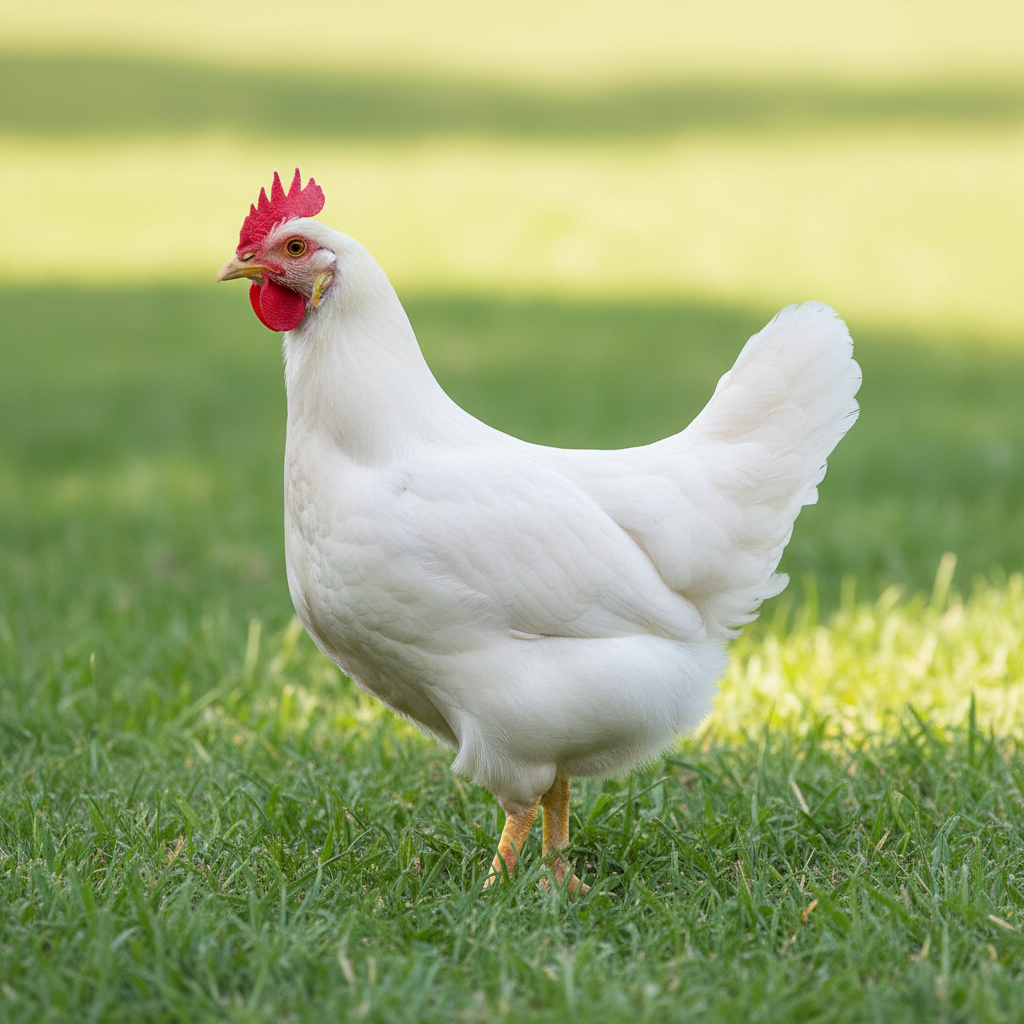
Illustration (AI rendered)
White Leghorn
The egg industry’s white workhorse.
About the White Leghorn
The White Leghorn is a prolific egg-laying breed with a slim body and striking white feathers. Known for their resilience and active nature, they are often less prone to disease. These birds are also characterized by their inquisitive temperament, making them engaging to keep in a backyard setting. Their distinctive physical appearance and outstanding egg production abilities set them apart from other breeds.
History
Originating from Italy, the White Leghorn was developed in the Mediterranean region in the early 19th century. They gained popularity in the United States after their importation in the 1850s, quickly establishing themselves as the primary breed for commercial egg production due to their high egg yield and adaptability.
Care tips
White Leghorns thrive in a spacious environment and prefer to roam freely, benefiting from daily forage opportunities. While they are hardy and can adapt to various climates, they are not known for being broody, which means they do not frequently sit on eggs. Providing shelter from extreme weather is essential, as their lightweight bodies can make them vulnerable.
Color varieties
Fun facts
- White Leghorns can lay over 300 eggs per year, making them top egg producers.
- They are known for their energetic and active behavior, often requiring more space to roam.
- Despite being excellent layers, they rarely go broody, making them low-maintenance for hatching.
- Their feathers are predominantly white, but their skin is yellow, indicative of their breeding heritage.