
Illustration (AI rendered)
Silkie
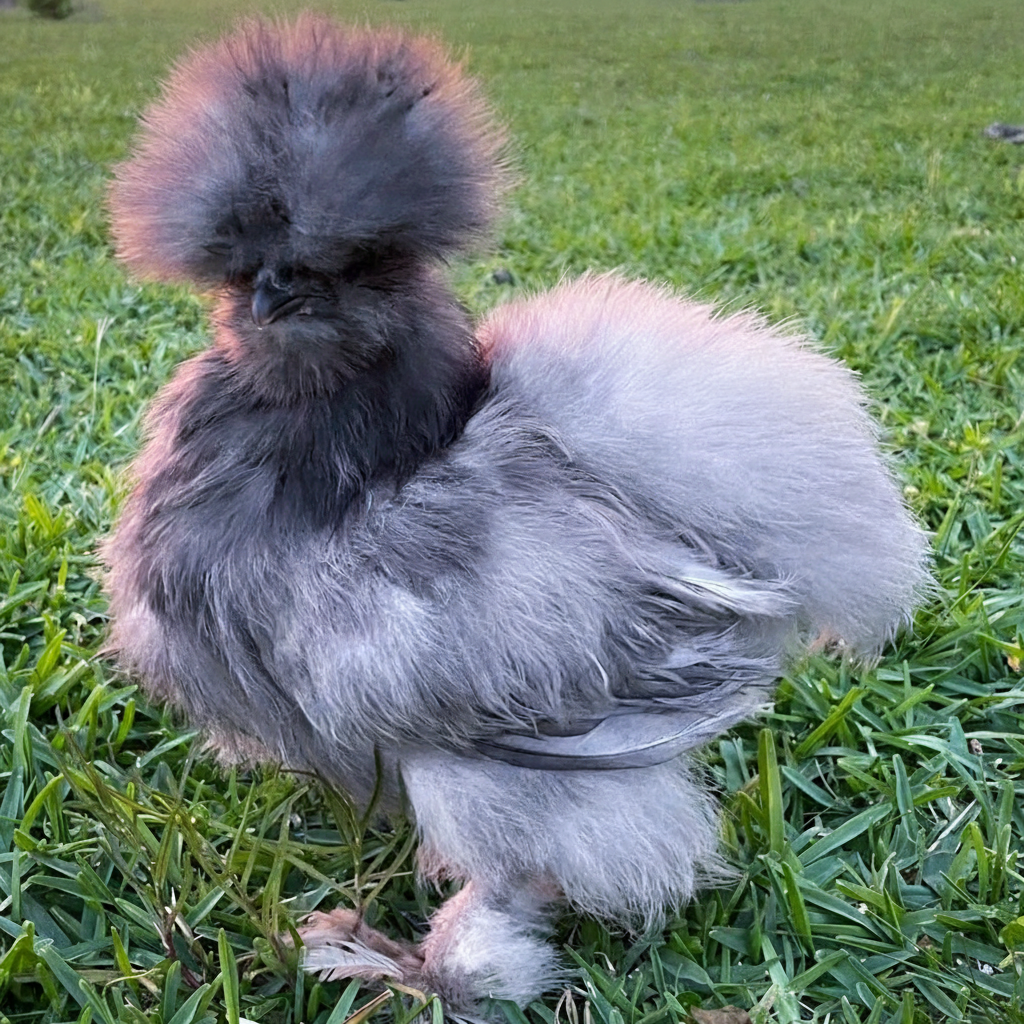
Fluffy bantam with black skin and 5 toes.
About the Silkie
Silkies are small, fluffy bantams known for their unique feathering, which offers a soft, silky texture resembling fur. They have distinct black skin, five toes on each foot, and a calm, friendly temperament, making them great pets. Their charming appearance and affectionate nature make them a popular choice among backyard keepers. Additionally, they are often recognized for their distinctive crest of feathers on their heads.
History
Silkies are believed to have originated in China, with their history dated back to at least the 13th century. They were possibly brought to Europe via trade routes, where they gained popularity for their unique looks and friendly nature. Over the years, Silkies have been selectively bred, leading to various colors and shapes appreciated by fanciers worldwide.
Care tips
Silkies are hardy and can adapt to different climates, but they prefer a sheltered coop to protect their soft feathers. They are known to go broody, often wanting to hatch eggs, so having fertile eggs available can be beneficial. Providing ample space for them to roam and forage is essential, as they enjoy interacting with their environment. Because of their gentle nature, they are best kept with docile breeds.
Color varieties
Fun facts
- Have black bones and skin
- Have 5 toes instead of 4
- Excellent broody mothers — often used to hatch other breeds’ eggs