
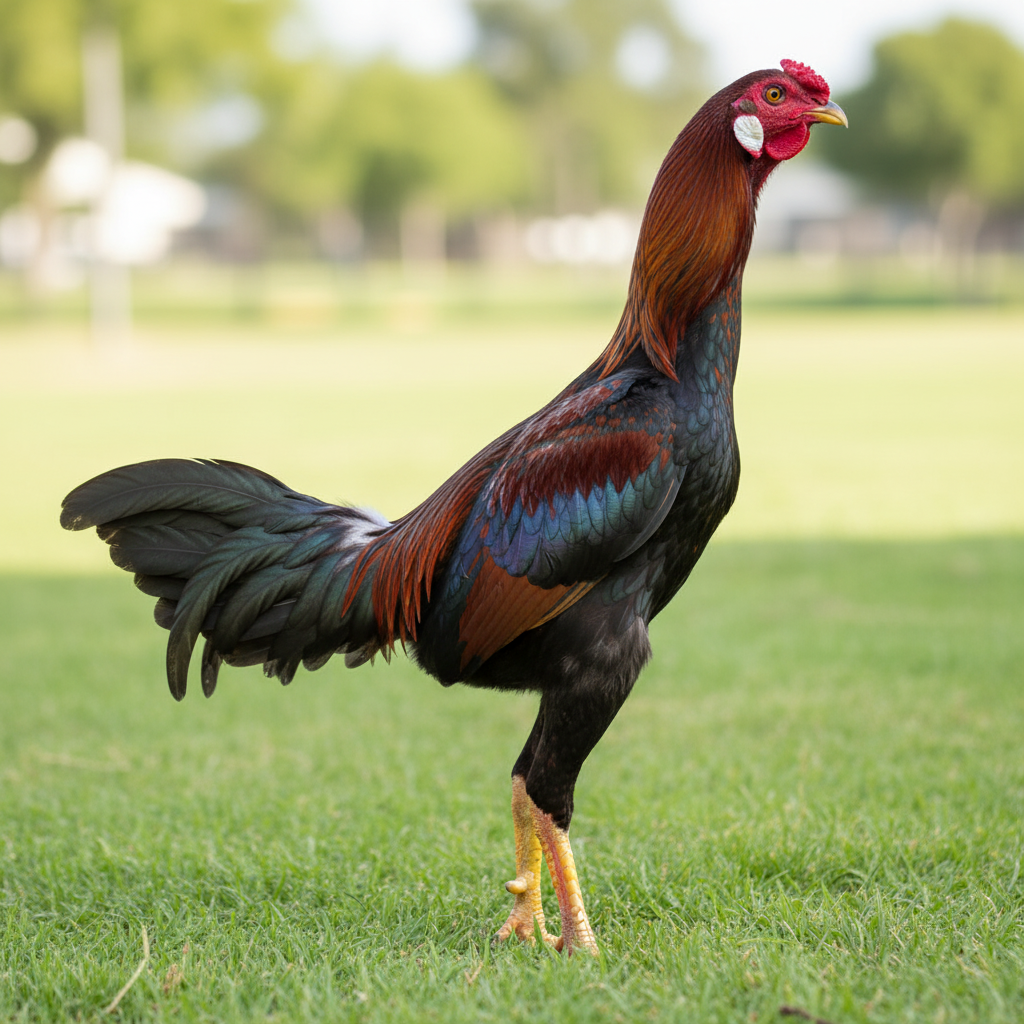
Illustration (AI rendered)
Shamo
Tall, upright Japanese game fowl.
About the Shamo
Shamo chickens are known for their impressive height and upright posture, giving them a regal appearance. Their bodies are muscular and compact, typically displaying a range of vibrant plumage colors. These birds possess a calm demeanor, yet exhibit a protective nature, making them excellent guardians of the flock. Their distinctive long legs and broad shoulders contribute to their exceptional presence.
History
The Shamo breed originated in Japan, where they were specifically developed for cockfighting and meat production. Believed to have been introduced from Thailand centuries ago, they have since evolved into an admired breed in various parts of Asia. Their popularity spread further due to their aesthetic appeal and resilience.
Care tips
Shamos thrive in spacious environments due to their large size and active disposition. They have moderate hardiness and can adapt well to different climates, but should be protected from extreme weather. Regular socialization is essential, and they may exhibit broodiness, making them good candidates for hatching eggs.
Color varieties
Fun facts
- Shamos can stand over 2 feet tall, making them one of the tallest chicken breeds.
- Their unique stance and gait give them an intimidating presence in the yard.
- The breed is known for its resistance to disease and hardiness.
- Shamos have a long history as game birds, prized in traditional Japanese culture.