
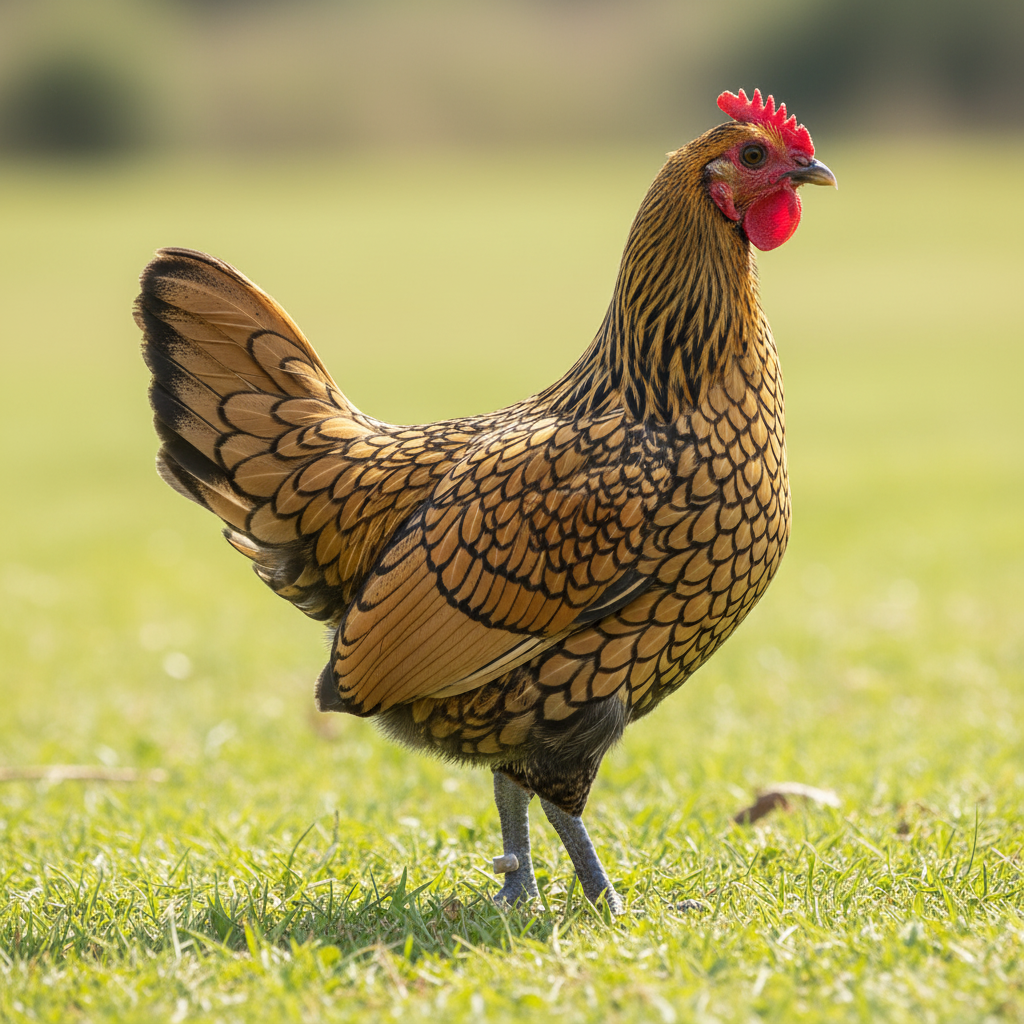
Illustration (AI rendered)
Sebright
True bantam with laced feathers and hen-feathered males.
About the Sebright
Sebrights are small, ornamental bantams known for their striking laced feathers, which are especially pronounced in the hen. Males are uniquely hen-feathered, lacking the typical long tail feathers seen in other breeds. They are friendly and curious, making them great pets for backyard keepers. Their compact size and charming appearance make them a favorite among poultry enthusiasts.
History
The Sebright breed was developed in England in the early 19th century by Sir John Sebright. Primarily bred for exhibition, it quickly gained popularity in poultry shows across Europe. The breed is recognized as one of the first true bantams, helping to pave the way for further bantam development.
Care tips
Sebrights are not particularly hardy and prefer a sheltered environment to protect them from extreme weather. They can be broody, making them suitable for hatching eggs if desired. Due to their small size, they require minimal space but should be kept in a secure coop to avoid predators. Regular handling helps to socialize them and prevent any skittish behavior.
Color varieties
Fun facts
- Sebrights come in both gold and silver laced varieties.
- They are one of the oldest bantam breeds recognized by poultry associations.
- Males have a distinct appearance due to their absence of long tail feathers.
- Sebrights are often used in poultry shows due to their unique feather patterns.