
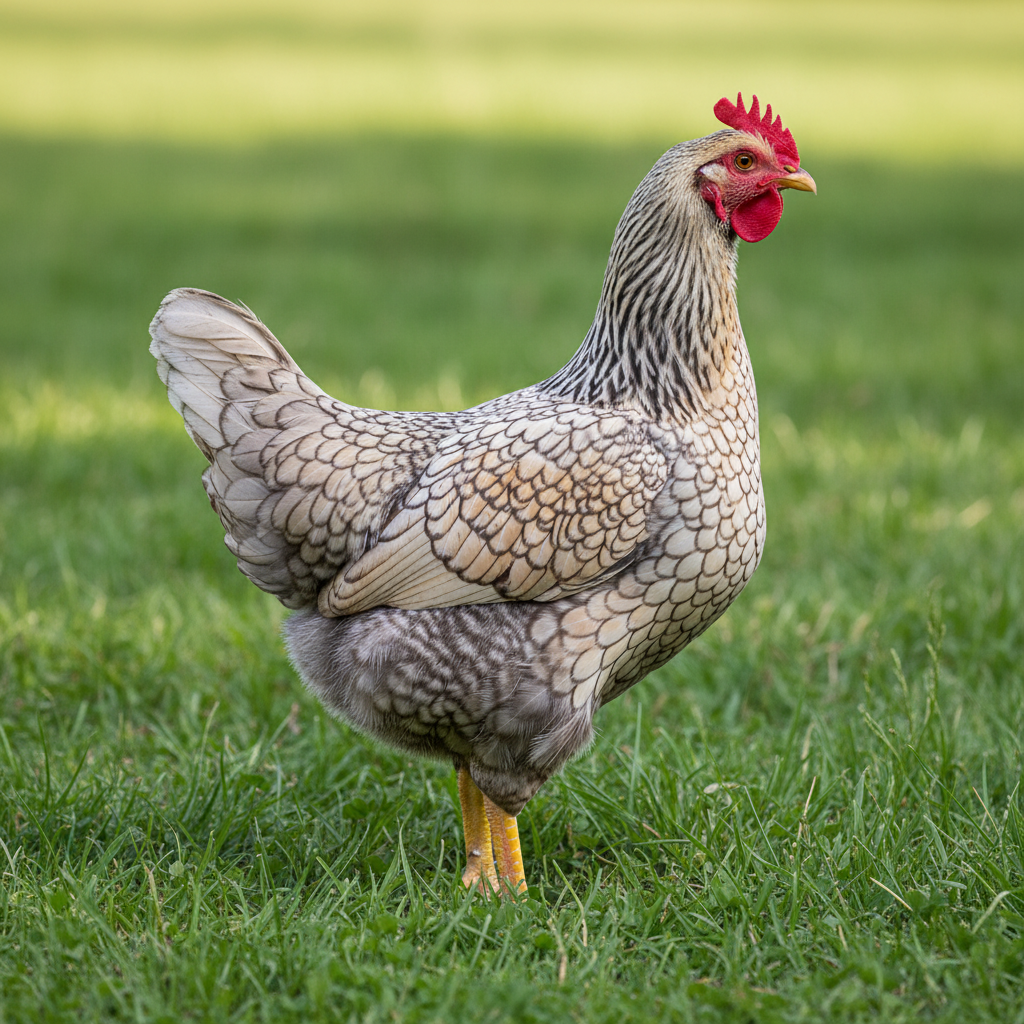
Illustration (AI rendered)
Plymouth Rock
Also known as: Barred Rock
Classic American homestead chicken.
About the Plymouth Rock
Plymouth Rocks are easily recognized by their striking black and white striped feathers. They are friendly and sociable birds, making them ideal for backyard flocks. Known for their excellent egg production, they typically lay brown eggs and are also good for meat, due to their dual-purpose nature. Their calm demeanor and adaptability to various environments further enhance their appeal among poultry keepers.
History
The Plymouth Rock breed was developed in the early 19th century in Massachusetts. Its development is attributed to various crossbreeds, including the Dominique and Black Cochins. The breed gained popularity quickly, spreading across the United States and becoming a staple for homesteaders due to its hardworking nature. By the late 1800s, Plymouth Rocks were recognized as a distinct breed, contributing to the American poultry scene.
Care tips
Plymouth Rocks are known for their hardiness and can adapt well to different climates. They require adequate space to roam and forage, as they enjoy being active. While not particularly broody, they can occasionally exhibit broodiness. Regular health checks and a balanced diet will ensure they thrive as productive members of the flock.
Color varieties
Fun facts
- Plymouth Rocks were one of the first breeds to be accepted into the APA in 1874.
- They are known for their distinctive 'barred' feather pattern.
- These chickens are friendly and often become curious companions.
- Plymouth Rocks can be good foragers, enjoying a diet that includes greens.